





 Portuguese
  English
  Spanish
  6 min of reading
  0 comments


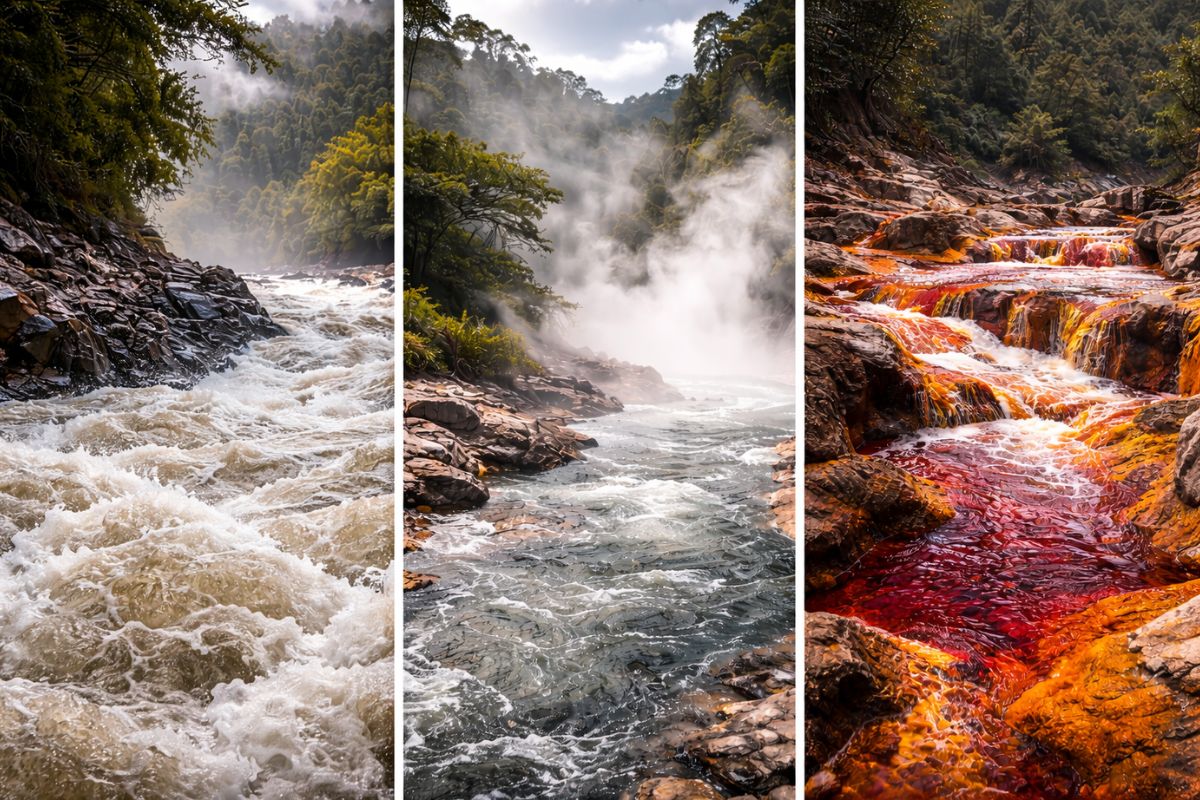
The Most Dangerous Rivers in the World Reveal That Calm Appearances Can Be a Trap, with Choke Points, Whirlpools, Boiling Water in Peru, and a Red River in Spain Where Almost Nothing Survives
The most dangerous rivers in the world don’t always scream danger. Some appear calm, almost inviting, but hide forces that pull down, create rock labyrinths, form whirlpools, and turn a simple dip into a one-way decision. It is precisely this combination of beauty and threat that makes these rivers so terrifying.
On this journey, you will encounter currents that literally “swallow” people, a river with water hot enough to boil, and another with vibrant golden and reddish hues but with extreme acidity. And yes, even giants like the Amazon River, the Nile River, and the Yangtze River make the list, even if they don’t seem threatening at first glance.
10) Wharfe River

Located in Yorkshire, England, this river may give a sense of normalcy, but it hides a critical point that changes everything.
-
Friends have been building a small “town” for 30 years to grow old together, with compact houses, a common area, nature surrounding it, and a collective life project designed for friendship, coexistence, and simplicity.

-
This small town in Germany created its own currency 24 years ago, today it circulates millions per year, is accepted in over 300 stores, and the German government allowed all of this to happen under one condition.

-
Curitiba is shrinking and is expected to lose 97,000 residents by 2050, while inland cities in Paraná such as Sarandi, Araucária, and Toledo are experiencing accelerated growth that is changing the entire state’s map.

-
Tourists were poisoned on Everest in a million-dollar fraud scheme involving helicopters that diverted over $19 million and shocked international authorities.


It stretches approximately 105 km and is usually shallow, around 9 meters from bank to bank, until at a specific stretch, the banks narrow to something close to 1 meter.
This “choke point” concentrates the force of the water and creates a brutal current that erodes rocks and carves tunnels, mazes, and abyss between subterranean stones. The result is a river famous for “swallowing” people, because the water pulls down and traps the victim in this tangled rock.
9) Mississippi River

The largest river in North America also ranks among the most dangerous rivers in the world due to a combination of risks.
Measuring about 3,766 km in length, it may appear calm in many stretches, but it harbors unpredictable undertows and whirlpools capable of dragging anything into the depths.
Furthermore, the river is described as having dangerous habitats, which increases the risk for those who enter the water without understanding what lies beneath. The calmness, in this case, is just a facade.
8) Yangtze River

Known as the “Heart” of China, the Yangtze is the largest river in Asia and the third largest in the world, measuring approximately 6,400 km. It provides for populations, crops, transport, and work, but this economic importance comes at a cost.
Aside from pollution from industrial waste, there’s one factor that makes it especially dangerous: the risk of flooding. In 2003, a mega project related to the Three Gorges Dam was inaugurated, and the large water runoff can overwhelm the river and push it beyond its capacity.
One of the largest floods since the reservoir was built occurred in 2020, and the threat is that, in the long run, an even bigger flood will put those living on the banks at risk, including cities such as Shanghai and Chongqing.
7) Mekong River

Flowing through six countries in Southeast Asia, the Mekong River is about 4,350 km long and sustains ecosystems and riparian communities. However, danger comes from two fronts: nature and human action.
It is described as a river with wild currents, a strong flow that puts boats and swimmers at risk, and a high potential for flooding.
With the increasing demand for water, energy, and infrastructure, dams have been built along its course. The concern is that this overloading will cause the river to fail, raising the risk of major floods over time.
6) Nile River

Measuring about 6,800 km and flowing through 10 countries, the Nile is a vital giant for the northeastern part of the African continent. But size and importance do not mean safety.
It ranks among the most dangerous rivers in the world due to deadly currents and the presence of dangerous species in its waters and banks, such as the Nile crocodile. It is the type of river that sustains lives and economies, but also demands absolute respect.
5) Zambezi River

In central Southern Africa, the Zambezi is about 2,575 km long and concentrates an explosive mix of geography and risk. The most famous region includes Victoria Falls, spanning 1,708 meters and a drop of 99 meters, along with other drops and rapids.
The combination of waterfalls, rapids, and currents gives the river a tremendous force, and there are also dangerous species in its ecosystem.
Furthermore, the possibility of flooding is frequent in an area where a people known as the “los” migrate annually during the rainy season to avoid the flooded plains in an event known as “comboca.” Here, danger is not isolated; it is part of the calendar.
4) Congo River

The Congo flows through nine countries in Central-Western Africa, measuring about 4,700 km, and is the second-largest in Africa by water volume.
What places it among the most dangerous rivers in the world isn’t just the surrounding environment, with dense forests and hostile fauna, but a frightening physical detail.
It is described as the deepest river in the world, reaching up to 220 meters at some points. It is so deep that light cannot penetrate certain areas, which increases risk and unpredictability for any attempt at navigation or entry into the water.
3) Amazon River

Among the most dangerous rivers in the world, the Amazon stands out for being the largest by water flow on the planet and the second longest, after the Nile. Its course runs through Peru, Colombia, and Brazil, crossing the Amazon Rainforest.
The combination of river and rainforest creates a perfect haven for diverse fauna, including dangerous species, as well as potentially treacherous currents.
It is a lush river, but swimming in it can be a real risk, because danger can come from both what you see and what you don’t see.
2) Shanay-Timpishka River

Now imagine a river where the water can reach boiling temperatures. In Peru, there is a tributary of the Amazon known as “La Bomba,” with temperatures ranging from 45°C to 100°C, and this extreme heat extends for over 6 km.
The most intriguing detail is that it is not located near an active volcano. The explanation presented is a non-volcanic geothermal theory: rainwater would enter very deep underground faults, heat up by the thermal gradient, and then feed the hot springs that supply the river.
The result is simple and terrifying: falling in means exposing yourself to heat capable of boiling instantly.
1) Tinto River
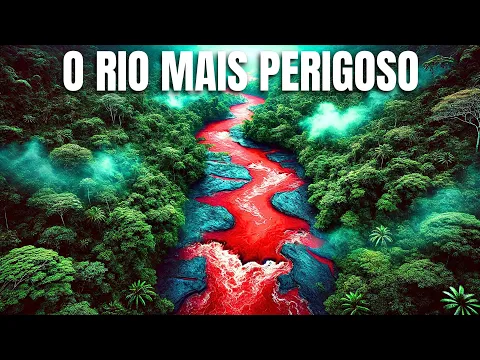

Amid the mountains in the Huelva Mountains, Spain, a visually hypnotizing river emerges, with vibrant gold and reddish colors. However, this beauty is precisely the deception.
The Tinto River is said to have gained this coloration from the presence of heavy metals, associated with a long history of mineral exploitation that, according to the narrative, began around 5,000 years ago with the extraction of copper, gold, silver, and other ores. The consequence is drastic: a drop in oxygen in the water and extreme acidity, with a pH around 1.7.
Few life forms can survive there, and the water is also dangerous for humans, with harmful bacteria thriving in these conditions. It is the type of river that looks like a painting, but functions as a warning.
So, Why Do They Enter the Most Dangerous Rivers in the World
The recurring pattern is straightforward: the most dangerous rivers in the world do not depend on a single “villain.” Sometimes, it’s the current that creates underwater traps.
In others, it’s whirlpools, extreme depth, flood risk, or abnormal chemical conditions.
And there is one factor that crosses many of them: the impression that nothing is happening, when, in practice, the risk is already in action.
Which of these most dangerous rivers surprised you the most and why?









-

-

-

5 pessoas reagiram a isso.