





 Portuguese
  English
  Spanish
  4 min of reading
  236 comments


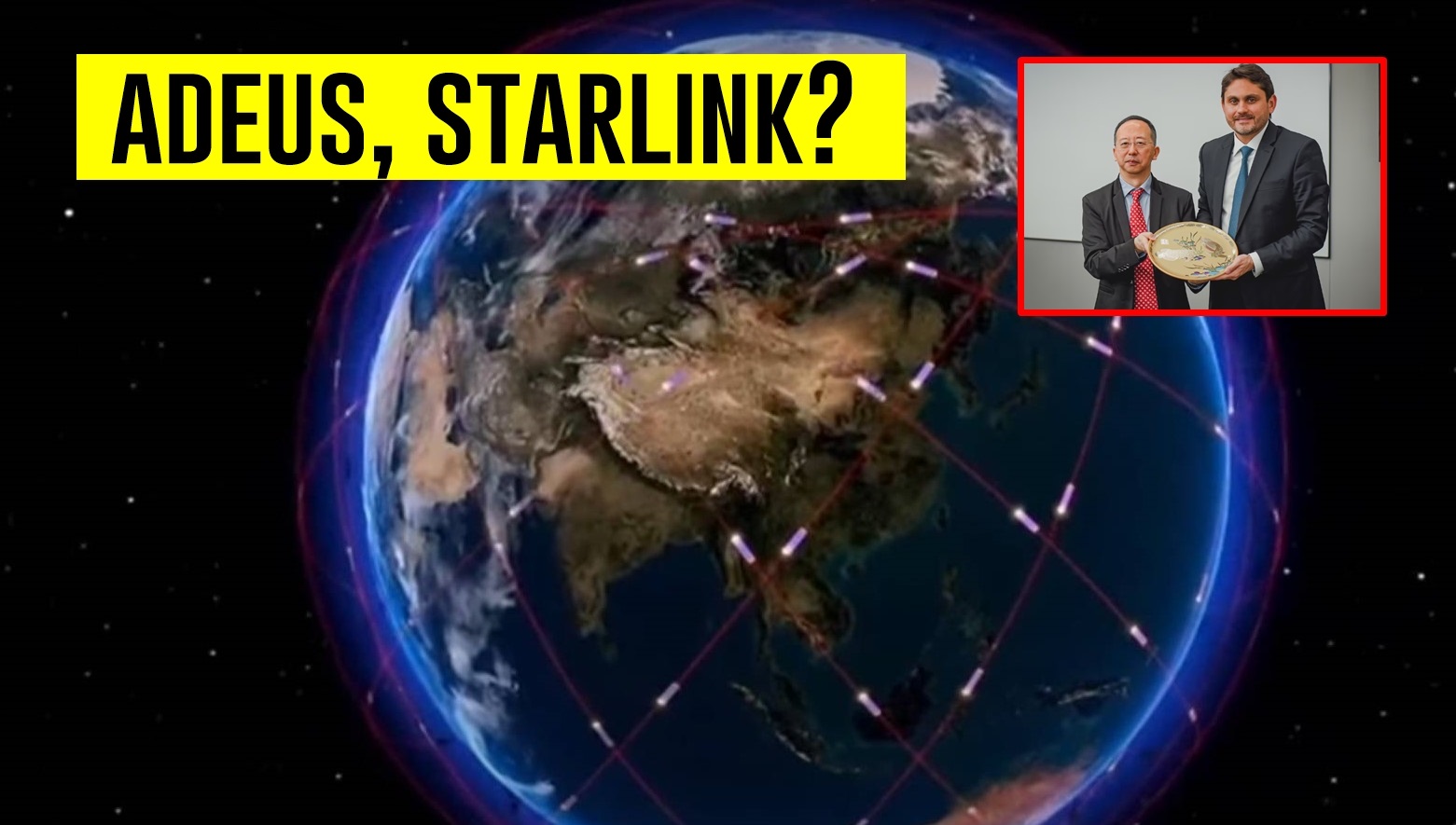


‘Starlink from China’ Plans to Revolutionize Internet in Brazil, Offering Affordable Internet with 15 Thousand Satellites
This Tuesday (11/19), Brazil’s Ministry of Communications signed important agreements with SpaceSail, the ‘Starlink from China’, a private Chinese company, and with the National Data Administration of China. These pacts aim to strengthen the country’s digital infrastructure, promote the digital economy, and diversify options in the satellite internet sector.
SpaceSail, based in Shanghai, is focused on developing a high-speed internet service through a low Earth orbit (LEO) satellite network. The National Data Administration of China, in turn, collaborates on smart city projects and the creation of standards to integrate and apply data resources.
-
In a flooded well, archaeologists found a 1,700-year-old Roman egg that still contains clear and yolk intact inside the very thin shell.

-
Something is happening around the Earth: Inside the huge explosion of fireballs in 2026

-
A hot air bubble coming from Argentina expands over Brazil, causing thermometers to exceed 38 degrees with a thermal sensation of 40 degrees in late March, affecting 6 states at once.

-
The radish leaf that almost everyone throws away has more polyphenols, flavonoids, and fiber than the consumed root, and a 2025 study showed that the leaf contains compounds that protect the intestine, combat inflammation, and may inhibit the growth of cancer cells.

These initiatives mark a significant step for Brazil, which seeks to reduce its dependence on Starlink, the American company of billionaire Elon Musk, currently the leader in the national satellite internet market.


SpaceSail and Its Entry into the Brazilian Market Dominated by Starlink
SpaceSail’s plans include starting operations in Brazil in 2025, promising an alternative to Starlink’s dominance. Currently, SpaceSail has 18 satellites in orbit but intends to expand this constellation to 15 thousand by 2030, surpassing Starlink’s approximately 6 thousand satellites.
SpaceSail’s low Earth orbit satellites are about 549 km from Earth, offering lower latency and greater reliability in data transmission, significant advantages over conventional satellite systems. However, to operate in Brazil, the company requires approval from Anatel and the installation of ground infrastructure.
SpaceSail’s entry into the Brazilian market could benefit sectors such as education, with possibilities to provide broadband internet to schools in remote areas through partnerships with Telebras, the telecommunications state-owned enterprise.

Cheaper Internet in Brazil
The initiative follows the model of Elon Musk’s Starlink, but with a notable competitive edge: more affordable costs. Leveraging China’s history of providing technologically advanced products and services at competitive prices, SpaceSail aims to democratize access to high-speed internet in the country.
The proposal is especially relevant in rural and hard-to-reach areas, where connectivity is still limited or nonexistent.
With next-generation satellites, the Chinese company bets on a robust infrastructure to meet the growing demand for stable and cheap connectivity. The aggressive pricing strategy may put Starlink in a challenging position.
The Crisis Between Elon Musk and Brazilian Authorities
The arrival of SpaceSail comes at a delicate time for Elon Musk in Brazil. In August, the Federal Supreme Court (STF) suspended operations of X (formerly Twitter), acquired by Musk in 2022, due to the lack of legal representation of the platform in the country and non-compliance with court decisions. The decision generated tensions that affected Starlink, with the STF blocking the company’s accounts in Brazil for non-payment of fines related to X.
These conflicts raised questions about Brazil’s dependence on Starlink, whose internet is widely used in remote areas like the Amazon, as well as for military and industrial applications. The episode also intensified President Luiz Inácio Lula da Silva’s (PT) criticisms of Musk, who supported Jair Bolsonaro (PL) during the 2022 presidential elections.
Market Expansion and Strategic Impacts
Starlink, which began 2023 as the fifth-largest satellite internet provider in Brazil, took the lead in July of this year, with a 45.9% market share, according to Anatel. This exponential growth, combined with the quality of its services, as highlighted by Thiago Ayub, technology director of Sage Networks, demonstrates the strength of the company in the sector.
However, Ayub also notes that the entry of new competitors like SpaceSail could benefit the Brazilian market:
“Having multiple suppliers of the same product is an indicator of health in any market. In the case of the satellite internet sector, which is strategic, competition is essential to meet the demands of both the public and private sectors.”
Strategic Interests of China
For China, expanding SpaceSail’s presence in Brazil aligns with its long-term objectives. In 2020, the National Development and Reform Commission of China listed the creation of satellite internet infrastructure as a national priority, aiming to consolidate the digital economy and conquer new markets.
Furthermore, the partnership with Brazil reflects a Chinese effort to diversify its global influence in strategic technology sectors, strengthening its position against the United States.
With SpaceSail’s advancement and the support of the National Data Administration of China, Brazil could diversify its options in the satellite internet sector, reducing its dependence on Starlink and enhancing connectivity in remote areas.







Não tem como competir com a china , o que eu considero legal é que teremos logo logo , um serviço melhor e mais barato oferecido pelos chineses, assim poderemos sair das garras desse **** dono da spacex , esse cara não é confiável , nada custa estar passando dados sensíveis para o governo dos EUA …
Estou a me divertir com os comentários do ****. 🐂🐂🐂🐂🐂
DEUS SALVE O BRASIL II