





 Portuguese
  English
  Spanish
  6 min of reading
  0 comments


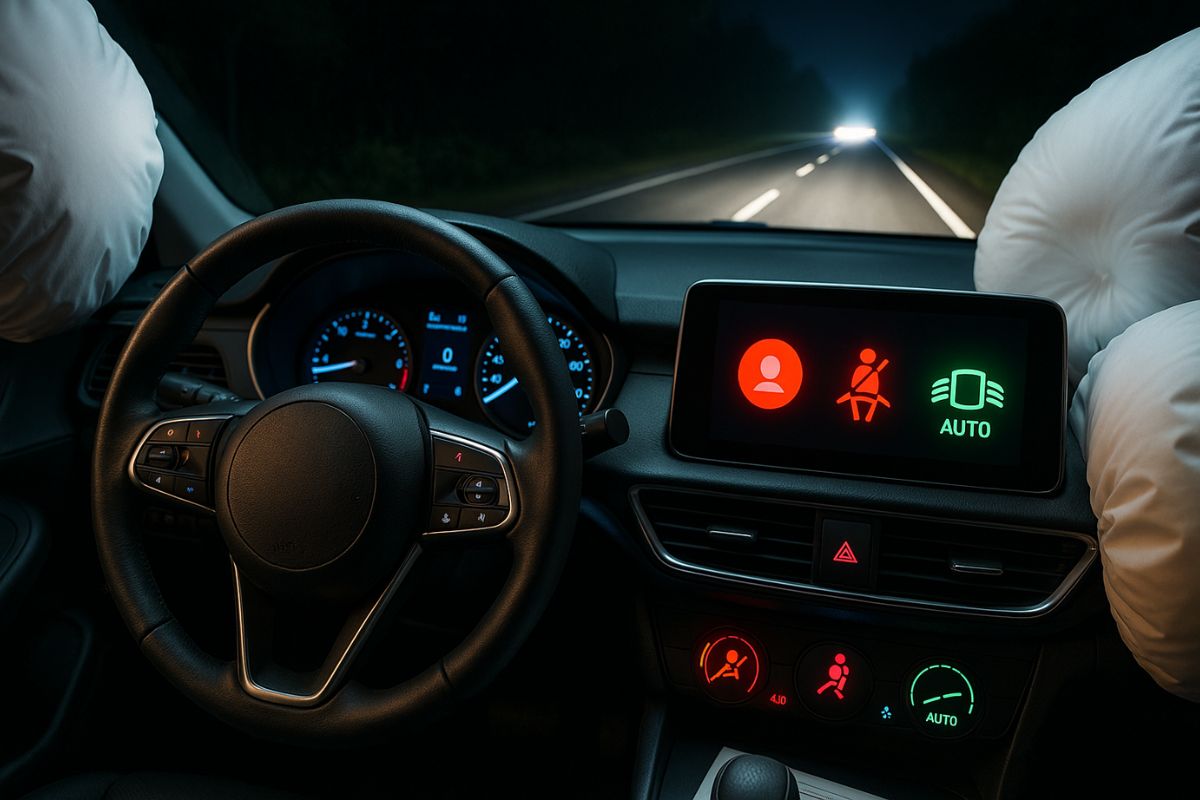
Discover the Hidden Car Features That Reduce Injuries by Up to 30%, Improve Night Visibility by 40%, and Help Avoid Glare — With Simple and Free Adjustments.
Most drivers go for years without exploring discreet — but powerful — functions that already come with their vehicle. These hidden car features operate in critical areas such as passive safety, visibility, and vehicle control. In real scenarios, energy management seams in the seatbelt can reduce cervical injuries by up to 30%, while headlight cleaning and alignment can increase night visibility by about 40% and prevent glare from oncoming traffic.
This practical guide organizes 15 Often Overlooked Functions by theme (safety, vision, control, connectivity, and emergencies), with straightforward guidelines for you to activate or review each one. The idea is not to buy anything, but to make better use of what already exists in your car — whether new, used, or pre-owned.
Passive Safety That “Works Silently”
1) Energy Management Seams in the Seatbelt (Passenger)
-
5 cheapest used cars than a Honda CG 160 Titan 0 km, with options starting at R$ 13,000 for those who want to trade their motorcycle for a car and escape the rain, sun, and risks of riding.

-
Around R$ 24,000: 4 used Ford SUVs with up to 253 hp, V6 engine, all-wheel drive, 7 airbags, panoramic sunroof, and a complete package that surprises with its price and performance in Brazil.
-
A brand new car starts at around R$ 75,000 in Brazil, but what stands out the most is seeing streets filled with SUVs and expensive sedans in a country where millions remain in debt.

-
For R$ 32,000, a brand new Hyundai car is a rival to the Kwid with a 1.2 engine producing 82 hp, 6 airbags as standard, multimedia with wireless Android Auto, up to 391 liters in the trunk, and a refreshed look for 2026 in India.

They may seem like just a detail of the fabric, but they were designed to give progressively in strong collisions, releasing controlled inches of the seatbelt.
This distributes the force on the chest and neck, reduces the chance of seatbelt rupture, and can decrease injuries by up to 30%.
Few people know that this feature usually appears in the passenger seatbelt, as the driver’s seat has specific reinforcements.
Never sew or glue these areas; visually inspect and keep the seatbelt in good condition.
2) Internal Trunk Release (Emergency Exit)
Since the 2000s, cars have come with a fluorescent lever/string in the trunk for internal opening.
Teach children and the elderly (without alarmism) about how it works. Test periodically: if it’s stiff, lubricate the lock assembly and check the cables.
In some modern models, there is even foot gesture opening or via app, useful in emergencies.
Visibility: See Better, Distract Less
3) Headlight Height and Direction Adjustment
Behind the optical assembly are adjustment screws (height/side). Poorly adjusted headlights create blind spots and dazzle other drivers.
A quick alignment on a flat wall, a few meters away, already corrects the beam and reduces night glare.
Do this with the car leveled, tires inflated, and normal load. Avoid improvising: if in doubt, ask a technician to follow the manual’s standards.
4) Headlight Washers/Wipers (When Present)
Dirt on the headlight reduces illumination by up to 40%. Some cars activate jets on the headlights along with the windshield washer (with headlights on) or via dedicated button.
Fill the reservoir with appropriate fluid (do not use just “pure” water in cold/wet regions). Clean headlights = more light with the same bulb.
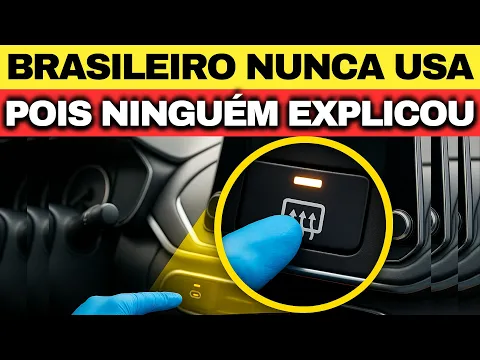
5) Rear Defroster as “Thermal Aid”
The glass tracks heat up and remove condensation and ice. In 10–15 minutes, they soften light resins and dirt to prevent scratches when cleaning.
In humid environments, turning it on early balances cabin humidity, reducing fogging on other windows and improving overall visibility.
6) Rain Sensor and Automatic Wipers
In automatic mode, you can adjust the sensitivity of the system to respond to drizzle or heavy rain.
Many models also activate the rear wiper when reversing while it’s raining in front.
If the sensor gets “confused,” clean the windshield and replace the blades (ideally once a year). Dirty glass alters the optical reading and hinders response.
7) Individual Tire Pressure (TPMS)
On the dashboard/multimedia, check the PSI of each tire. Persistent differences reveal slow leaks, uneven load distribution, and irregular wear — all affecting braking, stability, and fuel consumption.
Measure with cold tires in the morning. Monitor variation during travel (heating raises the PSI) and adjust according to the manual for rain/road/load.
Control and Comfort That Turn into Safety
8) Hill-Hold Assist
With electronic brakes, the car holds for 2–3 seconds when starting on an incline. Prevents “unintentional roll back” and bumpers touching.
In some models, it is activated by default; in others, you can turn it on in the menu. Test it in a safe location until you gain confidence.
9) Programmable Door Locking/Unlocking
You can lock them automatically upon reaching a certain speed and unlock when shifting into “P”.
It is also possible to open only the driver’s door on the remote — an anti-opportunistic measure at traffic lights or dark spots.
The programming varies (onboard computer menu or button/key sequence). Once set, it stays in memory.
10) Adaptive Cruise Control, Beyond the Basics
Adjust following distance and, in some cars, acceleration/braking style. Profiles by key allow each driver to save their “style.”
Advanced systems integrate GPS and traffic, smoothing curves, construction, and slow areas — less fatigue, more brake/fuel economy.
Connectivity That Avoids Distraction
11) Enhanced Bluetooth (Message Reading and 2 Phones)
Explore the advanced menu to read messages aloud, respond with quick replies, and pair two phones (prioritizing the driver’s).
Less fiddling with the phone = less distraction. Pair while stationary and test voice commands.
12) Memory Mirrors
Even without a memory seat, some models save mirror positions and even link to the control (each key, one position).
In families with different heights, this reduces blind spots and speeds up departures. Re-record after any jolt or tire/alignment change.
Access and Contingencies (When Something Goes Wrong)
13) Mechanical Key and Hidden Cylinder
In the electronic keychain, there is a metal blade. Some cars hide a lock under the door handle cover (sometimes on the passenger side).
If the remote battery dies, you can enter without calling a locksmith. Practice beforehand so you won’t learn in a bind.
14) Magnetic Compartment for Spare Key (Optional)
Some vehicles/stores offer a magnetic box in the chassis for a spare key. It’s inexpensive and saves trips when the key is left… in the trunk.
If you install it, choose a discreet and sturdy spot and protect the blade from water and rust.
Simple Maintenance That Prevents “Costly Headaches”
15) Cabin Air Filter (The Forgotten One)
It’s located behind the glove compartment (in most vehicles). Replace every 12,000–15,000 miles or sooner if you drive in dirt/humidity.
A saturated filter reduces airflow, overworks the air conditioning, worsens health inside the car, and can lead to costly repairs. Replacement is usually tool-free.
Worth It — And Why Now

Everything here is quick activation, with zero or minimal cost, focusing on the main villains of daily life: poorly managed deceleration in collisions, low visibility, and glare.
By activating the hidden car features that already exist in your vehicle, you can drive with less stress, react sooner, and protect those on board — without extra accessories.
For those wondering how to apply it in practice: start with what’s simple — cleaning headlights and windshield, checking the TPMS, programming doors, and voice pairing.
What involves safety components (seatbelts, locks, fine headlight adjustment) should follow your model’s manual and, in case of doubt, count on qualified technical assistance.
The investment is basically time and attention, and the return appears during the first well-lit nighttime drive.
The big lesson is straightforward: safety does not just reside in luxury technologies, but in the hidden car features you already have and sometimes have never activated.
Adjust headlights, check seatbelts, activate assistants, clean sensors, and program locks. These are 15 practical actions that transform your night on the road and your day in the city.
Now it’s up to you: which adjustment transformed your driving — headlight alignment, using Hill-Hold, monitoring tire pressure, or saving mirror positions? And in what real situation did these features prevent scares? Share in the comments: your experience helps other drivers to drive more safely today.









Seja o primeiro a reagir!