





 Portuguese
  English
  Spanish
  14 min of reading
  0 comments


Discover 20 Surreal Places on Earth With Blue Caves, Deserts That Become Mirrors, Impossible Waterfalls, and Dangerous Mountains That Challenge Everything You Imagine to Be Possible Today
Some surreal places on Earth are so extraordinary that they make us doubt we are still on the blue planet. These are scenes that seem to have been painted by hand, where the ground becomes a mirror, fire arises from nothing, ice glitters like crystal, and mountains rise at angles that defy any logic. In common, they all provoke that rare moment of inner silence when we simply stop, observe, and feel.
On this journey through 20 surreal places on Earth, we will visit blue caves beneath giant glaciers, temples swallowed by the jungle, deserts that look like Mars, cities hanging on cliffs, and trails that are so dangerous they border the impossible. Some of these destinations have changed science, others hold millennia-old legends, and many continue to hide secrets that humanity has barely begun to decipher.
Crystal Ice Caves, Iceland: Blue Cathedrals Beneath The Largest Glacier in Europe

Under the largest glacier in Europe, in Vatnajökull National Park, lies one of the most hypnotic scenes on the planet. The Crystal Ice Caves form true blue ice cathedrals that appear to emit their own light. Each winter, rivers of melted water carve out tunnels that then freeze, creating completely new, ephemeral caves that last only one season.
-
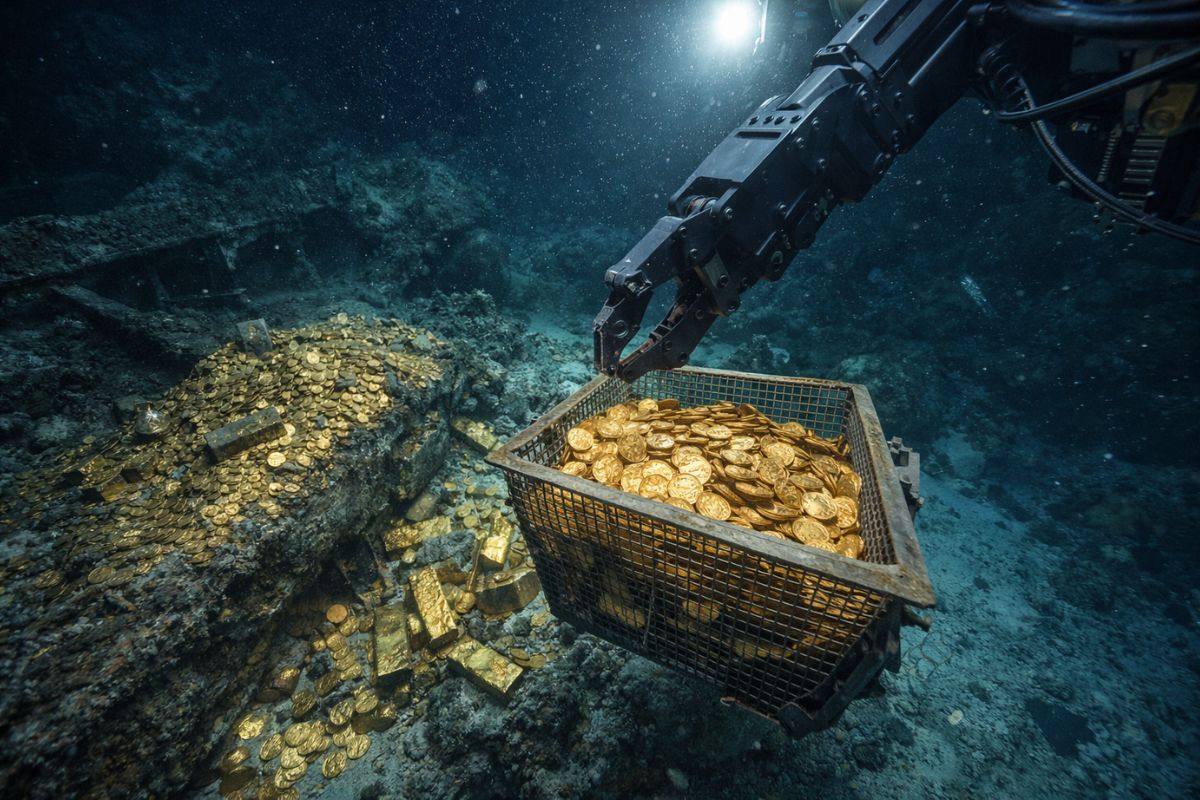
He found the largest gold shipwreck in the United States with tons of the precious metal at a depth of 2,400 meters in the Atlantic and recovered a treasure that no one thought possible to reach, but 500 gold coins disappeared without explanation.
-
The United States has a serious problem with its F-35s: China is already producing fighters at a pace that exceeds American capacity and could manufacture up to 300 aircraft per year before the end of the decade, shifting the global military balance.

-
A retired IT professional built a 22-meter boat in his backyard in Oklahoma with a school bus engine, light pole masts, and handmade watertight doors to become the redneck version of Jacques Cousteau.

-
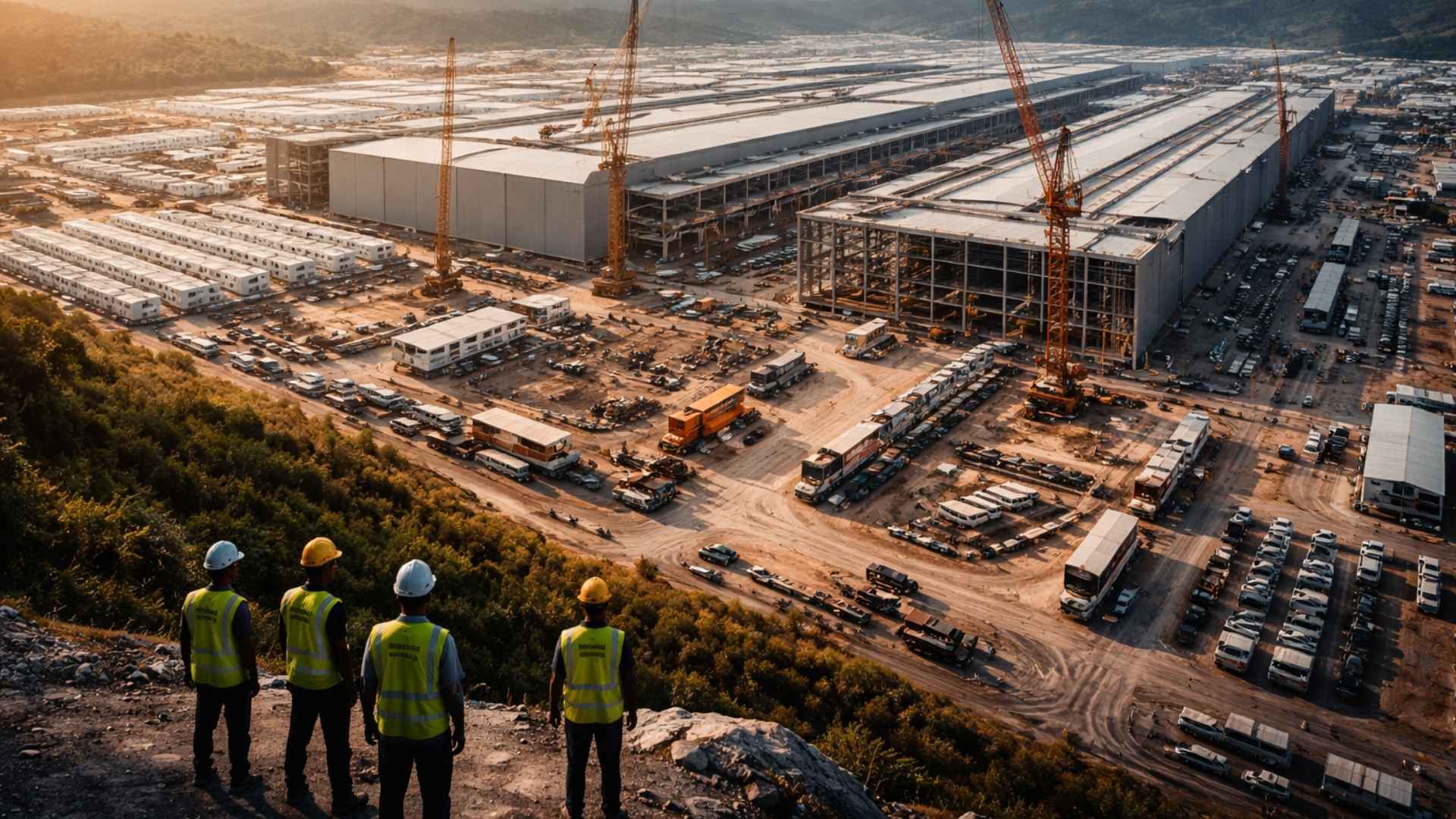
China is building a city in Brazil: a complex with an investment of R$ 5.5 billion comes to light, but allegations involving workers draw attention.

The intense blue color results from the extraordinary density of the ice, compressed over hundreds of years until nearly all air bubbles are expelled. Thus, light penetrates deeply and red tones are lost, leaving only blue. The famous Crystal Cave, also called Anaconda, impresses with its long and winding shape. Access between November and March is done in super jeeps that depart from the glacial lagoon Jökulsárlón, followed by a helmeted and cramponed hike through a true world of crystal ice.
Ta Prohm, Cambodia: The Temple Swallowed by the Jungle

In the heart of the Cambodian jungle, Ta Prohm is the perfect example of how nature and architecture can merge in a surreal way. Built in 1186 by King Jayavarman VII as a monastery dedicated to his mother, the temple once housed around 80,000 people, including thousands of staff and dancers.
What makes Ta Prohm unique are the giant trees, such as Silk Cotton and strangler figs, that have grown over the stone structures after the site was abandoned in the 15th century. Seeds brought by birds germinated on the rooftops, and the roots spread over the walls, portals, and corridors. Today, the temple appears to be slowly embraced and swallowed by the forest. A curious sculpture that resembles a dinosaur adds to the mystery regarding the knowledge of the artisans of the time. Ta Prohm gained even more fame by serving as a backdrop for the movie Tomb Raider, becoming a pilgrimage destination for adventurers.
Hitachi Seaside Park, Japan: A Battlefield Turned Sea of Flowers

In Ibaraki Prefecture, Hitachi Seaside Park is a symbol of the transformation of war into a landscape of peace. The 190-hectare area was once a Japanese military airport during World War II and later an American Air Force shooting and bombing range. After fatal accidents, the local population fought for the territory’s return and succeeded in converting it into a public park in 1973.
Today, the former scene of destruction has become one of the most colorful and surreal places on Earth. Between April and May, about 5.3 million nemophila flowers, known as blue baby eyes, create a translucent blue ocean that seems to merge with the sky and the Pacific Ocean on Miharashi Hill. In autumn, over 40,000 kochia plants turn the hills into a flaming red sea, contrasting with millions of cosmos flowers. Tulips, daffodils, and sunflowers ensure that the park remains a constantly changing natural kaleidoscope year-round.
Darvaza Crater, Turkmenistan: The Door to Hell That Never Goes Out

In the Karakum Desert, a crater 70 meters in diameter has been burning for over five decades, lighting up the night with thousands of flames. The Darvaza Gas Crater, nicknamed the door to hell, originated from a Soviet accident in 1971 when the ground collapsed during drilling for natural gas, swallowing equipment and creating a hole 30 meters deep.
To avoid the leakage of toxic gases, engineers set the methane on fire, thinking the fire would last only a few days. More than 50 years later, the flames continue to roar. In 2013, explorer George Kourounis became the first to descend to the bottom of the crater and collect samples at temperatures above 1000 ºC. Scientists found extremophile bacteria there, suggesting that life can thrive in similar conditions on other planets. In 2019, the Turkmen president himself drove around the crater to dismiss rumors of his death, further reinforcing the surreal aura of the place.
Grand Prismatic Spring, United States: Liquid Rainbow in Yellowstone

In Yellowstone National Park, the Grand Prismatic Spring is a giant hot spring, 113 meters in diameter, that looks like a liquid rainbow seen from space. Temperatures reach 87 ºC at the center, where deep blue water prevails. Around it, green, yellow, orange, and red rings appear, thanks to colonies of thermophilic bacteria that live in different temperature bands.
In 1966, scientist Thomas Brock discovered Thermus aquaticus bacteria in the spring from which the Taq polymerase enzyme was isolated, fundamental for the PCR technique, used decades later in disease tests such as Covid-19. In other words, one of the most surreal landscapes on Earth also revolutionized modern medicine. In 2014, the site made headlines again when a tourist lost a drone in the spring, reinforcing how this natural wonder is both fragile and resilient.
Baobabs of Madagascar: Giants Planted Upside Down

In Madagascar, the Malagasy baobabs rise like ancestral sentinels, with cylindrical and thick trunks that can store up to 140,000 liters of water. Six of the nine baobab species in the world are endemic to the island. The famous Avenue of the Baobabs, with about 25 trees up to 30 meters tall, looks like a corridor of natural columns sculpted by gods.
The strange shapes, with branches resembling roots, fueled the legend that the devil pulled the trees from paradise and planted them upside down. In arid regions, local communities dig into the trunks to create natural reservoirs. There are also baobabs of love, two intertwined trees that represent, according to tradition, an impossible love eternized in the landscape. For the Malagasy, baobabs are the abode of ancestral spirits and central pieces in the island’s spiritual culture.
Pamukkale, Turkey: Cotton Castle and Cleopatra’s Pool

In southwestern Turkey, Pamukkale impresses with its white terraces that look like a cotton castle suspended on a hillside. The formations are the result of thermal springs rich in calcium that, for thousands of years, deposited layers of travertine in steps resembling frozen waterfalls.
At the top of the terraces, the Greeks built Hierapolis, a sacred city founded in the 2nd century BC, which became a famous healing center. Roman ruins still dominate the plateau, including the famous Cleopatra’s pool, where marbled columns fallen by an earthquake in the 6th century remain submerged in bubbling water. However, modern popularity has brought risks. Excessive tourism has dried out part of the terraces, forcing authorities to demolish hotels and restrict access to try to preserve this heritage of humanity before it’s too late.
Tunnel of Love, Ukraine: A Secret Railway Turned Romantic Setting

Near the village of Klevan in Ukraine, an old Cold War industrial railway transformed decades later into one of the most romantic and surreal places on Earth. The Tunnel of Love is a stretch of approximately 4 km where the railway line is completely enveloped by green arches formed by the tree canopies.
Originally, the vegetation was planted to camouflage the transport of military equipment to a secret base. Over time, the train that still circulates there naturally “pruned” the branches, maintaining the tunnel’s perfect shape. Until 2011, the site was little known outside the region. Tourists discovered it by chance, posted photos on social media, and it gained worldwide fame. Legend has it that if a couple walks through the tunnel and makes a sincere wish, the wish will come true.
Alaska Glaciers: Turquoise Pools and Ice Time Machines

In Alaska, some of the planet’s coldest landscapes reveal how ice can also be one of the most surreal elements on Earth. The Matanuska Glacier, about 43 km long and 6 km wide, is the largest glacier accessible by road in the United States and moves about 30 cm per day, constantly reshaping the scenery.
The Knik Glacier, 40 km long, was the setting for a film in the Star Trek franchise and once formed a natural dam that accumulated millions of liters of water released all at once in summer. Colonizers turned this event into a sort of lottery, betting on the date of the rupture. The Columbia Glacier dumps tons of ice into the ocean daily, while Chugach National Park is home to more than 22 tidewater glaciers and a large concentration of bald eagles. Each layer of ice preserves records of thousands of years, turning these glaciers into true crystalline time machines.
Danakil Desert and Dallol, Ethiopia: Natural Mars Laboratory

In northeastern Ethiopia, about 125 meters below sea level, the Danakil Desert is one of the most extreme and surreal places on Earth. It is considered the hottest inhabited place on the planet, with an annual average of 34 ºC and peaks above 55 ºC. At the center of this hellish landscape, the Dallol volcano created, in 1926, a crater filled with acidic and multicolored water.
Thermal springs bubble with water loaded with salt, sulfur, and iron, forming neon green, yellow, and red pools that look like a science fiction set. Unlike other colored locations due to living organisms, the colors here mainly come from the inorganic oxidation of minerals. Lake Gaet’ale, with a salinity of about 43 percent, is one of the saltiest bodies of water on the planet. Even in toxic conditions, researchers have found extremophilic microorganisms that survive in near-total acidity, with a pH close to zero, showing how life can adapt to environments reminiscent of Mars.
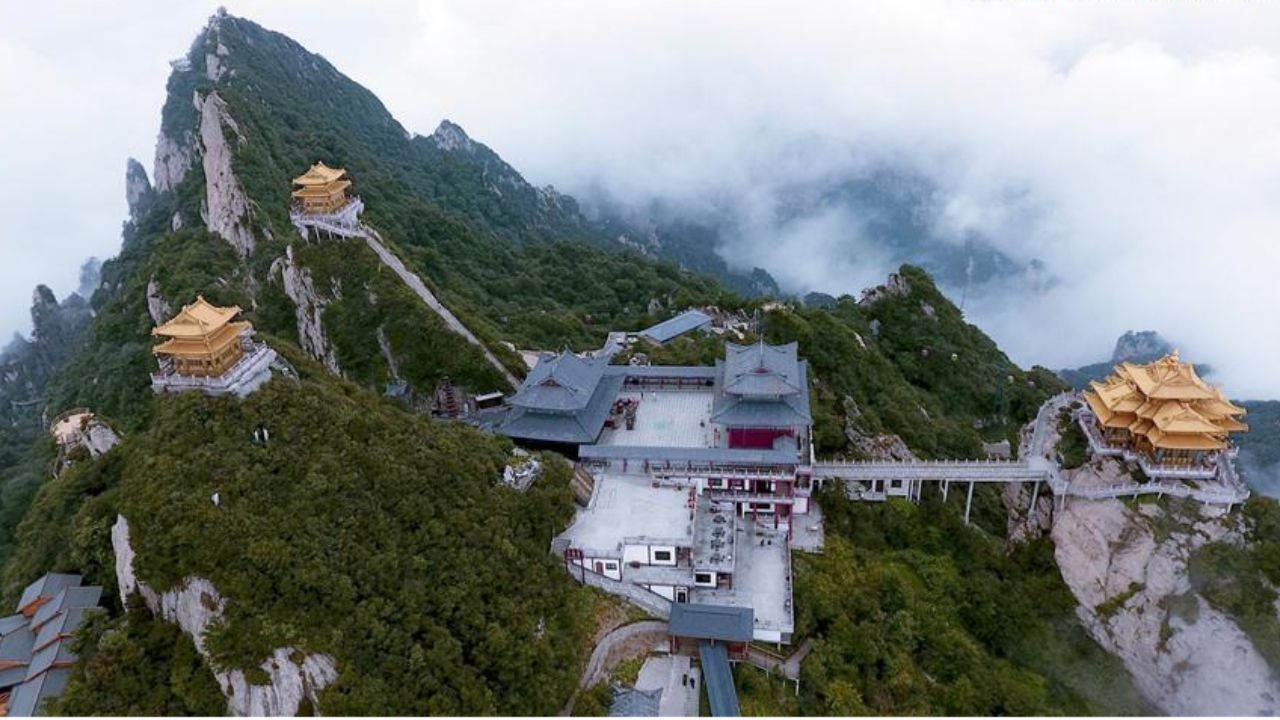
Mount Laojun, China: Golden Temples Above the Sea of Clouds

In Henan Province, Mount Laojun is a sacred taoist mountain that reaches 2217 meters in altitude. The peak is part of a mountain range that rises like a natural sanctuary above the clouds. According to tradition, the philosopher Laozi sought refuge there in search of spiritual enlightenment.
The steep trails ascend through stone and wooden staircases that wind around rocky cliffs, revealing dramatic views at every turn. At the top, golden taoist temples, like those of Laozi and Yuhuangding, appear to float above the sea of clouds, especially in winter when snow transforms the landscape into a crystal realm. Walking there gives the sensation of walking in the sky among the gods, uniting extreme landscape, spirituality, and a view that seems otherworldly.
Cappadocia, Turkey: Fairy Chimneys and Balloons in a World Sculpted by Lava

Cappadocia in Turkey is one of the most famous surreal places on Earth, with rock formations that resemble fairy tale castle towers. About 14 million years ago, volcanic eruptions covered the region with ash that solidified into tuff, a soft rock. A layer of more resistant basalt formed above, and erosion sculpted the so-called fairy chimneys, columns that can reach 40 meters tall with basalt “hats.”
The Uçhisar Castle was carved into a single giant rock and serves as a natural lookout. The Love Valley draws attention for its oddly shaped, almost alien formations. In Göreme, Byzantine churches carved into the rock preserve millennia-old frescoes. At dawn, hundreds of hot air balloons color the sky, and the Göreme National Park has established itself as the world epicenter for balloon flights, with hundreds of thousands of tourists experiencing it every year.
Underwater Waterfall of Mauritius: Optical Illusion at the End of the Oceanic Plateau

On the Le Morne Peninsula in Mauritius, one of the most impressive aerial images in the world shows what looks like a giant waterfall crashing into the ocean. In fact, it is an optical illusion created by sand and sediments sliding over the edge of a submarine plateau.
The island is atop a plateau about 150 meters deep that ends in an ocean abyss more than 4,000 meters. Ocean currents continuously drag sand over the edge, creating the effect of a submerged waterfall that falls into the infinite blue when viewed from above. The experience is best appreciated on helicopter or seaplane flights, with the 556-meter high Le Morne Brabant mountain, a UNESCO heritage site, as a backdrop. The result is one of the most surreal visual phenomena ever recorded in the ocean.
Bonifacio, Corsica: A City Hanging on White Cliffs

At the southern tip of Corsica, just 12 km from Sardinia, Bonifacio seems to defy gravity. The medieval town was built 70 meters high on white limestone cliffs that drop vertically into the turquoise sea. Viewed from the sea, Bonifacio appears to be a city floating on a luminous cliff, with houses literally on the edge of the abyss.
One of the most impressive elements is the King of Aragon’s staircase, with 187 steps cut into the cliff face. Legend has it that it was carved in a single night by the troops of Alfonso V of Aragon, but in reality, it is a natural fissure enhanced over the centuries for access to water. Seaside caves sculpted by erosion, like the famous cave with an opening in the shape of Corsica Island, can only be visited by boat, reinforcing the impossible scene between sky and sea.
Sigiriya, Sri Lanka: An Impossible Palace on Lion Rock

In Sri Lanka, Sigiriya rises 180 meters above the jungle like an isolated monolith. Known as Lion Rock, the formation houses an ancient fortress built in the 5th century by King Kassapa, who murdered his father and decided to erect a virtually inaccessible palace atop the rock.
To ascend, staircases carved into the stone wound through sections with nearly 100-degree inclines, passing by water gardens considered among the oldest in the world. In the final section, visitors pass between two giant claws carved into the rock, remnants of a colossal lion’s head that has collapsed. Centuries-old frescoes depict celestial women, and a polished wall that functions as a mirror guards graffiti over a thousand years old, proving that Sigiriya has long been a fascinating destination since the Middle Ages. At the top, the palace ruins offer a 360-degree view of the jungle, creating the sensation of being in a castle suspended between earth and sky.
Lençóis Maranhenses, Brazil: The Only Humid Desert on the Planet

About 250 km from São Luís, the Lençóis Maranhenses form the largest dune field in South America, spanning 155,000 hectares of white sand interspersed with thousands of crystal-clear lagoons. More than just a postcard, the park is one of the most incredible surreal places on Earth, a true humid desert.
For millennia, Atlantic winds have pushed quartz sand inland, forming dunes that reach heights of 40 meters and can shift up to 10 cm per day. Between January and June, rains fill the depressions between the dunes, creating over 7,000 temporary lagoons in shades of turquoise and emerald green. A layer of sedimentary rock prevents the water from fully infiltrating, keeping the lagoons full for months. In 2024, the Lençóis were recognized as a natural heritage of humanity by UNESCO, consolidating the site as one of the most unique landscapes on the planet.
Mount Huashan, China: Deadly Trail on the Most Dangerous Mountain in the Sky

In China, Mount Huashan has become famous as the most dangerous mountain under the sky. Standing at 2154 meters high with five sacred peaks, the site is home to one of the world’s most frightening trails. The most famous section is the plank walk, a pathway made of wooden planks just 30 centimeters wide, fixed to the side of a cliff over 2,000 meters high.
The trail is said to have been built more than 700 years ago by a Taoist monk seeking immortality, who fixed planks into supports hammered into the rock. Before even reaching the plank walk, visitors face vertical staircases almost 90 degrees steep, narrow passages that only fit one person at a time, and the Black Dragon Ridge crest, about 60 centimeters wide and steeply inclined. It is estimated that dozens of people die there every year, although the government does not release official statistics. Among ancient temples and deep abysses, Mount Huashan appears a blend of sacred sanctuary and adventure park on the brink of death.
Sossusvlei and Deadvlei, Namibia: Rusty Dunes and 900-Year-Old Trees

In the Namib Desert, one of the oldest in the world, Sossusvlei concentrates giant dunes of reddish sand, tinged by oxidized iron over millions of years. The Big Daddy, at 325 meters tall, dominates the scenery, which changes in hue as the sun moves, creating a spectacle that ranges from intense orange to deep red.
Next door, Deadvlei is one of the region’s most iconic scenes. It is a white clay basin dotted with acacias that have been dead for over 900 years, which did not decompose due to the extremely dry climate. The dark trunks remain standing, like natural sculptures, contrasting with the light soil and rusty dunes in the background. The result is an image that seems staged, yet it is one of the most real and surreal landscapes on Earth at the same time.
Salar de Uyuni, Bolivia: The Largest Mirror in the World

In the Bolivian highlands, at an altitude of 3656 meters, the Salar de Uyuni stretches for over 10,500 km² like a white sea of salt. During the dry season, the horizon appears infinite. In the rainy season, between December and March, a thin layer of water covers the surface, transforming the salt flat into the largest natural mirror on Earth.
At this time, the sky and ground merge into a unique image. It is hard to distinguish where the land ends and where the firmament begins, and walking there feels like floating within a cloud. The salt flat holds about 10 billion tons of salt and contains a significant portion of the world’s lithium reserves, essential metal for cellphone and electric car batteries. The plain is so perfect and flat that it serves as a reference for calibrating satellites. Not surprisingly, astronauts can easily identify the salt flat from space, and even Neil Armstrong would have been impressed to see it from above.
Horma Canyon, Turkey: Walkway Nailed to Rock to a Hidden Waterfall

In the Küre Mountains, in the Pınarbaşı district, the Horma Canyon has remained virtually untouched for centuries. The Zara River has carved out a steep and narrow gorge 4 km long, surrounded by limestone cliffs and dense vegetation. For a long time, the site was inaccessible, guarding its secrets from human eyes.
The transformation came with a bold solution: the construction of a 3 km wooden walkway literally nailed to the canyon walls. The structure was anchored by drilling into the rock and securing steel supports, allowing visitors to walk suspended over the river, inside the narrow gorges. The path ends at the Ilıca waterfall, with a drop of about 15 meters into a pool of crystal-clear waters. In autumn, the canyon becomes a spectacle of golden, red, and orange leaves contrasted with the gray rock and turquoise water. Part of the Küre Mountains National Park, the area is a biodiversity hotspot, with hundreds of plant species and rich fauna, uniting adventure and conservation in one of the most impressive settings in Turkey.
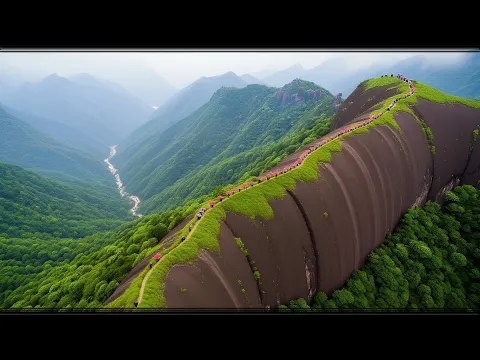

From the blue ice of Iceland to the red dunes of Namibia, from the jungle-swallowed temples of Cambodia to the crystal-clear lagoons of the Lençóis Maranhenses, these 20 surreal places on Earth show that we still know little about how far nature can go. Some have changed science, others hold ancient legends, and all have the power to make us rethink what we consider possible on this planet.
Now tell me in the comments: which of these 20 surreal places on Earth would you put at the top of your travel list and why?






Seja o primeiro a reagir!