





 Portuguese
  English
  Spanish
  6 min of reading
  0 comments


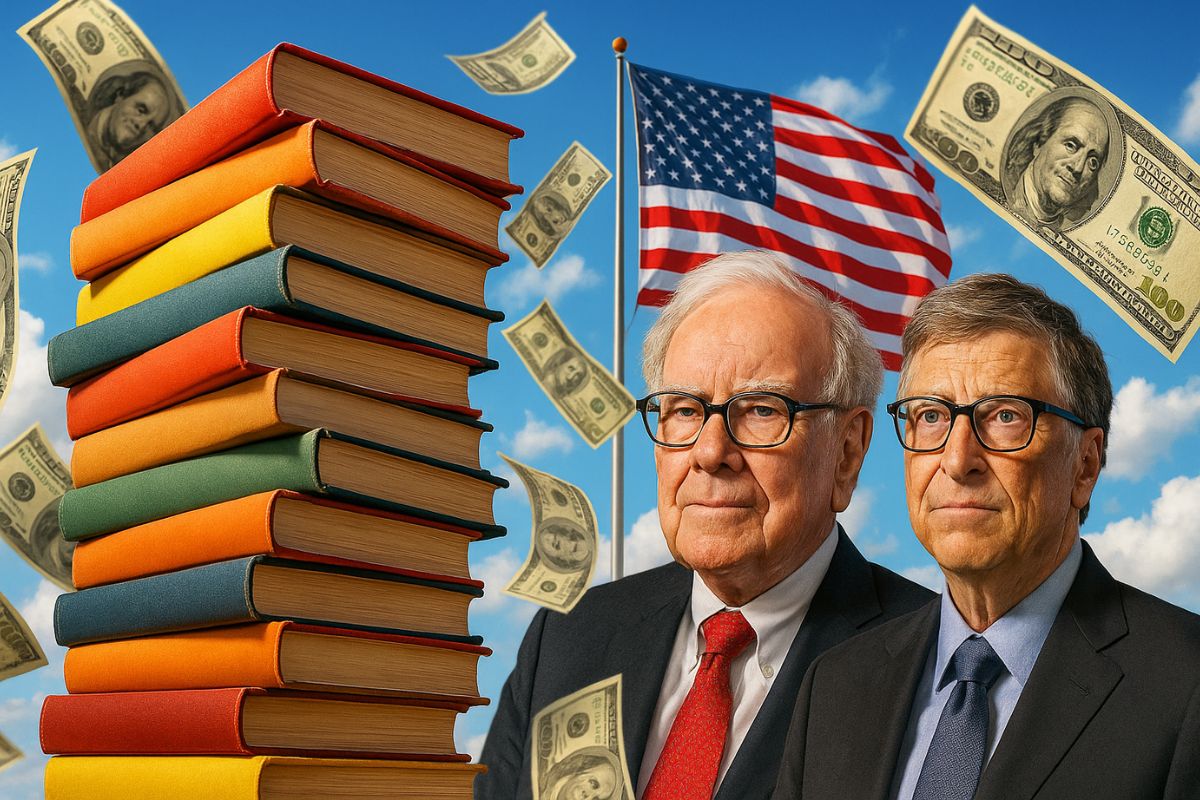
From Warren Buffett to Bill Gates, the “Super Readers” Inspire a Curated List of 25 Books for 2025 that Unite Money, Mindset, Strategy, and Habits: A Practical Guide for Those Who Want to Grow Without Shortcuts.
“25 Books for 2025” is not a magic promise; it is a reading plan inspired by those who have already made it. Warren Buffett often says he reads hundreds of pages a day. Bill Gates keeps up a routine of about 50 titles a year. According to investor Thiago Lolkus Nigro, the message is clear: reading changes how you decide, invest, and lead. The selection below gathers works cited and defended by major names in the market, focusing on enriching vision and only then the bank account.
Throughout this article, you will find the 25 books for 2025 organized by objective: mindset and purpose, finance and investments, strategy and antifragility, habits and performance, and timeless classics. The idea is to turn reading into practice, using what you read to sell better, choose assets calmly, build discipline, and shield decisions when the scenario gets turbulent.
Purpose, Mindset, and Positioning: The Starting Point
Anyone looking to grow wealth consistently must start with why.
-
China has deployed more than 1,400 fishing boats in formation, creating a barrier of 320 kilometers at sea, and the whole world wants to know if this is fishing, a military exercise, or a message of war.

-
Spain surprises the world by erecting 62 artificial dunes, mixing sand with natural remains of posidonia, and causing the structure to lose only 1.4% of its volume in 1 year.

-
With 16 Bulava missiles, improvements in acoustic stealth, and a design focused on silent patrols, Russia’s nuclear submarine was born to ensure Moscow’s invisible retaliation and has become one of the pillars of its maritime strength.

-
‘Populous’ city in Rio among the worst in Brazil in national ranking and exposes silent development crisis.


In Start With Why (Simon Sinek), the thesis is crystal clear: brands and people who communicate their purpose create loyalty, not just sales.
This applies to career, company, and even “selling a pen”: when the reason is clear, the offer gains value.
In a similar vein, The Secrets of the Millionaire Mind (T. Harv Eker) confronts old beliefs about money. Before increasing income, one must grow in understanding.
The author proposes “wealth files” mental and practical habits that become a compass in daily life. Replacing “I can’t” with an action plan may seem simple; applied consistently, it changes the game.
Strategy That Becomes Execution: From Good to Excellent, Even Under Pressure
Companies Built to Last (Jim Collins) explains why some businesses thrive for decades while others disappear.
The “hedgehog concept” focus on the intersection of what you love, what you do best, and what drives profitability helps say “no” methodically, to say “yes” to what truly scales.
Meanwhile, Antifragile (Nassim Taleb) offers a key insight for uncertain times: it’s not enough to endure chaos; it is possible to become stronger because of it.
This philosophy applies to career, operations, and portfolio: reducing exposure to fatal drops and leaving space for asymmetric gains is the heart of antifragility.
Crises, Cycles, and “Black Swans”: How Not to Be Caught by Surprise
In The Changing World Order (Ray Dalio), reading about cycles of empires, debt, and productivity helps understand why some periods are tougher and how to protect wealth along the way.
Reading the past to act in the present is the honest summary of the book.
Complementing this, The Black Swan (Taleb) reminds us that unlikely shocks change everything and that the investor’s task is not to predict but to build margins of safety.
Those who plan only for the “normal” pay dearly when the rare occurs.
Investments: From Basics That Work to Refinements That Separate the Excellent
To start right, The Intelligent Investor (Benjamin Graham) remains indispensable: discipline, margin of safety, and long-term horizon.
It is the antidote to emotional fluctuation.
In stock selection practice, The Magic Formula (Joel Greenblatt) simplifies: high return on capital + attractive price.
It’s a straightforward method to find profitable companies while paying less for them. Common Stocks and Uncommon Profits (Philip Fisher) adds the “how”: talk to customers, suppliers, and teams to understand the soul of the business, not just the balance sheet.
Want a complete map of winning styles? The Warren Buffett Way (Robert Hagstrom) unpacks the theories of the greatest of all; The Peter Lynch Way shows how to observe everyday life to find opportunities before the consensus.
For the passive portfolio, The Little Book of Common Sense Investing (John Bogle) explains why ETFs and low costs beat most in the long run.
Habits and Compound Effect: Small Steps That Yield Giant Results
The Compound Effect (Darren Hardy) is almost a “manual of consistency”: small actions, repeated, become structural change. This applies to workouts, studying, prospecting clients, and managing expenses.
It’s not luck; it’s rhythm.
To maintain the rhythm, The Power of Habit (Charles Duhigg) teaches how to reprogram trigger, routine, and reward.
And How to Win Friends and Influence People (Dale Carnegie) reminds us: results depend on people respectful and genuine communication opens doors that technical competence alone cannot.
Financial Education Without Shortcuts: Principles That Cross Generations
Rich Dad Poor Dad (Robert Kiyosaki) popularized a simple idea: buy assets, avoid liabilities.
There is discussion around the book, but the principle of building wealth remains valid: save, invest, reinvest.
From Zero to Million (Thiago Nigro) organizes the path into three pillars: spend wisely, invest better, and earn more and retrieves an unpopular truth: it’s not by cutting “the coffee” that you get there; it’s by designing a system that works for your life.
To test beliefs, The Zurich Axioms (Max Gunther) challenges the excess of diversification, warns about averaging down in the wrong position, and reinforces flexibility above attachment.
It’s a read to think for yourself.
Numbers Tell Stories and Stories Give Meaning to Numbers
In Narrative and Numbers (Aswath Damodaran), the lesson is that valuation does not exist without narrative, and narrative without numbers becomes fantasy.
The balance between credible story and well-made accounts explains why companies without profit can be worth billions and when this does not make sense.
Classics of Strategy and Principles of Wealth: The Foundation That Doesn’t Age
Think and Grow Rich (Napoleon Hill) talks less about money and more about clear goals, productive obsession, and support network.
The Art of War (Sun Tzu) applies to business, negotiation, and time management: to win without wasting energy.
The Richest Man in Babylon (George S. Clason) delivers simple and eternal principles pay yourself first and make your gold work.
And finally, Proverbs (Bible): practical wisdom about work, prudence, and character. It’s a read for a cool head: better decisions today avoid costly regrets tomorrow.
How to Use the 25 Books for 2025 (And Not Just “Collect Covers”)


To turn “25 Books for 2025” into results, divide the year into 5 blocks (one for each theme) and set bi-weekly goals.
Note one action per chapter (e.g., “increase contribution by 1 percentage point”, “create checklist of thesis”, “have 3 conversations with clients”). Review monthly what you applied without review, reading becomes entertainment.
Practical Tip: choose 1 title on mindset, 1 on investments, 1 on habits, 1 on strategy, and 1 classic for each bimonthly period.
Five books every two months wrap up the year with 25 read and applied. The goal is not speed; it is transformation.
Reading is the cheapest and most powerful leverage that exists. The curation of the “25 Books for 2025” was designed to broaden repertoire, discipline decisions, and sustain wealth over time. Now it’s up to you: which of these books will you start this month? Which title has already helped you make money or avoid a major error?
Let us know in the comments which reading habit you will adopt in 2025 and what results you expect to see by December. Let’s exchange experiences from those who are applying and reaping in real life.








Seja o primeiro a reagir!