





 English
  Francês
  Alemão
  Italiano
  Japonês
  Norueguês
  Portuguese
  Spanish
  3 min of reading


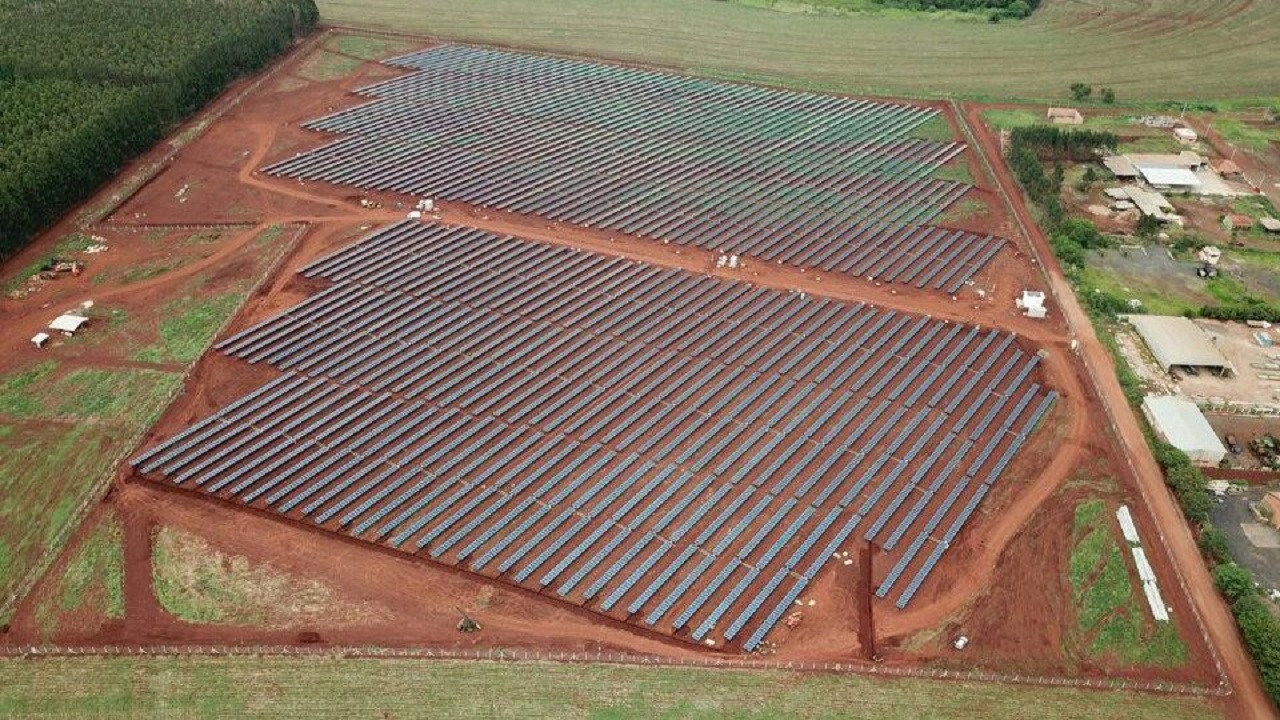
2W Energia Partners With GreenYellow to Build 7 Solar Power Plants in 7 Brazilian States, Generating a Total of 35 MW of Installed Capacity.
This Thursday (4), 2W Energia signed a contract with GreenYellow, a French company, to provide solar energy in 7 states of the country starting next year under the distributed generation (GD) model. The contract provides for the lease of 7 plants with a capacity of 5 MW each, totaling 35 MW over fifteen years from the start of commercial operations. The solar power plants are located in the states of Mato Grosso do Sul, Goiás, Mato Grosso, Bahia, São Paulo, Ceará, Piauí, and São Paulo, where 102 GWh of solar energy will be available to customers annually.
GreenYellow Will Be Responsible for the Construction of the Solar Plants
The solar energy generated is equivalent to the consumption of 52,000 homes and will reduce the emission of more than 10,000 tons of polluting gases. 2W has been providing solar energy under the distributed generation model since last year, when it launched its credit marketplace, where companies or individuals can join cooperative shared GD centers or consortiums in Minas Gerais.
The venture is also expected to reach the state of Pernambuco, although there is no launch date yet.
-
A study reveals the expansion of renewable energy procurement in Brazil and shows how companies are taking advantage of opportunities to reduce expenses, ensure energy efficiency, and strengthen strategic environmental commitments.

-
Mato Grosso do Sul excels in the sugar-energy sector: the state reaches a milestone of 22 operating mills and accelerates the production of clean energy in MS with a focus on sustainability.

-
National energy dilemma: Brazilians support clean energy but reject increases in tariff costs to finance the sustainable transition.
-
Research indicates that Brazilians support clean energy and wish to advance in the energy transition, but reject paying more on their electricity bill, showing a direct conflict between cost and sustainability.


GreenYellow will be responsible for the initial investment, construction, and management of the seven photovoltaic farms involved in the project.
According to Claudy Marcondes, Vice President of Operations and Marketing at 2W Energia, this solar energy partnership with GreenYellow is an essential step towards transforming the relationship between energy and society, moving towards a model that offers more efficiency, sustainability, and freedom.
Brazil Reaches 12 GW in Distributed Generation
According to Marcelo Xavier, President of GreenYellow in Brazil, agreements like this are essential for expanding solar energy generation, which is a clean and renewable source, and also for making access to the resource more popular among small energy consumers in one of the fastest-growing modalities in the country.
Distributed Generation reached the milestone of 12.2 GW of installed capacity in July, where approximately 11.9 GW are from photovoltaic installations, according to statistics from Aneel.
The state of Minas Gerais is leading the ranking of states, with about 2 GW of installed capacity, followed by São Paulo (1.6 GW) and Rio Grande do Sul (1.4 GW). In just the first 6 months of 2022, 2.9 GW of GD was added, with more than 316,000 new photovoltaic installations and 19 thermal power plants and four wind farms.
Learn About 2W Energia and GreenYellow
Being in Brazil since 2013, GreenYellow is an energy solutions company whose mission is to drive the energy transition for its clients through a global and multi-service program, providing solutions in the fields of Energy Efficiency, Energy Trading, Solar Energy, and Digital Solutions.
2W Energia, on the other hand, is a platform aimed at helping companies and consumers save money and also make the world a better place to live. With over 15 years in the national market, 2W Energia offers innovative solutions for those seeking clean and renewable energy, energy efficiency, smart metering, and zero carbon emissions.
Thus, it drives its assets to ensure sustainability, competitiveness, savings, efficiency, and simplicity in the use of one of the world’s most precious resources.










Seja o primeiro a reagir!