





 Português
  Inglês
  Espanhol
  4 min de leitura
  12 comentários


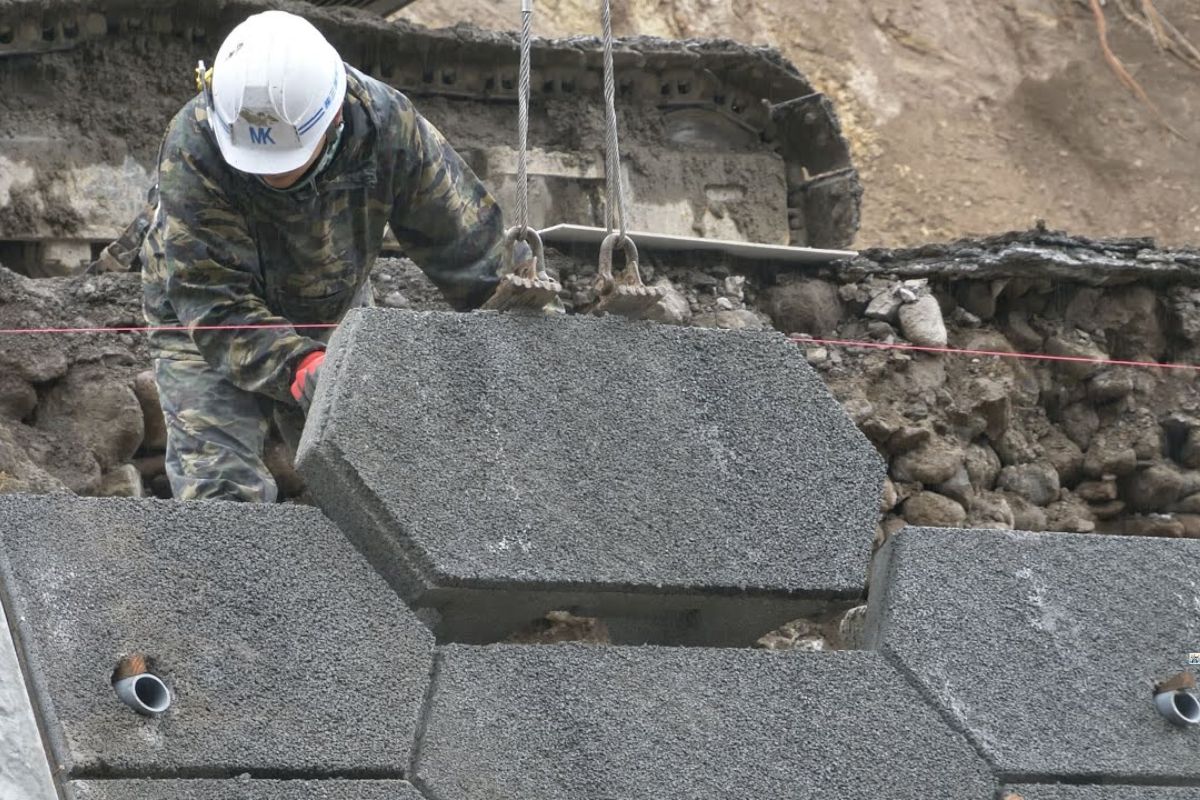


With Precision And Discipline, Japanese Engineers Completed A Complex Recovery Project Involving The Installation Of 400 Concrete Blocks, Based On Crushed Stone Layers And Reinforced With Concrete Formwork, Ensuring Structural Stability And Safety To The Affected Areas.
The reconstruction of areas affected by natural disasters has gained a new chapter of efficiency in Japan. Three Japanese engineers and their teams completed an extensive recovery project that involved the placement of 400 concrete blocks weighing one ton, used to reinforce damaged slopes and walls. The work integrates a technical plan that combines industrial precision with sustainable civil engineering practices.
Each block was set on a base of crushed stone carefully compacted and secured with concrete formwork, resulting in a continuous, drainable, and high-resistance structure. The project symbolizes the union of constructive tradition and innovation, transforming a scenario of destruction into a landmark of recovery and stability.
The Reconstruction Method Adopted By The Japanese Engineers
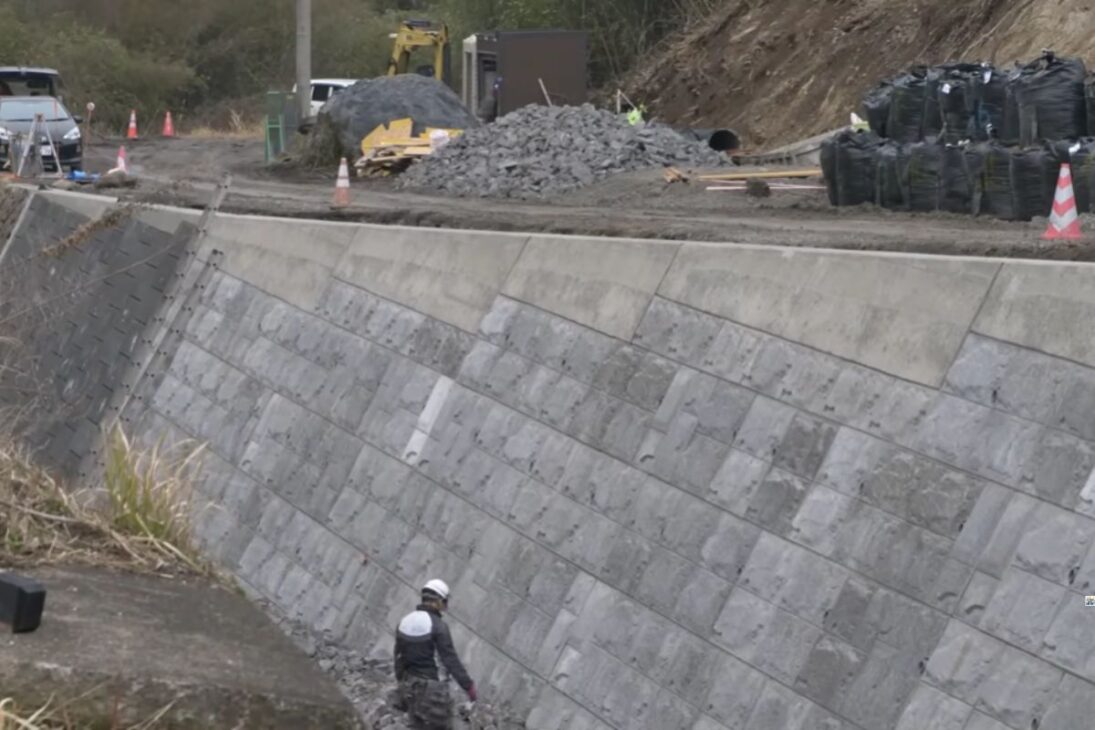
The Japanese engineers divided the work into two phases to ensure efficiency and safety.
-
While Argentina relies on the USA to provide communications, data transmission, and electronic warfare for the F-16, Brazil is accelerating with the Gripen and integrating the Link-BR2, a national technology that strengthens air defense.

-
The daily shower that seems harmless now worries specialists: a shower uses 6 to 15 liters per minute and is at the center of the water crisis.

-
Goodbye capsule coffee maker: consumers around the world are replacing the old item with this machine that grinds beans on the spot, reduces waste, and cuts recurring coffee expenses.

-
Measuring about 44 meters in length, with a nuclear reactor and retractable wheels in its hull, the NR-1 was the only atomic research submersible in the world capable of moving along the ocean floor and remaining submerged for weeks.

In the first phase, large foundation blocks were installed, responsible for supporting the weight of the upper layers and absorbing the impact of water.
In the second phase, the SV blocks, smaller and lighter versions of concrete blocks, were used in the lower parts of the wall, where the current is gentler.
Each block was positioned with the aid of cranes and manually aligned, respecting precise millimeters.
This type of recovery project requires synchronization between the stages of concreting, drainage, and structural reinforcement, along with strict control over the curing time of the material.
The Importance Of The Crushed Stone Base
The stability of the structure starts at the foundation.
Under each concrete block, the engineers applied a layer of crushed stone 30 centimeters thick, compacted in successive stages.
This technique allows for efficient drainage and prevents the accumulation of moisture, one of the main factors of erosion in structures exposed to water.
In addition to improving drainage, crushed stone acts as a kind of structural cushion, distributing weight and absorbing impacts.
The precision in leveling this base is essential, and each section is measured repeatedly before placing the next blocks, ensuring continuity and stability throughout the wall.
Concrete Formwork: The Reinforcement That Gives Shape And Resistance
After the installation of the blocks, the team began the molding process with concrete formwork, used to join the pieces and form a unique structure.
Inside the formwork, concrete is poured and vibrated to eliminate air bubbles and fill all spaces, ensuring total adhesion between the blocks.
This process is repeated several times, creating interconnected layers.
The concrete formwork reinforces the structure and increases resistance against hydraulic pressure and vibrations, being a decisive step for the durability of the system.
When the material hardens, the surface is leveled and the section goes to technical inspection before the next phase is released.
Visible Progress In The Recovery Project
With 78 days of continuous work, the recovery project reached its main milestone: all 400 concrete blocks were installed and reinforced.
The comparison between the first and the last day shows a transformed scenario, where the old erosion gave way to a solid and leveled wall.
In addition to its structural function, the recovery project has symbolic value, representing the union of technique and social reconstruction.
Each completed meter restores confidence to the communities that depend on these barriers for protection against floods and landslides.
Precision And Resilience As Marks Of Japanese Engineering

The work of Japanese engineers in this project reflects the standard of excellence that defines engineering in the country.
The combination of crushed stone, concrete formwork, and detailed planning demonstrates how technology can be applied practically and humanely.
The results go beyond physical reconstruction: they restore safety and hope to the affected areas.
The method, replicable in other countries, shows that rebuilding is about more than erecting structures; it is about restoring trust in the territory and in human capacity to start over.
Do you believe that techniques like those of the concrete blocks could be used in Brazil to strengthen areas vulnerable to flooding? Leave your opinion in the comments and join the discussion on resilient engineering solutions.






Silêncio, as pessoas estão finalmente aprendendo que engenharia tem função social, não é só objeto de especulação imobiliária.
Eu acredito perfeitamente! Os engenheiros japoneses são muito bons, mas no Brasil quase nada vai adiante, porque, infelizmente a corrupção está em todo lugar. É vergonhoso, mas é uma grande verdade. Condições de fazer as coisas direita tem.
Sim, poderia se as autoridades se importassem de deixar um legado para a população