





 Portuguese
  English
  Spanish
  3 min of reading
  2 comments


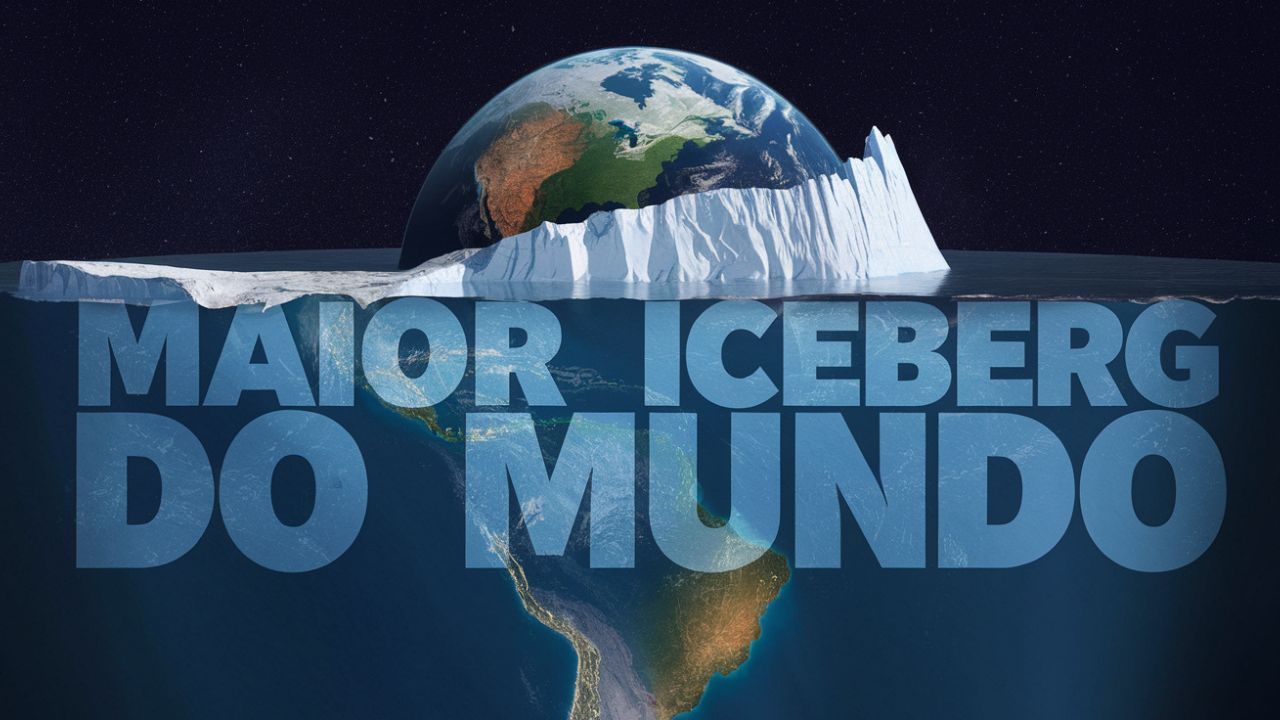


With three times the size of the city of São Paulo, the largest iceberg in the world, called A23a, broke free after decades aground and is now drifting, facing warmer waters that could fragment it into giant pieces.
Have you ever imagined a piece of ice so large that it makes São Paulo look small? This is A23a, the largest iceberg in the world, which has finally freed itself from its fixed position in Antarctica and is heading north. But why is this so important? The journey of this giant can teach us a lot about the impact of climate change on our planet.
The Giant A23a: Meet the Largest Iceberg in the World
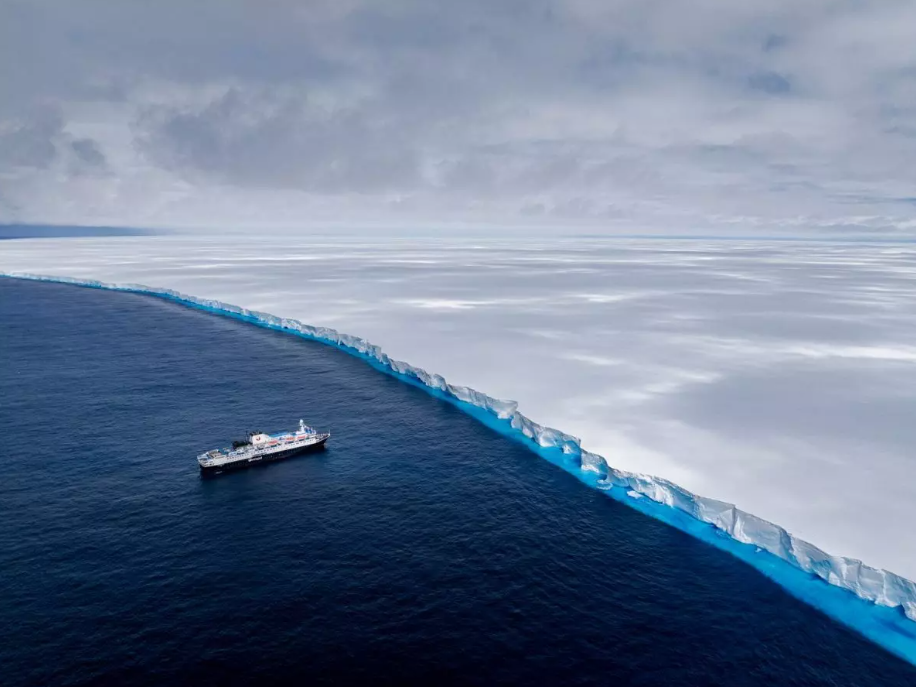
A23a is gigantic. It has an area three times larger than the city of São Paulo and weighs almost 1 trillion tons. This ice monster broke away from the Filchner-Ronne Ice Shelf in 1986 and has since intrigued scientists and environmentalists. Imagine a floating mountain, wandering across the ocean and altering ecosystems wherever it goes.
Despite breaking free nearly four decades ago, A23a remained “aground” in the Weddell Sea for over 30 years. It only began its journey in 2020, but not without challenges. Recently, it spent months spinning in one spot, stuck in a phenomenon known as a Taylor Column, before finally setting off.
-
While restoring a historic mansion from 1910, a brick structure with an old turbine that generated energy from the Rio do Testo emerged, along with a hidden door and a rare floor concealed under layers of wax.
-
In a flooded well, archaeologists found a 1,700-year-old Roman egg that still contains clear and yolk intact inside the very thin shell.

-
Something is happening around the Earth: Inside the huge explosion of fireballs in 2026

-
A hot air bubble coming from Argentina expands over Brazil, causing thermometers to exceed 38 degrees with a thermal sensation of 40 degrees in late March, affecting 6 states at once.


Why Did A23a Get Stuck for Decades?
The Taylor Column, a kind of “water whirlpool” that forms over submerged mountains, was responsible for holding A23a for quite some time. This natural phenomenon kept it spinning around itself, as if trapped in an endless dance.
Now, the largest iceberg in the world is finally adrift, following the Antarctic Circumpolar Current. This “invisible river” in the ocean will take it to warmer waters, headed toward the subantarctic island of South Georgia, where it will likely start to fragment.
Impacts on the Environment and the Ecosystem
When giant icebergs like A23a move, they not only change the maritime landscape but also the chemical balance of the ocean. Fragments and melting can release nutrients that stimulate marine life and affect carbon absorption in the water.
Upon reaching warmer waters, A23a will break into smaller pieces, altering local ecosystems. These fragments can be both a blessing, providing nutrients for microorganisms, and a challenge, creating obstacles for navigation and marine life.
The Future of the Largest Iceberg in the World
If it follows the same path as other large icebergs, A23a may reach South Georgia. There, it will face warmer waters, fragmenting and gradually disappearing. This may take years, but the impact on local ecosystems will be significant.
In addition to the local impact, the melting of the largest iceberg in the world symbolizes the ongoing effects of climate change. Monitoring its trajectory will help scientists predict future climate and ocean patterns.
A23a is not just a floating mountain of ice; it is a reminder of human impact on the planet and the need to better understand natural phenomena. Following its journey helps scientists predict climate changes and alerts us to the importance of caring for the environment.








Essa movimentação do “A23a” causará alguns impactos no planeta:
a) volume de água doce no mar causará aumento nos efeitos climaticos extremos;
b) vai colaborar no aumento dos niveis dos oceanos;
c) diminuição de sua “massa” pode causar “alivio” na “pressão” da crosta terrestre (as placas) que pode causar terremotos e erupções vulcânicas extremas, que poderá ocasionar o inicio do exterminio da raça humana, como já ocorreu em épocas passadas, em menor intensidade.
Assim caminha a humanidade.
Infelizmente nós humanos , contaminamos tudo que a natureza nos
deu .