





 English
  Francês
  Alemão
  Italiano
  Japonês
  Norueguês
  Portuguese
  Spanish
 6 min of reading


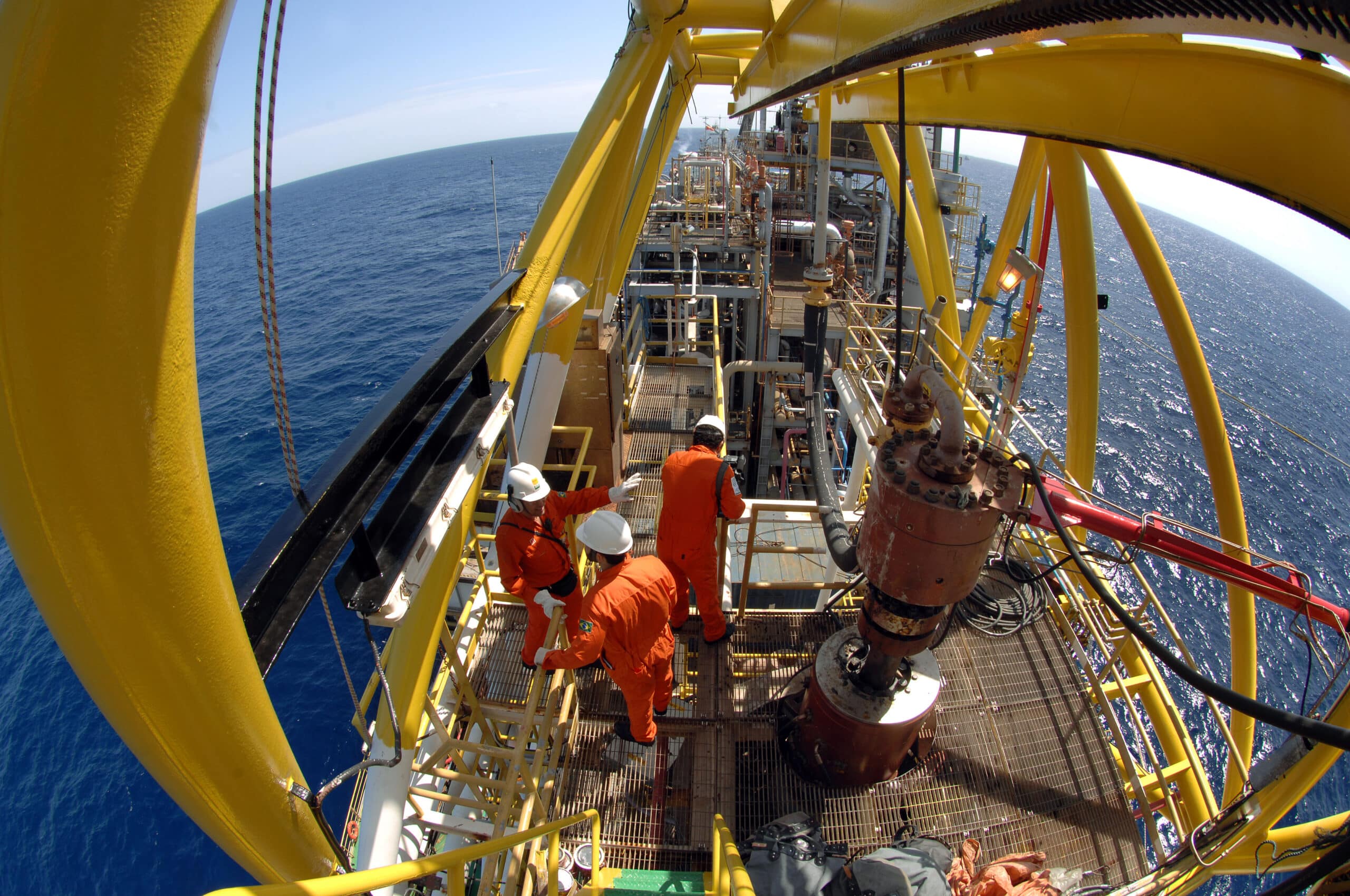
Brazil’s Largest Oil Company Announces US$13 Billion Investments in Campos Basin by 2025, and Rio de Janeiro Will Benefit from Many Jobs, Royalties, Special Participations, and Dividends
According to what we announced at Click Petroleum and Gas, Brazil’s largest oil company, Petrobras, continues to invest more and more in the Campos Basin, bringing positive impacts, primarily, to 13 municipalities in the Lagos Region and Northern Fluminense: Araruama, Armação dos Búzios, Arraial do Cabo, Cabo Frio, Campos dos Goytacazes, Carapebus, Casimiro de Abreu, Macaé, Quissamã, Rio das Ostras, São Francisco de Itabapoana, São João da Barra, and Saquarema.
Read Also
- Petrobras Announces US$13 Billion Investments in Campos Basin by 2025, and Rio de Janeiro Will Benefit from Many Jobs, Royalties, Special Participations, and Dividends
- First and Only Autonomous Motorhome with Electric Power, Air Conditioning, Continuous Hot Water, and No External Charging Dependency Is Manufactured in Brazil
- Brazilian Oil and Gas Institute Defends Brand Loyalty for Fuel Stations and Says Proposal Approved Yesterday Does Not Benefit Consumers in Terms of Price
- Raízen Announces Acquisition of Paraguayan Company for US$130 Million and Celebrates Sales of 460 Million Liters of Cellulosic Ethanol over Nine Years
It is the innovation hub in deep waters that positioned Petrobras internationally and laid the technological foundations for the discovery of the pre-salt. In Rio de Janeiro, operating in both post-salt and pre-salt, there are more than 270 producing wells and 28 offshore platforms.
On August 13, the Campos Basin will complete 44 years of production. To celebrate the date, despite a long list, we selected 10 facts that strengthen Petrobras’s presence in the Campos Basin.
-
Petrobras announces new oil discovery in the pre-salt of the Campos Basin and reinforces Brazil’s prominence with high-quality reserves that can increase production and energy revenues.

-
Alert in the fuel market: Analysts and a former director of ANP warn that oil prices may worsen in the coming months due to global instability.

-
Ocyan brings executives and digital solutions to Macaé Energy 2026 and highlights offshore expansion with Nexio and a new base in Macaé.

-
Petrobras advances 4.6% with rising oil prices and the dollar, reigniting the debate on macro risks, pricing policy, and fiscal impact in Brazil.

Check Below the Ten Facts That Strengthen the Presence of the Oil Giant Petrobras in the Campos Basin
27 More Years
Two contracts for supplying flexible lines that will be used in the revitalization project of the Marlim and Voador fields were signed in June. Of the total of 448 km of flexible lines for the project, 280 km were contracted with the company NOV and 168 km with Baker Hughes. Additionally, the project, fully operated by Petrobras, plans to install two new FPSO (floating production, storage and offloading) units in the northern area (Module 1) and southern area (Module 2) of the Marlim field, extending production for another 27 years. The new systems will allow for an increase in current production from Marlim and Voador from about 45,000 boepd (barrels of oil equivalent per day) to about 153,000 boepd, offering an important avenue for learning and knowledge for other revitalization projects.
Resilience
There are US$13 billion in investments planned over the next five years solely in this basin – focusing on strategic assets to maintain the sustainability of our production. And do you know why the Campos Basin will continue to play a key role in our business portfolio? Because in addition to featuring world-class assets with high value generation potential, it concentrates a range of projects with great resilience capacity even in the face of abrupt scenario changes and fluctuations in oil barrel prices.
Many Fronts
Petrobras has scheduled a platform for the integrated complex of Parque das Baleias, in the capixaba portion of the Campos Basin, with the potential to produce 100,000 bpd. Another front will be the interconnection of more than 100 new wells to the systems already installed in the basin. Concurrently, efforts are also concentrated on drilling 20 new exploratory wells in this basin.
Giant in Deep Waters
If today Brazil is among the select group of the largest offshore oil and gas producers, we owe a lot to the Campos Basin. The numbers are impressive. From the first oil to today, there have been nothing less than 14 billion barrels of oil and gas (boe) accumulated. The region currently accounts for about 30% of total national production, and there is still much potential to develop. With 25 units in production, this basin occupies an area stretching from Espírito Santo at the height of Vitória to Arraial do Cabo on the northern coast of Rio de Janeiro. There are about 281 producing wells in operation – and 7,000 employees working in various areas of activity.
International Innovation Hub
It was in the Campos Basin that Petrobras put into operation the world’s first FPSO (floating production, storage and offloading) unit, developing technologies that reconfigured the offshore oil and gas industry. They transformed what seemed impossible – producing at depths never reached before – into reality. A significant step that elevated the Brazilian oil giant to global player status in the sector.
Series of Discoveries
Over the past few years, Petrobras has accumulated a series of new discoveries: the results achieved in the Brava wells (Marlim field); Tracajá (Marlim Leste); Poraquê Alto (Marlim Sul); Carimbé (Caratinga) and Náutilus (Barracuda) motivated its teams of geologists and geophysicists to continue prospecting this region in search of new oil. In January of this year, it was the pioneer well Urissanê, operated in partnership with Exxon in the pre-salt layer of the Campos Basin, about 200 km off the coast. In 2020, Petrobras identified the presence of hydrocarbons in a well named Naru, a pioneer of the pre-salt in block C-M-657, operated in partnership with Exxon and Equinor. The discovery journey was marked by a unique aspect: it was the first exploratory well in the history of the company planned and drilled from the start with teams working remotely due to the coronavirus pandemic.
Auctions
Petrobras’s participation in the last auctions of exploratory blocks promoted by the National Petroleum, Natural Gas and Biofuels Agency (ANP) has intensified. Only the areas acquired between 2017 and 2019 cover an area of 13,000 km², equivalent to a new Campos Basin.
Mature Oil Fields
If the Campos Basin currently produces 800,000 boe (barrels of oil equivalent) per day, it is because the Brazilian oil company has heavily invested in its revitalization. To give you an idea, if the company had not applied resources for its recovery, the Campos Basin would be producing only 300,000 boe per day. As the region is mature, its fields have already reached peak production – and today they are in decline, a natural process that occurs in all oil and gas assets. To reverse the decline curve, the state-owned company has invested US$53 billion in this basin over the past 10 years, bringing 269 wells into operation, along with 10 new production systems.
Recovery Factor
Do you know what recovery factor is? It is how much oil can be extracted from a reservoir. In the case of mature fields, increasing the recovery factor is crucial to ensure their efficiency and the sustainability of their production. This represents a huge challenge, as they are in a natural phase of production decline. To extend the life of the Roncador field, for example, a world-class asset in the Campos Basin, Petrobras has formed a strategic partnership with Equinor, a company that is a reference in this sector. Only in this field, the expectation is to increase the recovery factor by at least 5%. With this increase, the company expects to incorporate an additional volume of approximately 500 million boe to our production.
Concession Contracts
Another promising perspective is that the Brazilian oil giant, along with the ANP, has extended the concession contract terms for the Espadarte fields – for an additional 14 years, until 2039 – as well as Roncador, Barracuda, Caratinga, and Jubarte – all for an additional 25 years, until 2050. This extended timeframe allows Petrobras to outline a long-term operational strategy for these assets.









-

Uma pessoa reagiu a isso.