





 Portuguese
  English
  Spanish
  4 min of reading
  0 comments



The Countries With Most FPSOs In The World Concentrate Large-Scale Offshore Production; The Pre-Salt Drives Demand For Offshore Logistics And Strengthens Maritime Operations In The Sector
The global map of countries with the most FPSOs in the world highlights a power redesign in offshore production. Brazil leads with 46 FPSOs in operation, supported by the advance of the pre-salt and an industrial ecosystem that combines topside integration, specialized maintenance, and long-range logistics. Following Brazil, the United Kingdom, Angola, Nigeria, and China form a block of technical and commercial relevance, each with regulatory particularities and field maturity.
According to specialist Léo Cruz, the current snapshot reveals where the demand for engineering, logistics, and maritime operations is most intense and recurring. Knowing the distribution of FPSOs indicates contracting trends, retrofit profiles, and the type of local content solution that tends to gain traction. For those working in the sector, understanding the geography of the fleet is strategic input for portfolio planning and competitive positioning.
Brazil: Pre-Salt Scale And Multiplier Effect
Brazil maintains its leadership with 46 FPSOs, a result of projects in ultra-deep waters and operational maturity in the pre-salt.
-
Petrobras surprises the world again by announcing a new discovery in the pre-salt with excellent quality oil.

-
Offshore industrial demand in Macaé skyrockets with the recovery of oil and gas and could grow by up to 396% by 2026 in the Campos Basin.
-
Offshore industrial demand in Macaé surges with the recovery of oil and gas and could grow by up to 396% by 2026 in the Campos Basin.
-
Brazilian giant expands borders in the Southeast: Petrobras confirms new oil discovery in ultra-deep waters in the pre-salt of the Campos Basin.
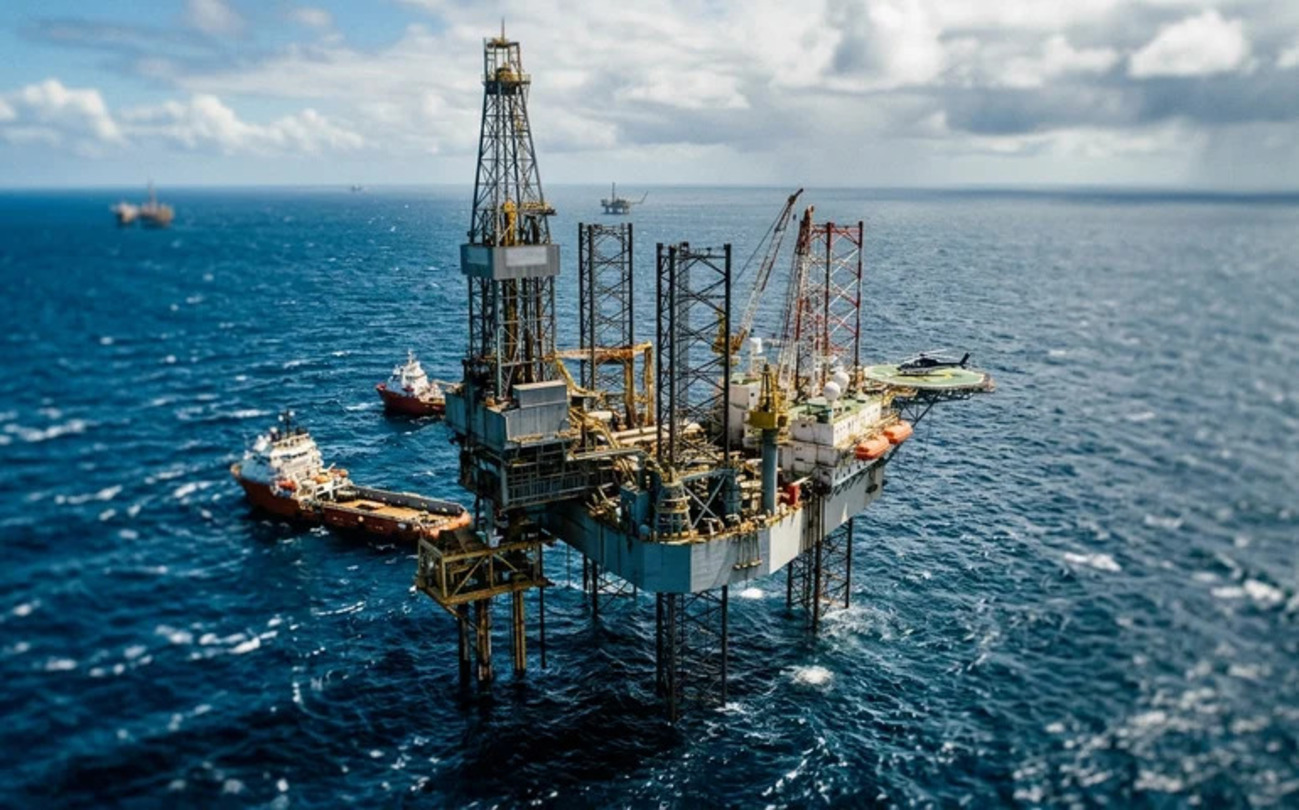
The combination of large units, maintenance windows, and well expansion creates continuous demand for commissioning, inspection, integrity, and subsea intervention services.
The cadence of new entries consolidates the country as the largest destination for contracts related to operation and maintenance.
In logistical terms, the fleet is distributed across hubs that connect supplies, teams, and support vessels, requiring fine planning of weather windows and tugs for long-distance movements.
The predictability of the pipeline benefits suppliers with response capability, risk management, and critical inventories close to the basins.
Offshore logistics orchestrates supplies and teams for continuous maritime operations in the hubs.
United Kingdom: North Sea And Field Revitalization
With 18 FPSOs, the United Kingdom mainly operates in the North Sea, where field revitalization and retrofit guide the technical agenda.
The focus is on efficiency, operational decarbonization, and extending the lifespan of units that combine topside upgrades, metrology, and instrumentation.
The regulatory environment requires rigorous integrity and emissions management, which strengthens niches for advanced inspection, process modifications, and digitalization.
Accumulated experience in mature fields creates a market for high-value-added solutions and firm intervention timelines.
The focus on mature offshore production sustains contracts for maritime operations and offshore logistics.
Angola: Deep Water And Local Content
Angola has 16 FPSOs and remains among the leaders in West Africa.
The offshore geography and water depth impose logistical and maintenance challenges, with routines for spare parts and crew schedules adjusted to weather windows.
Local content guides knowledge transfer and capacity-building strategies.
The need to maintain recovery factors in relevant assets drives process optimization, reliability, and corrosion management services.
The predictability of contracts depends on operational stability and synchronization between operators and international suppliers.
Nigeria: Lifespan Extension And Creative Solutions
Nigeria, with 15 FPSOs, operates in mature fields that benefit from FPSO use to extend the lifespan of wells.
The pressure for productivity and availability stimulates creative solutions in support and maintenance, including modular upgrades and reduced downtime strategies.
In this context, integrity planning and risk management are competitive differentiators.
The logistics of critical parts and the safety of offshore operations dictate the pace of execution, favoring players with rapid mobilization capacity and robust compliance.
China: Shipbuilding Industry And Technological Expansion
China hosts 14 FPSOs and relies on a strong shipbuilding and construction industry to accelerate deliveries and standardize components.
The movement includes growing investments in offshore technology and international partnerships to integrate supply chains and detailed engineering.
This ecosystem allows for scale gains in manufacturing, commissioning, and testing, shortening timelines and enabling solution packages that combine hull, topsides, and automation.
The focus on standardization reduces unit costs and enhances competitiveness in new projects.
What The Numbers Signal For Engineering And Logistics
The concentration of countries with the most FPSOs in the world indicates waves of demand in integrity, risk-based inspection, process upgrades, and support maritime operations.
Brazil leads the growth, while the United Kingdom, Angola, Nigeria, and China sustain stable pipelines of retrofit, maintenance, and construction.
For suppliers, the message is clear. Logistical response capacity, advanced inventories, traceability, and SLA for critical parts become decisive.
At the same time, safety and performance standards gain weight as selection criteria, raising the technical entry barrier.
The ranking of countries with the most FPSOs in the world positions Brazil in the lead, followed by the United Kingdom, Angola, Nigeria, and China, each with specific opportunities in engineering, logistics, supply chain, and maritime operations.
Among the countries with the most FPSOs in the world, the pre-salt remains a driver of offshore production with integrated offshore logistics.
For those operating or supplying the sector, aligning competencies to the geography of the fleet is key to capturing value in an expanding cycle.
Which country from this top 5 should concentrate its strategy in the next 12 months and why? Share in the comments which technical niche you would prioritize.









-

-

-

-

-

-

24 pessoas reagiram a isso.