





 Portuguese
  English
  Spanish
  3 min of reading
  0 comments


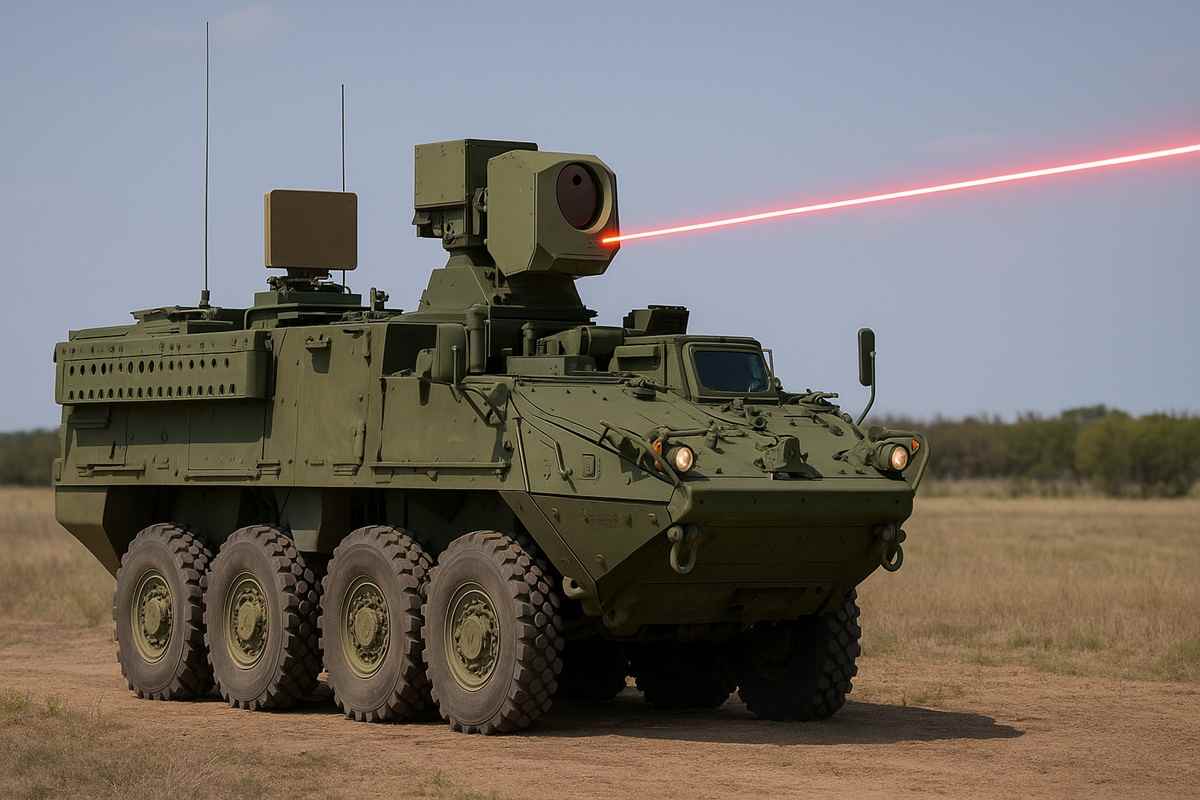
U.S. Army Successfully Tests 50 kW Laser System Mounted on Stryker Armored Vehicle Capable of Taking Down Drones with Long-Range Precision.
The United States Army conducted a military exercise with live fire using a high-energy laser system mounted on an armored vehicle.
The demonstration took place at Fort Sill, Oklahoma, and marked the operational debut of a 50-kilowatt (kW) beam mounted on a Stryker.
The objective was to hit drones at distances of up to 8 kilometers with precision. The initiative reinforces the Army’s commitment to directed energy technologies for short-range air defense.
-
China has created a mass-produced hypersonic missile that costs the same as a Tesla, and this is changing everything in modern warfare because the United States cannot defend itself without spending millions.

-
100% Brazilian technology transforms agricultural waste into a meat-scented ingredient using fungi from the Amazon rainforest. The process does not use excessive water or chemicals, and it also increases the nutritional value of the final product.

-
Psychology reveals that adults who avoid conflicts at all costs are not balanced individuals, but rather children who learned in the worst way that expressing emotions brought punishment and now live paralyzed by the fear of expressing themselves.

-
Goodbye pet hair on clothes: a washer with an internal filter promises to remove up to 5 times more hair than regular machines and uses an XL trap dryer system to capture what remains.


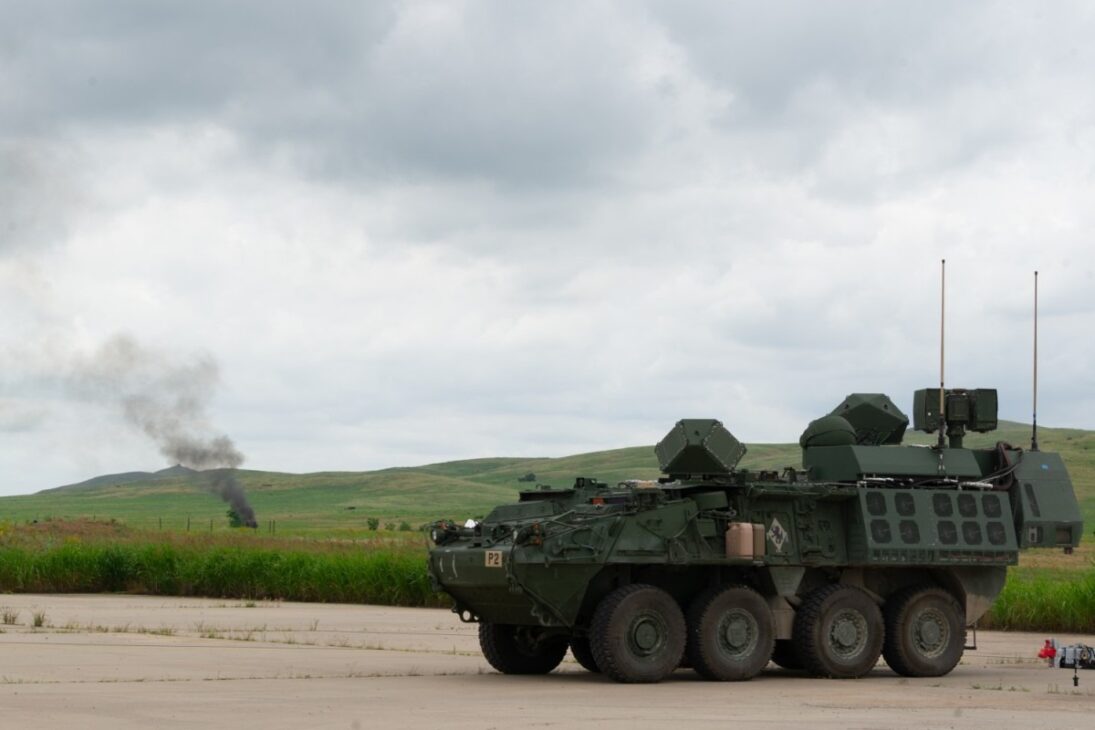
Tests with the DE M‑SHORAD
The equipment tested is known as DE M‑SHORAD, which stands for Short-Range Air Defense with Directed Energy Maneuver.
The system was operated by soldiers from the 4th Battalion, 60th Air Defense Artillery Regiment.
The exercise was conducted in conjunction with the Army Rapid Capabilities and Critical Technologies Office (RCCTO), responsible for developing new technologies.
The DE M‑SHORAD was tested alongside traditional armaments, such as the M‑SHORAD systems, which utilize Stinger missiles and 30 mm cannons.
Both systems acted against unmanned aircraft from Groups 1 to 3, including small and medium drones.
The goal was to integrate different types of armaments into a more efficient layered defense prepared for multiple threats.
How the Laser Works
The 50 kW laser is installed on a Stryker A1, an 8×8 armored vehicle that serves as a mobile combat platform.
The beam is a solid-state laser capable of destroying aerial threats through concentrated heat. This includes drones, helicopters, and even rockets or artillery projectiles.
To hit targets with precision, the system utilizes electro-optical and infrared sensors, as well as a Ku-band radar.
This suite allows the laser to autonomously track and destroy targets, reducing the risks of collateral damage.
The power supply is provided by a hybrid system that combines lithium-nickel-cobalt-aluminate (Li-NCA) batteries and diesel generators, ensuring prolonged operation while in motion.
Real-World Training
During the exercise, soldiers were challenged to use the laser in an environment close to reality. They tested the integration of the new system with existing command and control protocols, as well as surveillance and reconnaissance networks.
According to Lieutenant Colonel Ronald Yuhasz, this experience was vital for adapting military tactics to the new type of weaponry.
He also emphasized that traditional weapons will remain relevant and will be used in conjunction with the new laser solutions.
Technological Milestone for the Army
The DE M‑SHORAD represents the first time that the U.S. Army has integrated a high-energy laser system onto a mobile combat platform.
It is also part of the E‑HEL program, set to advance in fiscal year 2026. This program aims to develop even more powerful lasers, up to 300 kW, to protect larger areas and face more robust threats.
Since 2023, four Stryker vehicles with 50 kW lasers have been sent for operational testing.
These field experiences have fueled the advancement of the program, which promises to shift the focus of strategic defense toward closer and more versatile combat, especially against drones and rapid threats.
New Chapter in Military Doctrine
According to Colonel Steven Gutierrez, director of the Directed Energy area in the RCCTO, the demonstration at Fort Sill is a game-changer.
It is the first time that a laser system has been formally incorporated into the doctrine, policy, and personnel structure of the U.S. Army. This shows that the technology is ready to move from the laboratory to the battlefield.
With nearly instant firing, low cost per shot, and virtually unlimited replenishment capability — limited only by power generation — lasers become a promising alternative to conventional systems.
As aerial threats multiply, especially with the use of drone swarms, the DE M‑SHORAD stands out as a centerpiece in the country’s new air defense strategy.







Seja o primeiro a reagir!