






 Portuguese
  Spanish


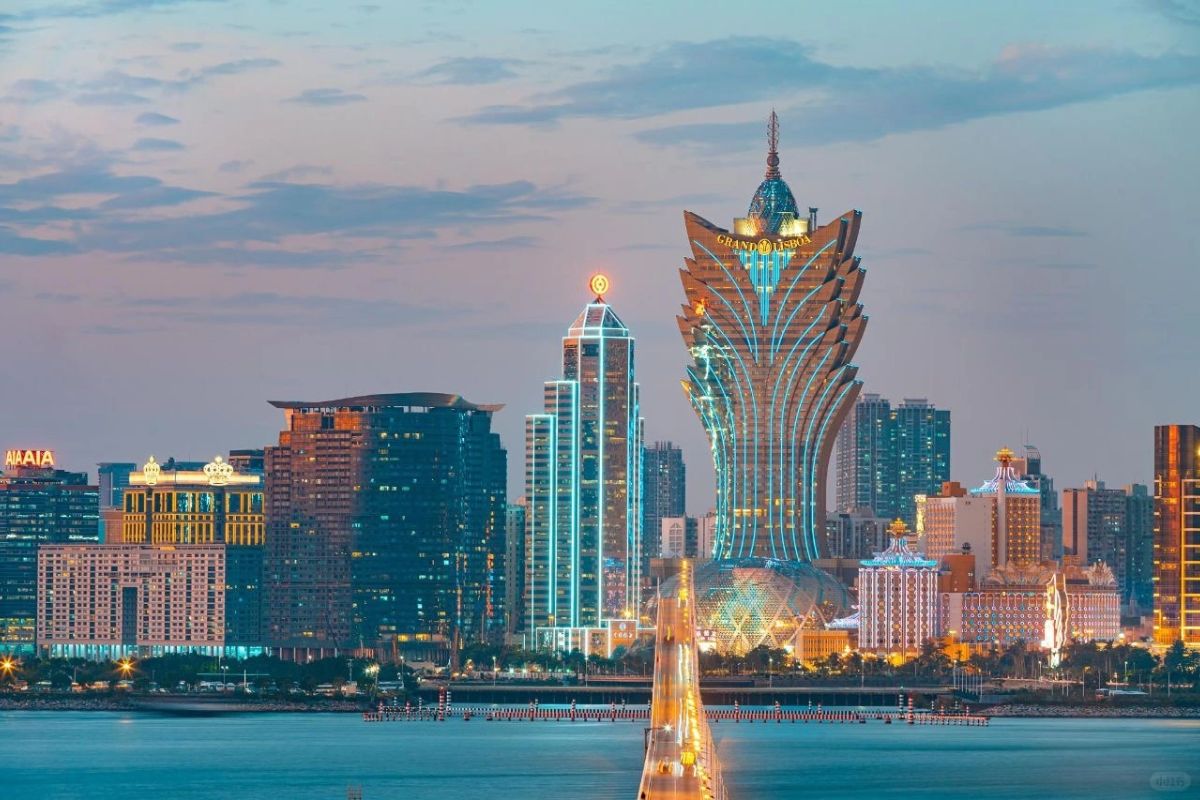


Macau is the city in China where Portuguese is the official language, the calçada portuguesa decorates entire squares, the Ruins of São Paulo are a world heritage site, and the Portuguese heritage of nearly five centuries makes the Brazilian visitor feel like they never left home
There is a city in China located right next to Hong Kong where street signs are written in Portuguese, the architecture resembles historic cities in Brazil, and Portuguese is an official language alongside Chinese. This city is Macau, and those who walk through its streets find a Portuguese heritage so alive that the feeling is of being in a piece of Portugal transplanted to the heart of Asia.
What makes Macau different from any other Asian destination is the depth of this cultural fusion, according to Portal 6. This is not a themed neighborhood or a specific tourist attraction: the Portuguese heritage is in the names of the buildings, in the calçada portuguesa that covers entire squares, in the Ruins of São Paulo that dominate the skyline, and even in the cuisine, creating an identity that no other city in China has managed to reproduce.
How a city in China ended up speaking Portuguese

The story begins in 1557, when the Portuguese consolidated their presence in Macau and transformed the city into one of the most important trading posts in the East.
-
Crab Trapped in Plastic Bottle for 62 Days Near Okinawa Highlights Little-Known Impact of Marine Pollution on Small Animals

-
Esperanza’s Bamboo Barrier in Oaxaca Redirects River and Reduces Erosion by 85% in Five Years

-
Family Builds Homemade Wind Turbine to Power Off-Grid Home, Video Reaches 555,000 Views on Ngô Thị Huyền’s Channel
-
Indian Brand Creates Sneakers from Recycled PET Bottles and Discarded Tires, Repurposing Over 1 Million Bottles and Raising $4 Million for Expansion



Decades earlier, Portugal had already arrived in Brazil in 1500, and from Macau created a strategic link connecting Europe, Asia, and indirectly, Brazil itself.
Missionaries, merchants, and administrators circulated between these territories for centuries, bringing customs, architecture, and linguistic habits that became permanently rooted in Macau.
The result is a city in China that developed a unique identity: it maintained deep Chinese roots while incorporating Western elements that endure to this day.
Portuguese remains the official language, appears in street names and institutions, and serves as a living reminder that the Portuguese heritage in Macau is not a museum piece, but part of everyday life.
Ruins of São Paulo are the greatest symbol of Portuguese heritage in Asia
Anyone visiting Macau inevitably arrives at the Ruins of São Paulo, the most well-known postcard of the city and one of the greatest symbols of European presence throughout East Asia.
The site houses the remnants of an ancient church and a Jesuit college built during the colonial period, and the stone facade that has survived the test of time is recognized as a World Heritage Site.
The scale of the Ruins of São Paulo surprises those who expect to find only a historical fragment.
The facade rises at the top of a wide staircase and can be seen from various points in the city in China, serving as a constant reminder that Macau was, for centuries, a bridge between civilizations.
For Brazilian visitors, the connection is even more direct: the same Jesuit order that built churches in Salvador, São Paulo, and Olinda also left its mark in Macau, on the other side of the planet.
Calçada portuguesa and colonial facades that remind of Brazil
Walking through Largo do Senado, the central square of Macau, the Brazilian visitor finds something unexpected underfoot: calçada portuguesa in wavy patterns that repeat the same designs seen in Rio de Janeiro and Lisbon.
The black and white limestone pavement covers the entire square and extends through surrounding streets, creating a landscape that seems to belong to the Brazilian coast.
The architecture reinforces this familiarity. Colorful facades in pastel tones, wooden windows, and colonial details create a setting that resembles historic cities like Ouro Preto and Olinda, but are surrounded by Chinese ideograms and signs in Mandarin.
The calçada portuguesa is just the most visible element of a Portuguese heritage that also appears in street names, in administrative buildings, and in churches scattered throughout this city in China that seems to defy geography.
Cuisine and climate that bring Macau closer to Brazil
The cultural fusion of Macau goes beyond architecture and language. The tropical climate of the city, with humid heat and dense vegetation, brings the experience of being in Macau closer to coastal regions of Brazil, contributing to the sense of familiarity that many Brazilian visitors report.
In cuisine, the Portuguese heritage appears irresistibly in the pastéis de nata, known locally as egg tarts, which dominate shop windows and serve as a gastronomic symbol of the city.
The Macanese cuisine mixes Portuguese techniques and ingredients with Chinese and Southeast Asian flavors, creating dishes that do not exist anywhere else in the world.
In Macau, signs with Chinese ideograms share space with names in Portuguese, and this visual coexistence summarizes what makes this city in China a different destination from all others: a place where the East and the Lusophone world coexist on every corner.
Did you know there was a piece of Portugal in China?
Macau is living proof that the Portuguese heritage crossed oceans and continents.
With the Ruins of São Paulo on the horizon, calçada portuguesa underfoot, Portuguese on the street signs, and the taste of pastéis de nata on the palate, this city in China offers the Brazilian visitor something that no other Asian destination can: the feeling of being at home on the other side of the world.
Did you know about Macau or were you surprised to discover that such a city exists in China? Would you like to visit? Let us know in the comments if this destination made it onto your travel list.


I have visited the city Macau 🇲🇴 from Hong Kong 🇭🇰
Fui a Macau em 2018. Procurei pessoas que falassem Português e não encontrei nenhuma. Perguntei a motoristas de táxi e ela só sabiam dizer bom dia e boa noite. Talvez exista uma comunidade que ainda fale nossa língua mas não encontrei ninguém e fiquei decepcionado.