





 Portuguese
  English
  Spanish
  6 min of reading
  1 comment


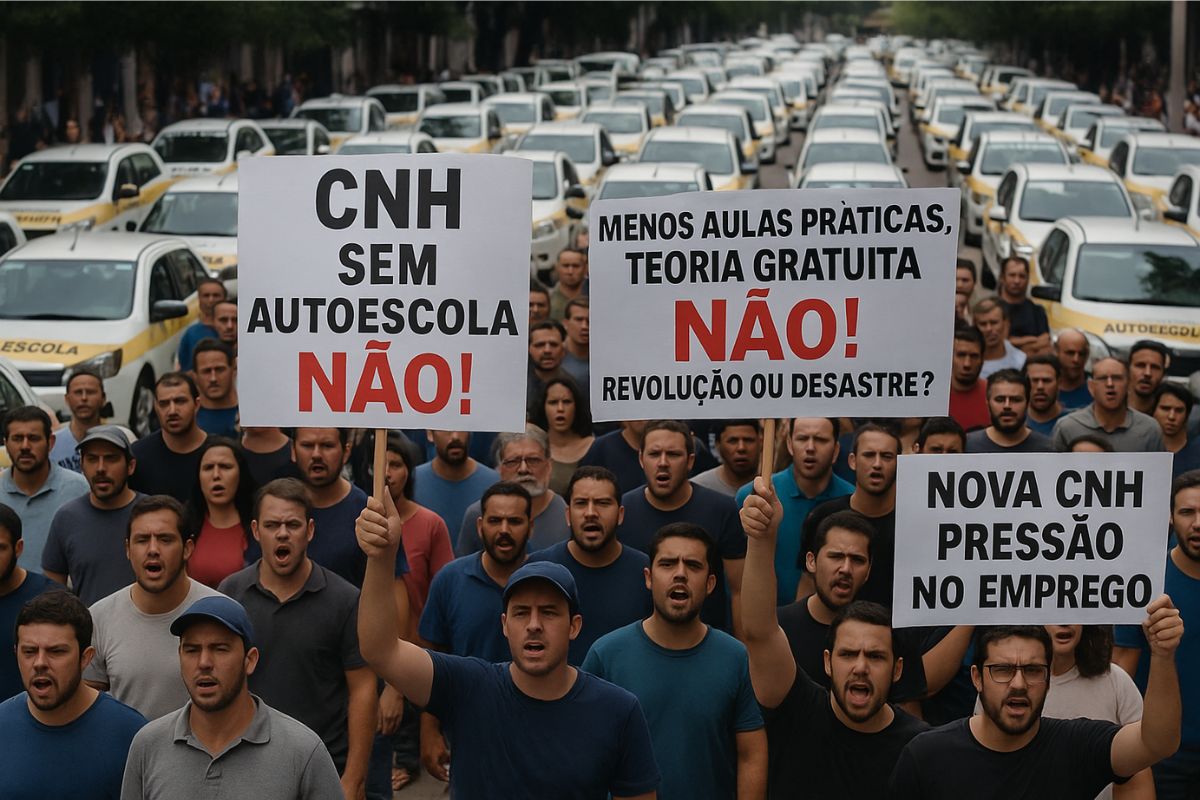


Reduction of Practical Lessons, Free Online Theory, and Independent Instructors Change the Way of Obtaining a Driver’s License and Pressure Employment in the Sector
The new rules from the National Traffic Council for obtaining a Driver’s License are already affecting the routine of driving schools across the country. The possibility of obtaining a driver’s license without a driving school, with free online theoretical content and much shorter practical lessons, has been causing layoffs and uncertainty among companies and employees.
According to the president of the National Federation of Driving Schools and Driver Training Centers (Feneauto), Ygor Valença, about fifty thousand people are already being impacted by the announced changes. He claims that many workers have been laid off and others are serving notice periods, even before the rule is published in the Official Federal Gazette.
The official launch of the measure is scheduled for this Tuesday, the ninth. Meanwhile, many driving schools are reporting a decrease in demand for traditional training services, with motorcycles and cars parked in garages awaiting the definition of the new driver’s license rules.
-
The noise law will no longer be in effect at 10 PM starting in June with a new rule valid during the 2026 World Cup.

-
The Chamber opens a debate on driver’s licenses at 16 years old as part of a reform that includes around 270 proposals to change the Brazilian Traffic Code and may redesign rules for licensing, enforcement, and circulation in the country.

-
The new Civil Code could revolutionize marriages in Brazil with “express divorce” and changes that could exclude spouses from inheritance.
-
Banco do Brasil sues famous influencer for million-dollar debt and intensifies debate on delinquency, risks of seizure, and direct impact on Gkay’s credibility.


Fifteen Thousand Companies on Alert and Training Structure Under Pressure
The driver training sector in Brazil comprises approximately fifteen thousand companies that depend directly on the current model of in-person theoretical lessons and a minimum of practical class hours. According to Ygor Valença, of the fifty thousand employees affected by the future rules of obtaining a driver’s license without driving schools, thirty thousand are general managers and twenty thousand are instructors.
Even without publication in the Official Gazette, the scenario is already one of readjustment. Driving school owners fear a significant drop in revenue, as a significant portion of their income comes from mandatory practical lessons and in-person theoretical courses. With the expectation of free theoretical content online and reduced practical class hours, many candidates prefer to wait to begin the licensing process.
According to available information, the change does not eliminate driving schools but removes the requirement for a link with these establishments. This profoundly alters the balance between traditional companies, independent instructors, and digital teaching platforms.

What Changes in the Driver’s License Without Driving School
One of the most relevant changes is the way access to theoretical content for obtaining a driver’s license will be provided. The ministry responsible for traffic will make all theoretical content available online and at no cost to the candidate. Thus, those who wish to obtain their license will be able to study from home using the internet, without the need to enroll in a driving school for this step.
For those who prefer in-person education, the option to attend driving schools or institutions accredited by traffic agencies will still exist. The traditional model remains available but is no longer the only path. The expectation is that the driver’s license without mandatory driving school will make the process more accessible to those facing financial or transportation difficulties.
Driver’s License Practical Lessons with Much Shorter Class Hours
Another central change is the reduction of the requirement for practical lessons. The current rule stipulates twenty hours of lessons before the driving test. With the new regulation, the obligation is reduced to just two hours of practical lessons.
In practice, the candidate will still be required to perform driving practice before the test, but with a much lower minimum requirement. For driving schools, this represents a significant loss of revenue and reduced demand for instructors and vehicles. For the candidate, there is a promise of a shorter and possibly cheaper process, although the available text does not provide details on costs or official estimates for cost reductions.
Authorized and Monitored Independent Instructors
The new rules allow candidates to take practical lessons with independent instructors, without links to a driving school. These professionals will be authorized by the State Departments of Transit and monitored by state agencies, following standardized criteria throughout the country.
This means that practical training will no longer be exclusive to driving schools. Candidates will be able to choose between hiring a traditional driving school or a certified independent instructor, based on price, location, and service preference. This change increases competition in the sector and may significantly alter the organization of the driver’s license market without driving schools.
Millions of Brazilians Without a License and the Inclusion Argument
Data from the National Traffic Secretariat indicates that around twenty million Brazilians drive without a license. Additionally, approximately thirty million people are of age to obtain a driver’s license but do not have the document due to financial constraints in affording the entire process.
It is in this context that the driver’s license without mandatory driving school is presented. Free access to online theoretical content and the possibility of reducing time and costs associated with practical lessons are offered as alternatives to include more Brazilians in the regular licensing system.
On the other hand, sector representatives raise concerns about the risk of a decline in training quality if candidates arrive at the exam with insufficient driving practice. Road safety depends on the adequate preparation of new drivers, keeping the debate open on the balance between inclusion, cost, and responsibility in traffic.
Questions and Answers About the Driver’s License Without Driving School
When Does the Driver’s License Without Driving School Go into Effect
The driver’s license without mandatory links to driving schools will come into effect upon publication of the rule in the Official Federal Gazette. Until then, the current rules remain in place, requiring a link to a driving school and a longer minimum duration of practical lessons.
How Will the Theoretical Lessons for Obtaining a Driver’s License Look
The theoretical content will be offered online and at no cost to the candidate. Those who wish may continue studying in person at driving schools or accredited institutions. The theoretical preparation for the driver’s license will have two main paths: free remote study or classroom study, depending on the future driver’s preference.
Is the Practical Lesson Still Mandatory for the Driver’s License Without Driving School
Yes. The practice of driving is still required, but the minimum required hours will no longer be twenty and will be reduced to two hours. Even with the driver’s license without a driving school, the candidate must drive a vehicle under the supervision of an authorized professional before the practical exam.
Is It Possible to Take Lessons with an Independent Instructor Instead of a Driving School
Yes. The new rules allow practical lessons to be conducted with independent instructors. These professionals must be authorized by the State Departments of Transit and monitored by state agencies, following uniform criteria nationwide. The candidate may choose whether to prepare with a driving school or a certified independent instructor.
Future of Driving Schools and Driver Training
According to available information, the implementation of the driver’s license without mandatory driving school introduces a new scenario for driver training in Brazil. While about fifteen thousand companies and fifty thousand employees face layoffs, restructuring, and parked vehicles, millions of Brazilians may find it easier to access licensing.
The challenge will be to find a balance between democratizing access to the driver’s license, preserving jobs in the driving school sector, and ensuring that the training of new drivers remains appropriate for the realities of Brazilian traffic.
And you, do you believe that the driver’s license without a driving school will make it easier for those who need a license or are you concerned that the reduction of practical lessons will compromise road safety?










Auto escolas não ensinam ninguém a dirigir, elas apenas treinam o candidato para passar no exame( controle de embreagem, ré em linha reta e baliza). Se o examinador pedisse ao candidato para abrir o capô, ligar o farol alto ou perguntasse a calibragem dos pneus a maioria não passaria. Sem contar os preços abusivos, na minha cidade o aluguel do veículo da auto escola para fazer o exame de direção custa R$ 500,00. O exame não dura 20 minutos.