





 Portuguese
  English
  Spanish
  7 min of reading
  0 comments



The duplication of BR-262 in Espírito Santo will include 50 viaducts, 28 bridges, 4 tunnels, and 40 kilometers of bike paths along 180 kilometers, with an investment of R$ 8.6 billion that will make this the largest engineering project in the history of the state, with bidding expected in the second half of 2026.
Espírito Santo is about to begin the largest engineering project ever executed in its territory. The duplication of BR-262, a highway that runs through the state from the coast to the border with Minas Gerais, will receive R$ 8.6 billion in investments to transform 180.6 kilometers of roadway into a modern route with 50 viaducts, 28 bridges, 4 tunnels, and 40 kilometers of bike paths. The project is inspired by the Immigrant Highway in São Paulo and promises to change the face of infrastructure in Espírito Santo.
The numbers are impressive, but the context is equally relevant. BR-262 is one of the most dangerous highways in Espírito Santo, with winding sections in the mountainous region that have accumulated serious accidents for decades. The duplication did not attract private investors due to high costs and technical complexity, which forced the state government to take on the project entirely with public funds without toll charges. Part of the financing, R$ 2.3 billion, comes from the reparations agreement for the collapse of the Mariana dam in Minas Gerais.
Why BR-262 urgently needs duplication
Anyone who has driven on BR-262 in the mountainous region of Espírito Santo knows that the highway is a test of nerves. Sharp curves, single lanes, sections without shoulders, and a traffic volume that has long exceeded the road’s capacity create a scenario that frequently appears in accident reports.
-
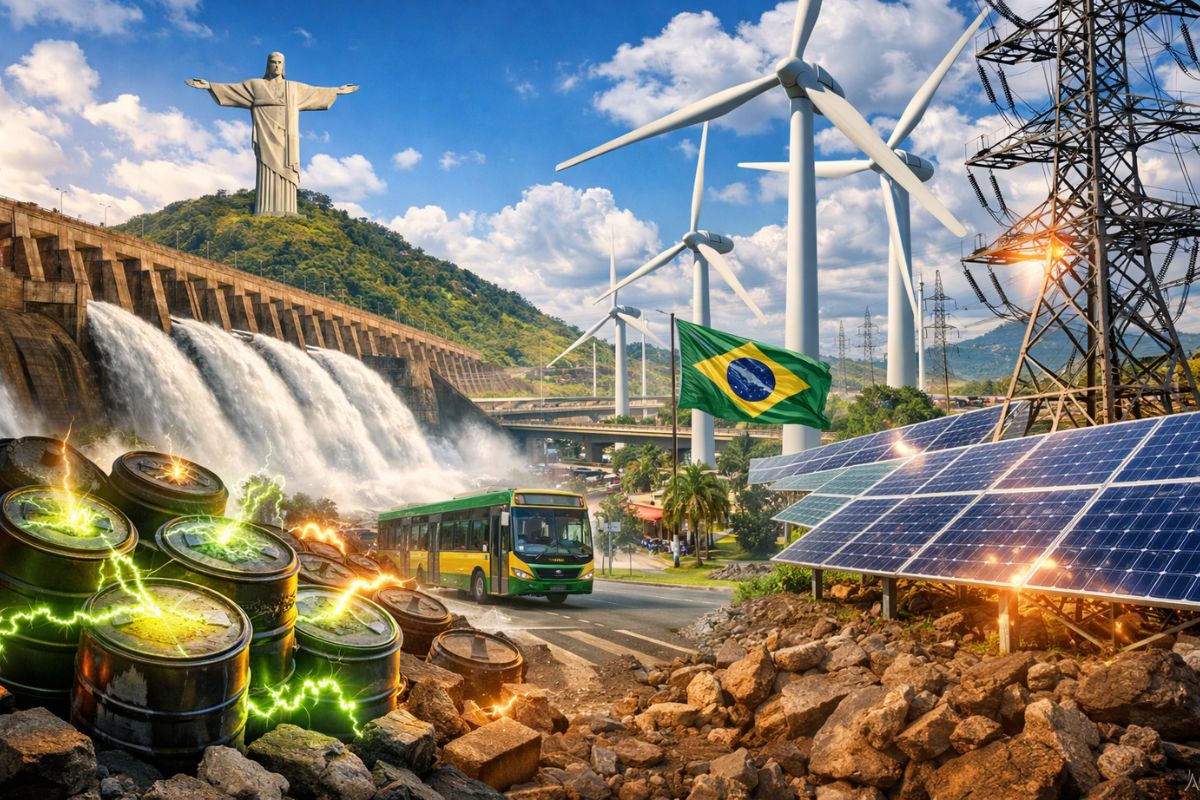
Brazil produces too much clean energy and doesn’t know what to do with it: over 20% of solar and wind capacity was wasted in 2025 while investors flee and 509 renewable generation projects were abandoned in the last year.
-
Piauí will produce a new fuel that replaces diesel without needing to change anything in the truck’s engine and reduces pollutant gas emissions by half: truck drivers from all over the Northeast are already celebrating the news that will arrive later this decade.

-
A new Brazilian shopping center worth R$ 400 million will be built in an area equivalent to more than 4 football fields, featuring 90 stores, 5 cinemas, a supermarket, a college, and parking for 1,700 cars, potentially generating 3,000 jobs.

-
Larger than entire cities in Brazil: BYD is building a 4.6 km² complex in Bahia with a capacity for 600,000 vehicles per year, but the discovery of 163 workers in conditions analogous to slavery has shaken the entire project.


The highway connects Greater Vitória to the mountainous interior and the western part of the state, serving as a logistical corridor for agribusiness and a daily route for thousands of workers and students.
Each serious accident halts traffic for hours because there is no real alternative route for drivers. The duplication of BR-262 is, above all, a matter of public safety and economic survival for the municipalities that depend on this road.
The duplication project has been discussed for years but only gained concrete outlines when it became clear that the concession model would not work. No private company was interested in financing a project of this magnitude in exchange for tolls, which transferred all responsibility to the public sector.
What makes this the largest engineering project in Espírito Santo

To gauge the size of the project, just compare it with the largest road project ever done in the state: the Mestre Álvaro Bypass, which cost R$ 456 million. The duplication of BR-262 will cost almost 19 times more. That’s R$ 8.6 billion distributed across five lots covering 180.6 kilometers, with structures ranging from viaducts and underpasses to tunnels excavated in the rock of the Espírito Santo mountains.
The volume of special works planned is 176.8 thousand square meters, a number that confirms why this is considered the largest engineering project ever planned for Espírito Santo.
In addition to the 50 viaducts and 28 bridges, the project includes 6 exclusive pedestrian walkways, 31 grade-separated intersections, 24 operational turnarounds, and 22.6 kilometers of urbanized sections. The 4 tunnels will have a total length of approximately 2 kilometers.
The declared inspiration in the project from the Immigrant Highway in São Paulo is not coincidental. BR-262 in the Espírito Santo mountains presents similar topographical challenges to those of the descent from the Serra do Mar in São Paulo, with steep gradients and terrain that requires sophisticated engineering solutions to ensure safety and durability.
The 50 viaducts and 4 tunnels that will redesign the Espírito Santo mountains
The viaducts are the backbone of the project. In a winding mountain highway, the construction of 50 viaducts and underpasses is what allows for the elimination of the most dangerous sections without destroying the natural terrain.
Instead of cutting through hills or making curves around valleys, the road goes over, gaining in safety and speed of travel.
The 4 tunnels represent the greatest technical challenge of the duplication. Excavating almost 2 kilometers of rock in the Espírito Santo mountains requires specialized equipment, strict geotechnical control, and a construction timeline that could extend for years.
These are structures that allow no errors: any miscalculation compromises the entire safety of the road. Therefore, Dnit has determined that the selection criterion for the responsible company will be based on technique and price, not just the lowest bid.
In addition to the viaducts and tunnels, the 28 bridges distributed along the 180 kilometers will ensure that the highway crosses rivers and valleys without interruptions. The combination of these structures is what makes this the largest engineering project in Espírito Santo, not only due to cost but also because of the technical complexity involved.
How the R$ 8.6 billion will be divided among the five lots
The duplication project of BR-262 is organized into five lots, each covering a specific stretch of the highway.
Lot 1, which goes from the junction with BR-101 to the end of the Boa Vista Variant, is the most expensive: R$ 3 billion for 34.9 kilometers of new roadway plus 28.8 kilometers of restoration.
Lot 3, which covers the stretch between Domingos Martins and the junction of ES-484, comes in second with R$ 1.98 billion for 34 kilometers, one of the most challenging sections of the mountains. Lot 4, covering 36.1 kilometers up to the urban crossing of Ibatiba, receives R$ 1.56 billion.
Lot 2 (Domingos Martins, R$ 1.05 billion) and Lot 5 (up to the bridge over the José Preto River, R$ 1.02 billion) complete the investment.
A significant part of the R$ 8.6 billion comes from the reparations agreement for the tragedy in Mariana. Of the total resources, R$ 2.3 billion comes from this agreement, which means that almost 27% of the funding for the largest engineering project in Espírito Santo originates from compensation for an environmental disaster that occurred in another state. The remainder comes from federal budget allocations.
The timeline: when the duplication of BR-262 comes to fruition
The main bidding covering the stretch of the mountainous region, considered the most difficult, is expected in the second half of 2026. In April of this year, the bidding for the supervision of the work and the registration will be announced, bureaucratic steps that precede the actual start of construction.
The second part of the project, which goes from the Ibatiba region to the border with Minas Gerais in Pequiá, is considered the simplest stage from a technical point of view.
This stretch is expected to be executed under a concession regime, which means it may involve toll charges, unlike the first phase, which will be fully funded with public money.
The history, however, inspires caution. The duplication project of BR-262 has been announced since 2023 and has yet to physically commence.
For the largest engineering project in Espírito Santo to come to fruition, it will be necessary for the federal and state governments to meet the bidding deadlines without the delays that characterize much of the major roadworks in the country.
What changes for those who depend on BR-262 in Espírito Santo
If executed according to the project, the duplication will completely transform the experience of those using the highway. Dual lanes throughout, viaducts eliminating at-grade crossings, tunnels shortening winding sections, segregated bike paths, and pedestrian walkways represent a leap in standards that places BR-262 on another level.
For the municipalities in the mountainous region, such as Domingos Martins, Venda Nova do Imigrante, and Conceição do Castelo, the project could mean a significant economic boost.
Safe and efficient highways attract investment, reduce freight costs, and increase tourist flow—vital sectors for the economy of the Espírito Santo mountains.
But the most immediate impact is on lives. BR-262 has a history of fatal accidents that could be drastically reduced with the duplication and the safety structures planned in the project.
If the largest engineering project in Espírito Santo delivers on its promises, the most important benefit will not be measured in kilometers of asphalt, but in lives saved.
With the values, the expectation is to deliver, in addition to the duplication of the roadway:
- 50 viaducts/underpasses
- 28 bridges
- 6 exclusive walkways
- 4 tunnels, totaling 2 km
- 176.8 thousand m² of special works
- 31 grade-separated intersections
- 24 operational turnarounds
- 22.6 km urbanized
- 40 km of bike paths
With information from the portal of G1.
Do you believe this project will be completed on time, or will the history of delays in large road projects in Brazil repeat itself? Leave your opinion in the comments; the future of BR-262 and Espírito Santo concerns us all.








Seja o primeiro a reagir!