





 English
  Francês
  Alemão
  Italiano
  Japonês
  Norueguês
  Portuguese
  Spanish
  5 min of reading
  0 comments


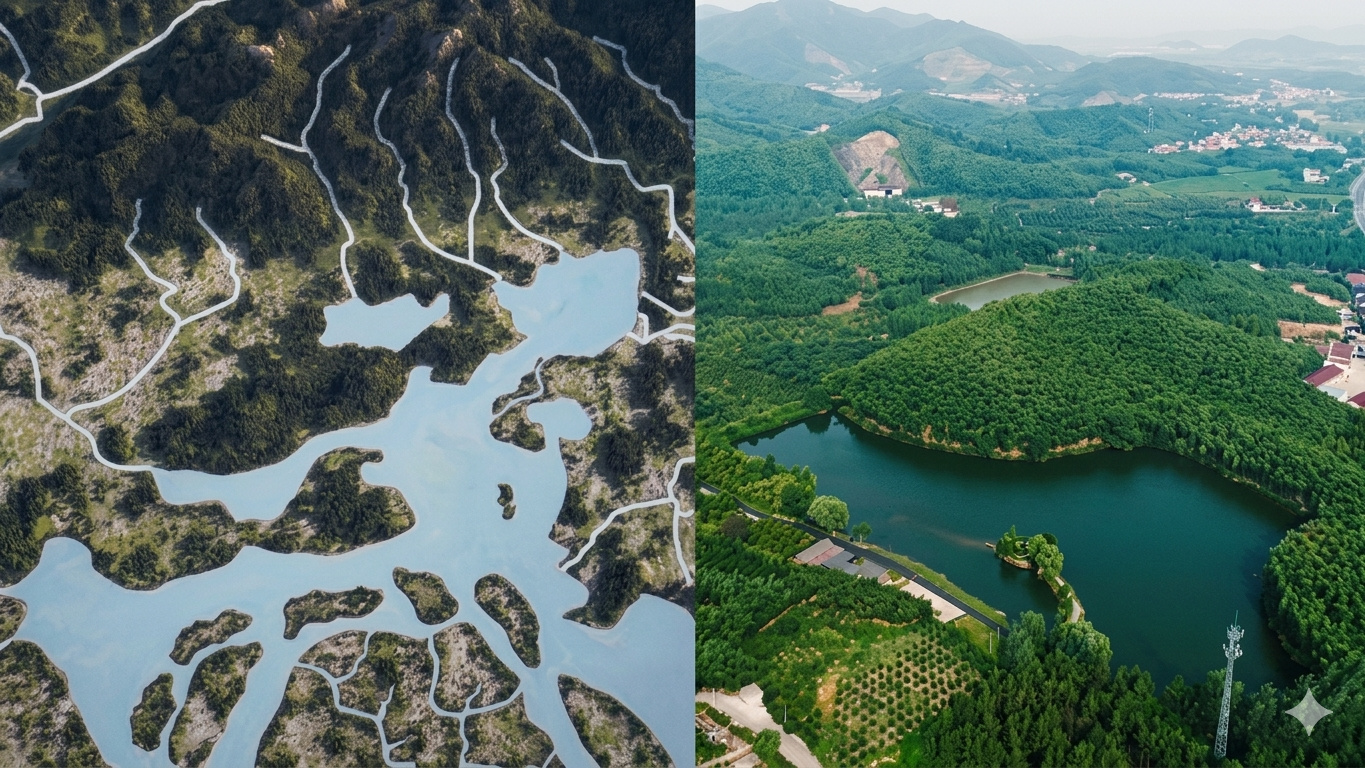
Liangzhu Civilization Collapsed After Extreme Monsoons Destroyed Its Hydraulic System. Study in Science Advances Reveals What Happened
According to a study published in the journal Science Advances by an international team led by geologist Christoph Spötl from the University of Innsbruck, in partnership with the University of Xi’an Jiaotong and six other research institutions from China and the USA, the mystery of the most intriguing collapse in Chinese archaeology has finally been solved, not through excavation, but through a stalactite. The Liangzhu civilization, which flourished in the Yangtze River Delta for nearly a thousand years before abruptly disappearing 4,300 years ago, was destroyed by the same force that its engineers had spent centuries trying to control: water.
More specifically: a sequence of abnormally intense monsoons between 4,345 and 4,324 years ago — a period of just 21 years, with a margin of error of ±30 years, produced rainfall volumes that exceeded the absorption capacity of all the dikes, channels, and reservoirs that Liangzhu had built over generations. The city was flooded. People fled. And one of the most sophisticated civilizations of prehistoric times disappeared under a layer of clay that archaeologists found centuries later but could not explain — until the stalactites told the story.
The discovery did not come from traditional archaeological excavations but from the analysis of stalactites, which accurately recorded the intensity of rainfall over thousands of years. The data shows that the civilization, which flourished in the Yangtze River Delta for nearly a millennium, was destroyed by a sequence of abnormally intense monsoons that occurred between 4,345 and 4,324 years ago. This period of just 21 years, even considering a margin of error of ±30 years, was enough to exceed the containment capacity of one of the most advanced hydraulic systems ever built in the Neolithic.
-
Spain surprises the world by erecting 62 artificial dunes, mixing sand with natural remains of posidonia, and causing the structure to lose only 1.4% of its volume in 1 year.

-
With 16 Bulava missiles, improvements in acoustic stealth, and a design focused on silent patrols, Russia’s nuclear submarine was born to ensure Moscow’s invisible retaliation and has become one of the pillars of its maritime strength.

-
‘Populous’ city in Rio among the worst in Brazil in national ranking and exposes silent development crisis.

-
Couple buys house in the South Zone of São Paulo, opens a hidden door in the garage, and finds a secret wine cellar with dozens of old wines forgotten since the 1970s.


Liangzhu Civilization Built the Largest Hydraulic System of the Neolithic Before the Pyramids of Egypt
The Liangzhu culture emerged about 5,300 years ago in the Yangtze Delta, in present-day Zhejiang Province, eastern China. This period predates the construction of the Pyramids of Giza, positioning Liangzhu as one of the oldest and most advanced civilizations of its time.


The main city, now recognized as a UNESCO World Heritage Site, had a complex urban organization with walled inner zones, protected outer areas, and an extensive hydraulic system surrounding it. Its total area was approximately four times larger than that of the Forbidden City in Beijing.
The hydraulic system included dikes, channels, reservoirs, and sluices capable of controlling water flow in one of the most flood-prone regions of Asia. This infrastructure allowed for continuous agricultural production and supported a highly organized society based on rice cultivation.
Layer of Clay in the Ruins Indicated Flooding, but Cause of the Collapse Remained Unknown
Since the discovery of the ruins in 1936, archaeologists identified a layer of clay deposited over the structures of the Liangzhu civilization. This layer indicated a flooding event but did not allow for determining its origin or intensity.
The clay could have resulted from a single flood, cumulative events over time, or even marine influence. Without precise dating and direct evidence of cause, various hypotheses were raised, including conflicts, epidemics, and social collapse.
None of these explanations, however, were able to fully justify the abrupt disappearance of such a sophisticated civilization.
Stalactites Recorded Extreme Rains That Destroyed the Liangzhu Civilization
The solution to the mystery came from caves located about 160 kilometers from the archaeological site. Stalactites from the Shennong and Jiulong caves were analyzed using uranium-thorium dating, allowing for an accurate reconstruction of the climatic history of the region.

The isotopic records revealed a period of extremely intense precipitation coinciding with the abandonment of the city. This direct correlation between climate and collapse provided the first concrete evidence that extreme climatic events were the main cause of the destruction of Liangzhu.
What was once an archaeological enigma became explained as an extreme climatic event recorded in mineral.
Dam System Failed Against Rains Beyond the Engineering Capacity of the Time
The hydraulic system of Liangzhu was designed based on climatic patterns observed over centuries. However, the rains recorded during this period exceeded any scenario previously experienced by the civilization.
The compacted earth dams could not withstand the volume of water, leading to the collapse of the structures. The channels, designed to control the flow, began to function inversely, contributing to the widespread flooding of the Taihu plain.
As the region is naturally low, there were not enough elevated areas for the temporary relocation of the population, making abandonment inevitable.
Collapse of Liangzhu May Have Influenced the Rise of Chinese Civilization
After the collapse of Liangzhu, records indicate a prolonged period of climate change, followed by drier conditions around 4,000 years ago. This period coincides with the rise of the Xia Dynasty, considered the first political structure of ancient China.
There is evidence that displaced populations from the Yangtze Delta migrated to the Central Plains, bringing with them agricultural knowledge and engineering techniques that influenced later civilizations.
This process suggests that the collapse of Liangzhu did not only represent the end of a civilization but also the transfer of knowledge that contributed to the formation of historical China.

Researchers from East China Normal University emphasize that the conditions that led to the collapse of Liangzhu are comparable to current climate changes. The combination of rising sea levels and intensified monsoon rains poses an increasing risk to densely populated coastal regions.
The plain where Liangzhu existed is located about 160 kilometers from Shanghai, one of the largest cities in the world, built on the same deltaic system and protected by modern hydraulic structures.
The parallel is direct: an advanced civilization managed to control water for nearly a thousand years until extreme events exceeded its engineering capacity. The geological record preserved in the stalactites shows that this type of rupture can occur rapidly — and with irreversible consequences.








Seja o primeiro a reagir!