





 Portuguese
  English
  Spanish
 5 min of reading
  0 comments


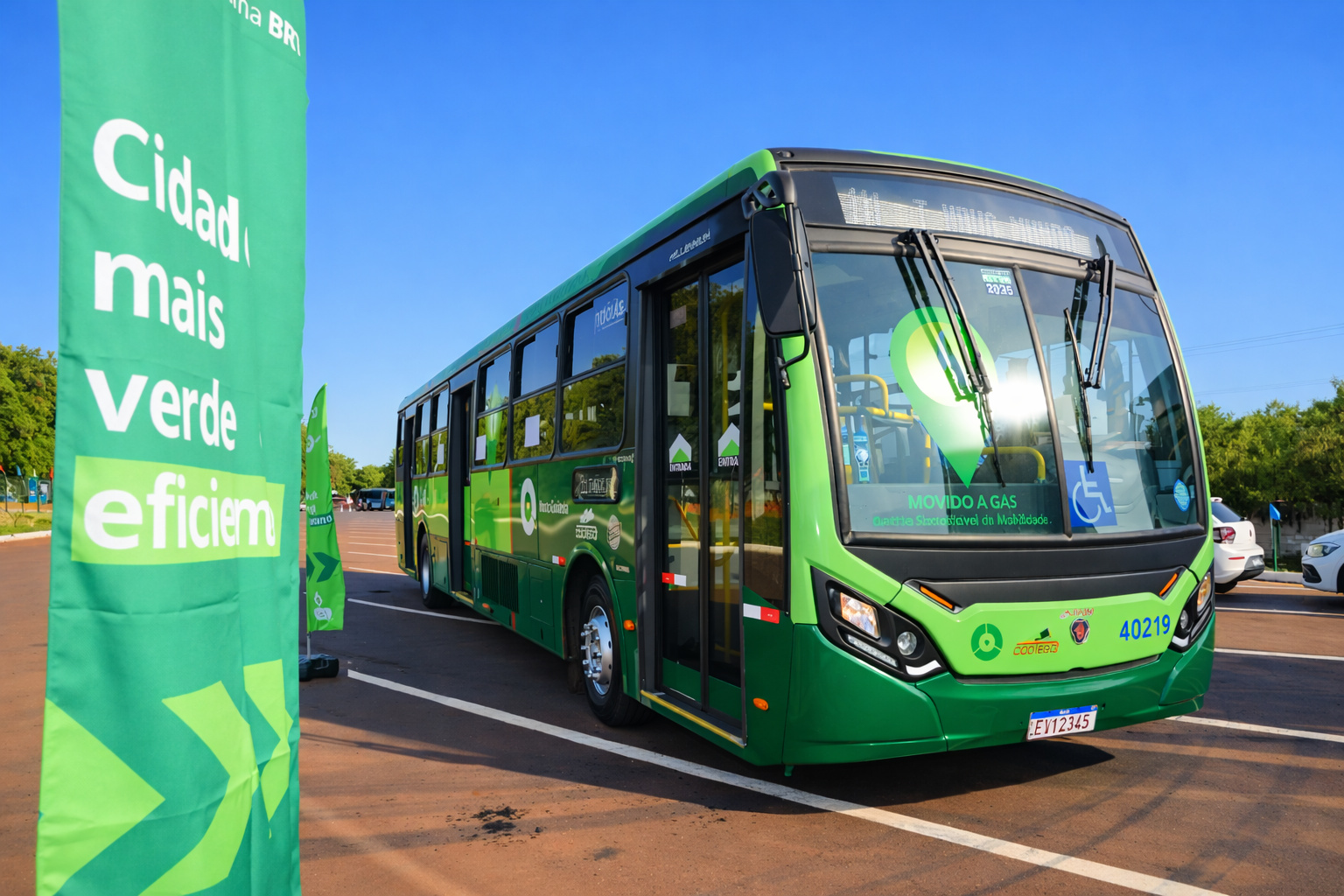
Know How The Arrival Of New Buses Powered By Biogas And CNG Is Modernizing Collective Transport In Goiania, Reducing Emissions And Improving Passenger Comfort.
The arrival of 501 new buses powered by biogas and Compressed Natural Gas (CNG) to the collective transport in Goiania represents, above all, one of the most relevant movements in the recent history of urban mobility in the Midwest. Moreover, this initiative goes far beyond mere fleet renewal, as it signals a structural change in how the government perceives transport, the environment, and quality of life.
Over the past decades, accelerated urban growth has progressively imposed complex challenges on collective transport systems. In this sense, Goiania has closely followed this process. On one hand, the increase in the private fleet has intensified congestion. On the other, the environmental impacts have made it evident that there is a need to invest in more modern, efficient, and sustainable solutions. Thus, the new buses emerge as a concrete response to an old demand from the population, which seeks faster, safer, and less polluting travel.
For many years, Brazilian collective transport depended almost exclusively on diesel. Although this model ensured the expansion of urban systems, it also raised, over time, pollution levels and operational costs. In light of this, with the advancement of the debate on climate change and energy transition, governments began to seek viable alternatives that reconcile performance, economy, and sustainability. In this context, biogas and CNG gained prominence as possible and effective solutions.
-
Brazil surprises the world by cloning a pig with human genes in an attempt to save humans with transplants, a technique with only 1% to 5% success rate, editing 3 genes, inserting 7 human genes, and impacting 48,000 patients on the waiting list.
-
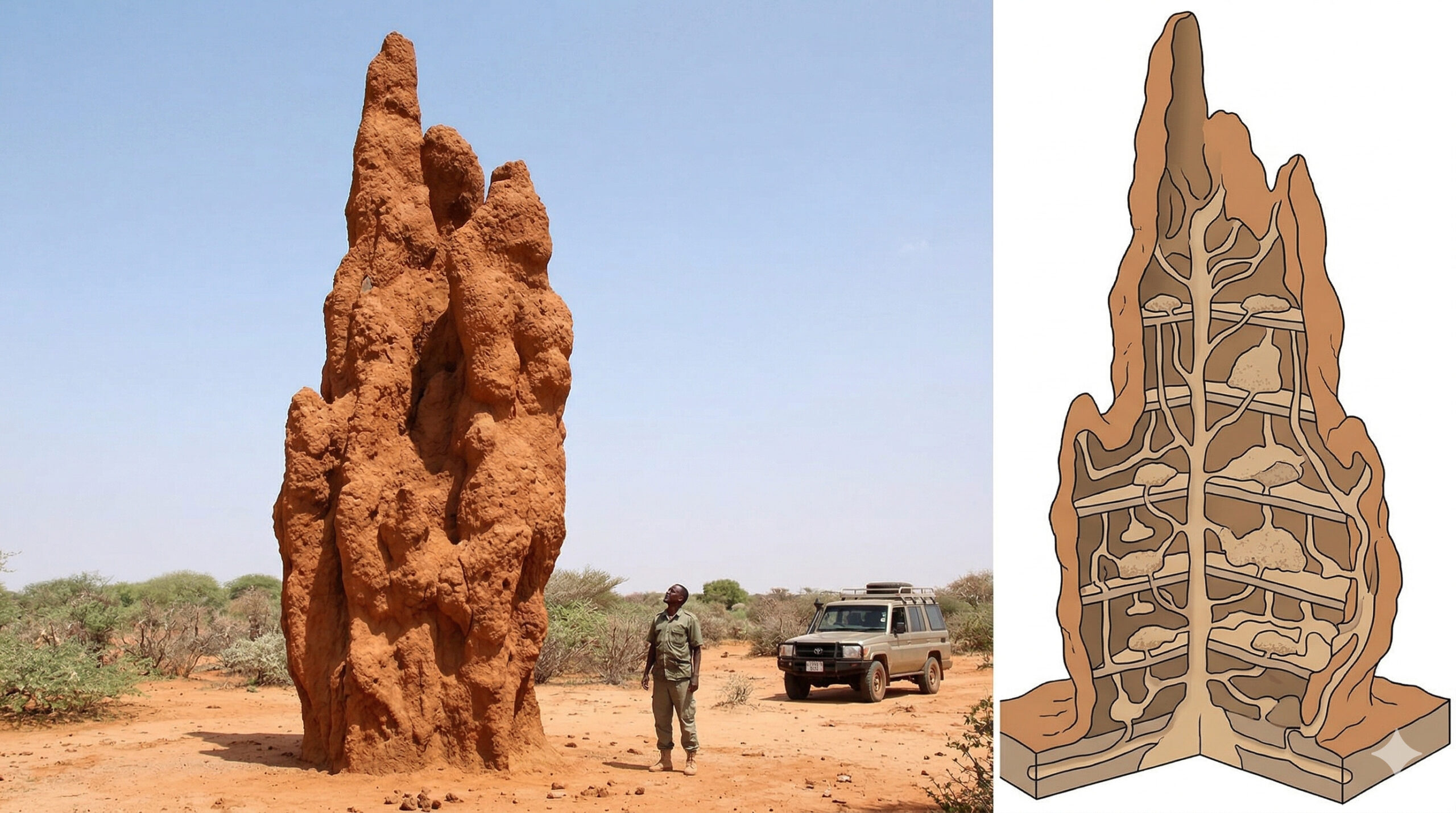
With a height of 8.7 meters, the giant termite mound found in Somalia has entered history as the largest ever recorded and reveals how insects just a few millimeters tall build three-story structures.
-
Measuring about 50 cm in wingspan, the merlin, the smallest bird of prey in the world, is at risk of extinction and could disappear by 2050, according to research published in Nature.
-
With 96 rooms, 37 bathrooms, and five kitchens, the mansion of the heir to Pernambucanas is worth R$ 50 million, has a pool, two terraces, and has become the target of a legal dispute after the owner fell into a coma in 2016.

Fleet Renewal And Long-Term Planning
To achieve this goal, the Government of Goiás structured the implementation of the new buses as part of a gradual process of modernization of the metropolitan fleet. Thus, the delivery schedule until 2027 allows for a planned transition, maintains the regularity of service, and at the same time avoids negative impacts on daily operations. Furthermore, this model facilitates the adaptation of garages, workshops, and technical teams to new technologies.
At the same time, the new buses are complemented by electric vehicles and diesel models with more stringent environmental standards already in circulation. This way, technological diversity strengthens the system, reduces operational risks, and expands future evolution possibilities. Therefore, by investing in different energy matrices, Goiania builds a more resilient collective transport system ready for change.
Another central point concerns the positive environmental impact. In this regard, the new buses stand out significantly. When fueled with biogas, these vehicles dramatically reduce pollutant gas emissions compared to traditional models. Furthermore, the production of biogas from organic waste transforms an environmental liability into a source of clean energy. Similarly, CNG offers more efficient and less environmentally harmful combustion.
Comfort, Efficiency, And Passenger Experience
When observing the historical trajectory of collective transport in Goiania, one can see a continuous process of evolution. Initially, the city had systems based on conventional buses. Later, it advanced to exclusive corridors and BRT. Now, the introduction of new buses powered by alternative fuels adds a new chapter to this trajectory and, consequently, brings Goiania closer to global sustainable mobility trends.
Beyond the environmental issue, comfort plays a central role in this process. In this sense, all new buses come with air conditioning and different floor configurations, suitable for both structured corridors and conventional roads. As a result, the passenger experience improves significantly, making collective transport more attractive, especially in a city marked by high temperatures throughout the year.
Over time, many users migrated to individual transport due to the lack of comfort and predictability. Therefore, the fleet modernization seeks to reverse this scenario, offering quieter, more pleasant, and reliable journeys. Additionally, the new buses reduce mechanical failures, common in aging fleets. Thus, the regularity of routes improves and user confidence increases.
Sustainability And Regional Economic Impact
Regarding the operation of the system, the distribution of new buses in the corridors of highest demand follows technical criteria and historical urban planning. For example, the East-West BRT has a large daily passenger flow and therefore requires higher-capacity vehicles. Thus, by directing articulated and standard buses to these sections, the system gains operational efficiency and reduces travel time, a decisive factor for service quality.
In addition to environmental and operational gains, the new buses also stimulate regional economic development. In this context, the creation of a production chain focused on providing biogas and CNG attracts investments in infrastructure, technology, and professional training. Consequently, sectors linked to clean energy and the circular economy strengthen, amplifying the positive effects of the initiative.
Historically, the adoption of alternative fuels in collective transport faced challenges, such as high initial costs and the need for specific infrastructure. However, experiences in other regions of Brazil and Latin America demonstrate that, with adequate planning and well-structured subsidies, these barriers can be overcome. Thus, by betting on new gas buses, Goiania is part of a continuous process of learning and innovation.
An Atemporal Vision Project For Urban Mobility
To ensure the financial sustainability of the project, the adjustment in the remuneration of the concessionaires, through subsidies, plays a fundamental role. Throughout the history of urban transport in Brazil, the balance between fare, investment, and quality has always required creative solutions. In this sense, the strategy adopted in Goiás preserves access to collective transport while simultaneously enables system modernization.
On the national scene, this initiative puts Goiania in a prominent position. After all, the possibility of operating one of the largest biogas and CNG bus systems in Latin America reinforces the city’s role as a reference in sustainable public policies.
Finally, with a focus on the long term, the new bus project perfectly fits the concept of an atemporal public policy. It relies on consolidated technologies, with the potential for continuous evolution. Thus, in the coming years, the presence of these vehicles on the streets is expected to transform the population’s relationship with collective transport, contributing to a cleaner, more efficient city ready for future challenges.







-

-

2 pessoas reagiram a isso.