





 Portuguese
  English
  Spanish
  3 min of reading
  0 comments



Know The Pros And Cons Of Having A Wind Turbine At Home And What Is The Best Option Among Several Available
In a scenario of rising gas and electricity prices, the search for renewable energy sources is on the rise. Solar panels are a well-known option, but what about residential wind turbines? In this article, we will explore the pros and cons of these turbines and present the six best options available on the market to help you make an informed decision.
Domestic Wind Turbines: Is It Good Or Not?
Main wind turbines offer a sustainable way to generate renewable electricity, but this solution is not universally suitable. Before investing, it is crucial to consider if you can generate enough energy to offset the installation costs. Here’s a quick summary of the pros and cons:
- Pros: Reduction in household bills, potentially selling surplus energy; contribution to environmental preservation; financial support available, such as the Property Assessed Clean Energy (PACE) program.
- Cons: Potential insufficiency; inconsistent results due to variations in wind levels; unsuitability for urban areas due to noise and average wind speed; need for planning permission; environmental risks for birds and bats.
The 6 Best Residential Wind Turbines On The Market
Avatar Wind Turbine
- A low-cost option from the Indian Avant Garde Innovations;
- Compact dimensions (3 meters in diameter);
- Daily production of 5 kWh;
- Affordable cost, under $899;
RidgeBlade Wind Turbine
- Innovative, discreet, and efficient design from The Power Collective;
- Efficiently captures wind power in an “invisible” manner;
Shine Turbine Wind Turbine
- Lightweight (under 1.4 kg) and efficient (29.5 watts per kilogram);
- Ideal for areas where solar power and other sources are not viable;
Jackery Air Wind Turbine
- Designed to provide continuous electricity;
- Two motors to optimize wind utilization;
- Layered configuration in layers for adaptation at different heights;
Liam F1 Wind Turbine
- Compact diameter of 1.5 meters, suitable for rooftop installation;
- Approximate weight of 100 kg;
- Generates about 1.5 thousand kilowatts per hour in one year;
- Icewind Wind Turbine;
Icewind Wind Turbine
- Innovation from the Icelandic renewable energy company;
- Vertical axis turbines for residential use;
- Resistant to winds up to 130 mph, ensuring durability;
Choose The Best Turbine For You
Before deciding on a residential wind turbine, consider the average wind speed in your area and the available space for installation. Check local regulations and follow the necessary guidelines. If questions arise, seek guidance from a profile
-
The Brazilian state accelerates industrial competitiveness with a focus on the extraction of strategic minerals to boost the energy transition in Goiás.

-
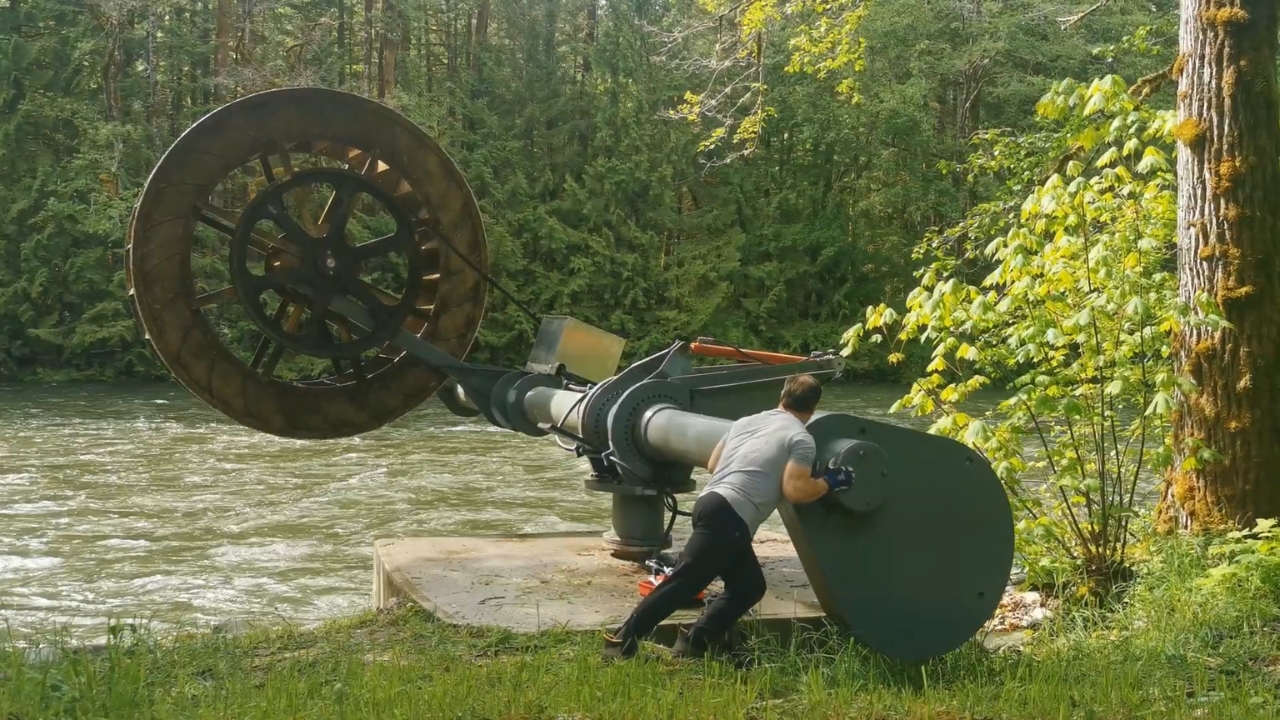
A Canadian retiree creates a hydroelectric system on a real river, generating energy continuously throughout the day and demonstrating how the power of water can supply a house with stability even in a simple structure.
-
Giant of the winds in Rio Grande do Norte: Serra do Tigre Wind Complex receives new investments and accelerates the expansion of clean energy generation to supply millions of Brazilian homes.

-
Petrobras reaffirms its commitment to the market and ensures that it will carry out the energy transition safely to maintain national sovereignty.


Frequently Asked Questions From Wind Turbine Customers
- What is The Wind Speed Needed For A Domestic Wind Turbine To Operate Efficiently?
A: It varies, but is generally between 10 to 16 km/h.
- Can I Install A Wind Turbine In An Urban Building Or Apartment?
A: Generally not recommended, but there are specific models for urban environments with low noise.
- How Long Does It Take To Recoup The Investment In A Domestic Wind Turbine?
A: It depends on several factors, but on average, it takes 5 to 15 years, considering the initial cost, the energy generated, and the local energy price.





Seja o primeiro a reagir!