





 Portuguese
  English
  Spanish
  4 min of reading
  3 comments


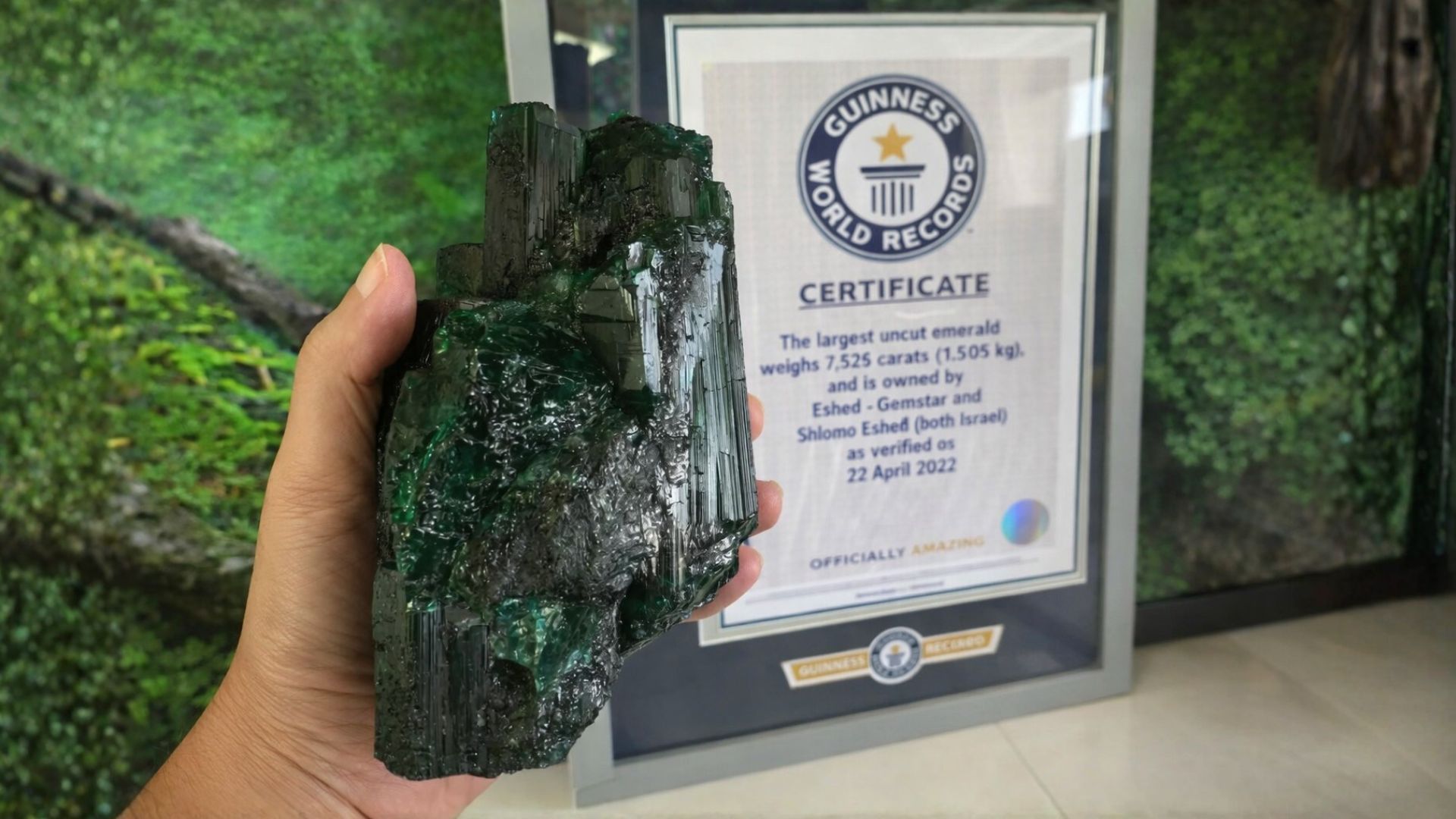


Rough Crystal Weighing 1.505 kg Extracted in Zambia Enters Guinness as Largest Uncut Emerald in the World and Mobilizes International Market with Traceability Technology, Private Auction, and Debate on the Destination of the Record Stone.
A rough emerald weighing 7,525 carats, or 1.505 kg, was extracted in Zambia and entered the Guinness World Records as the largest uncut emerald ever recorded, following official validation on April 22, 2022.
Nicknamed Chipembele, the stone was sourced from the Kagem mine in Copperbelt province and became an unparalleled rarity for the industry, which typically deals with large crystals in fragments, rather than a single piece of this weight.
In addition to its unusual volume, the gem drew attention for being described as a beryl crystal with a well-defined hexagonal structure, featuring an intense green hue and low presence of inclusions, a combination considered rare for a rough material of this size.
-
Friends have been building a small “town” for 30 years to grow old together, with compact houses, a common area, nature surrounding it, and a collective life project designed for friendship, coexistence, and simplicity.

-
This small town in Germany created its own currency 24 years ago, today it circulates millions per year, is accepted in over 300 stores, and the German government allowed all of this to happen under one condition.

-
Curitiba is shrinking and is expected to lose 97,000 residents by 2050, while inland cities in Paraná such as Sarandi, Araucária, and Toledo are experiencing accelerated growth that is changing the entire state’s map.

-
Tourists were poisoned on Everest in a million-dollar fraud scheme involving helicopters that diverted over $19 million and shocked international authorities.


Kagem Mine and Emerald Production Weight in Zambia
Kagem is an open-pit operation located in the Lufwanyama district, in an area known for Zambian emerald deposits, and holds a license of 41 km², according to corporate information from the mining operation itself.

From a corporate perspective, the mine is controlled 75% by Gemfields, while the remaining 25% belongs to the Zambian government, an arrangement that helps explain the economic impact of exceptional discoveries beyond the jewelry market.
It was in this environment that, in July 2021, Chipembele appeared during the work of geologists and field teams, in a discovery that Guinness itself described as a find in Copperbelt, reinforcing the direct link to Kagem.
Guinness Record and Criteria for Largest Rough Emerald
The title awarded by Guinness refers to the category “Largest uncut emerald”, meaning that the measurement considers the gem in its rough state, before any cutting, polishing, or shaping, a step that usually reduces volume to prioritize brilliance, transparency, and color.
On the technical gauge of gemology, 1 carat equals 0.2 grams, which places the 7,525 carats exactly in the range of 1.505 grams announced in the record descriptions, helping to dimension the size with comparable numbers.
Guinness also contextualized that Chipembele follows other very large stones discovered in the same complex, citing previous finds such as Insofu and Inkalamu, although none of them reached the same weight level as the new record.
Name Chipembele, International Auction, and Buyer
The name Chipembele means “rhino” in the Bemba language, spoken by local communities, and the association did not stop at the translation, as Guinness described that the piece was named in reference to a “horn” visible on the top.
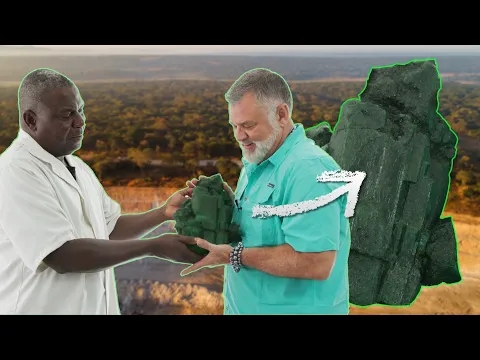

The purchase of the emerald was attributed to the Israeli company Eshed-Gemstar, which acquired the stone in a high-quality emerald auction organized by Gemfields in November 2021, without public disclosure of the final transaction value.
In the announcement regarding the validation of the record, Gemfields registered the participation of Eshed-Gemstar founder Avraham Eshed and maintained a direct quote from the executive commenting on the intention behind the milestone achieved.
“We wanted to do something really special to celebrate our relationship with Africa and African gemstones,” said Avraham Eshed in a statement published by Gemfields, associating the record with the strategy to promote African natural gems in the international market.
Blockchain, Nanoparticles, and Emerald Traceability
In an industry increasingly pressured for transparency, Chipembele received a traceability package that includes DNA nanoparticle tagging and registration on a blockchain ledger, technology attributed to the Provenance Proof service linked to the Gübelin lab.
The logic behind this registration is to allow any gemstones cut from the same crystal to be traced back to the original rough material, creating a traceable chain of custody in certificates and reports, directly impacting the trust of the end buyer.
Detailing the record criteria, Guinness stated that verification required the emerald to be natural and unmodified, and mentioned the need for a laboratory report with analysis of composition, dimensions, and mass within the validation protocol.
Rhinoceros Conservation and Economic Impact
The public narrative surrounding Chipembele also incorporated an environmental component, as Gemfields reported that part of the proceeds from the sale was donated by Kagem to the North Luangwa Conservation Programme, aimed at the conservation of black rhinos in Zambia.
According to the same communication, the buyer would commit to contributing a share from future sales related to the stone, a move that connects the “rhino” symbol in the name to a conservation program, without detailing percentages or amounts.
In the economic backdrop, emerald mining in Zambia remains subject to regulatory decisions that influence the appetite of investors and buyers, as highlighted by the discussion about reintroducing an export tax mentioned by Reuters in January 2025.
Between record, mineral chemistry, traceability, and auction, Chipembele has become a rare case where a single rough stone concentrates cultural and commercial value, while the market awaits what cutting will reveal, should the piece be transformed.
If an emerald of this size were to reach the hands of a collector or jeweler, what would weigh more: keeping the crystal whole as a unique object of verifiable origin or dividing the gem into jewelry that spreads the story around the world?









Villager: Eu dou 20 trigos por isso
1⁰) Uma Pedra bruta preciosa NUNCA deve ser descrita em QUILATES e sim no sistema de peso internacional, o kg.
2) Uma pedra preciosa ou gema só deve ser descrita em QUILATES depois de lapidada.
3) O quilate vale UM QUINTO da grama e pode ser dividido em PONTOS. Um quilate tem 100 pontos.
4) A maior esmetalda do mundo é Brasileira, achada na Bahia e pesa 380 kg, cerca de 252,5 vezes maior que esta
Existem MILHARES de esmeraldas maiores que esta no Brasil.
Penso eu que também deva existir inúmeras esmeraldas maiores que essa no Brasil. Mas acontece que a mineração feita pela Gemfield em Moçambique e na Zâmbia preserva muito mais os canudos de esmeraldas, como é esse da reportagem. Aqui no Brasil a mineração arrebenta e estoura as pedras, muitas vezes o que era pra ser um canudo enorme ou um conjunto de canudos, fica so o caco, porque é muito dinamitado. Essa esmeralda que você se refere da Carnaiba Bahia, é uma canga, e nao um conjunto de canudos. Toda semana sai canga carregada de esmeralda, mas conjunto de canudos desse tamanho e peso, se tiver vira caco kkk