





 Portuguese
  English
  Spanish
 3 min of reading
  0 comments


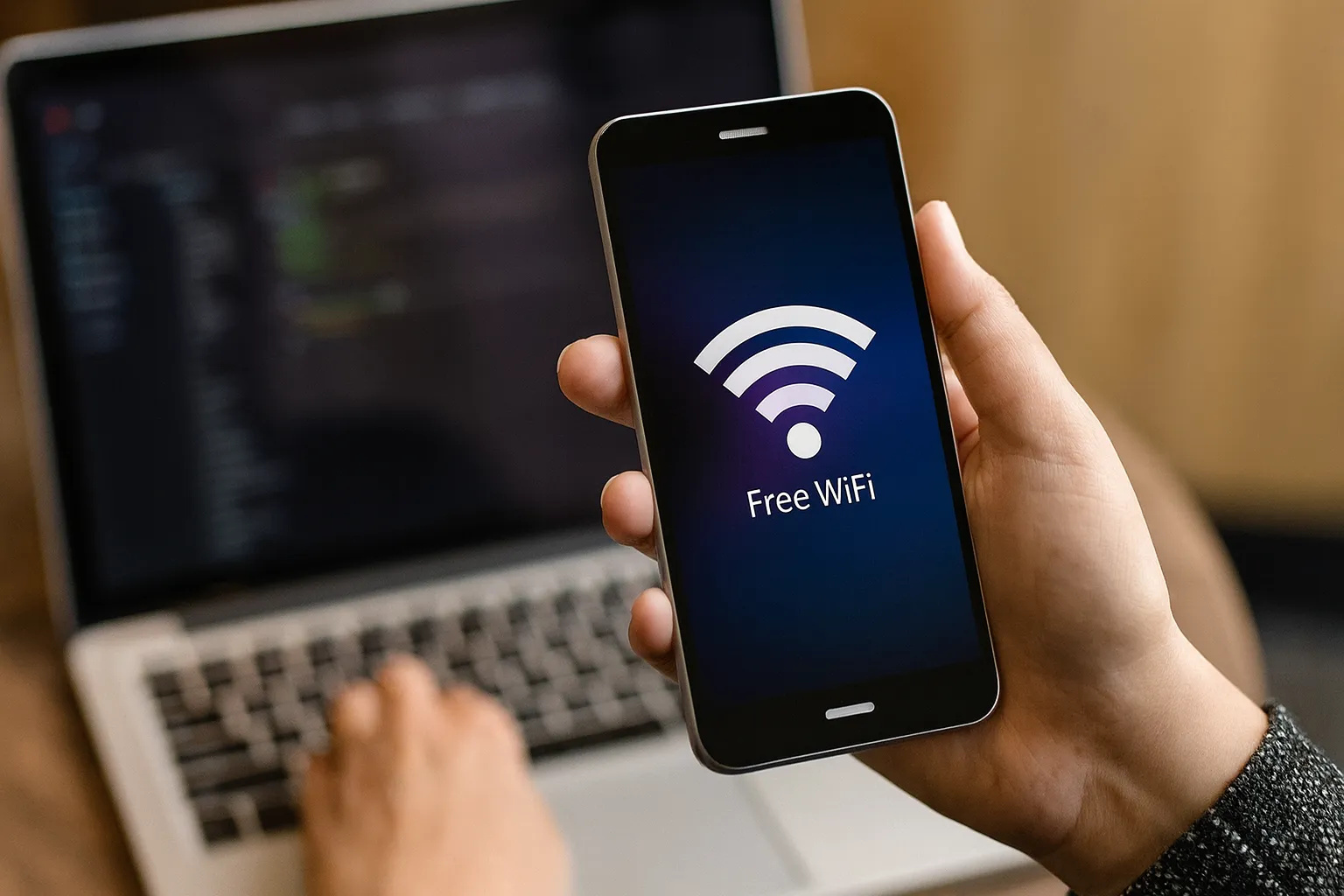
Have you ever connected to a free Wi-Fi network at a café, airport, or mall without thinking twice? This scene is common: a quick click, and voilà, the internet is free. But what many forget is that this convenience can come at a high cost. Public networks hide silent risks that open doors to information theft, invasions, and even banking scams. Ignoring these details can turn a few minutes of browsing into a problem that lasts for months.
Public Wi-Fi and Its Invisible Risks
Public Wi-Fi may seem harmless, but behind the free connection lie digital traps that exploit the lack of protection on these networks. Criminals use interception techniques to access passwords, photos, and even personal conversations. According to SaferNet Brazil, over 3,000 reports of cybercrime involving open connections were registered in just the last year. Meanwhile, the global report from Kaspersky (UK) indicates that 25% of successful digital attacks originate from unencrypted networks.
Blindly Trusting Any Open Network
A common mistake is to connect to any available network without checking its origin. Many scammers create fake access points, mimicking the names of known places, such as “Shopping_Free_WiFi.” This trap, called evil twin, is one of the most used to capture data without the user noticing.
-
Friends have been building a small “town” for 30 years to grow old together, with compact houses, a common area, nature surrounding it, and a collective life project designed for friendship, coexistence, and simplicity.

-
This small town in Germany created its own currency 24 years ago, today it circulates millions per year, is accepted in over 300 stores, and the German government allowed all of this to happen under one condition.

-
Curitiba is shrinking and is expected to lose 97,000 residents by 2050, while inland cities in Paraná such as Sarandi, Araucária, and Toledo are experiencing accelerated growth that is changing the entire state’s map.

-
Tourists were poisoned on Everest in a million-dollar fraud scheme involving helicopters that diverted over $19 million and shocked international authorities.


Accessing Banking Accounts and Social Networks
Making financial transactions or logging into social networks over public Wi-Fi is a huge risk. Information such as passwords and card numbers can be intercepted with simple software. The Central Bank of Brazil warns that over 40% of digital fraud cases in the country are related to insecure connections, especially on open networks.
Leaving File Sharing Enabled
Many devices come set up to automatically share files when connected to a network. This vulnerability can allow third parties to access personal folders and documents. Disabling this feature is one of the most basic protective measures.
Not Using VPN or Secure Connections
Another mistake is browsing without encryption. Tools like VPN create a secure tunnel between the user and the internet, making data almost inaccessible to virtual spies. Despite this, research from ESET Security reveals that less than 20% of Brazilians use VPN regularly, leaving most exposed in public environments.
Ignoring System Updates
Outdated devices are easy targets. Many updates fix security flaws exploited by hackers. Browsing on open networks without keeping your phone or laptop updated drastically increases vulnerability.
Using Repeated Passwords on Different Services
If a password is intercepted on a public network, all services associated with it are compromised. This practice increases the damage in the event of an attack. Experts recommend using two-factor authentication to create an extra layer of defense.
Leaving Wi-Fi Enabled Automatically
Configuring your phone to automatically connect to any network is another risk. The device may link to fake access points without the user noticing. Ideally, you should keep Wi-Fi turned off until it is truly necessary.
How to Browse More Safely on Open Networks
Although public Wi-Fi is convenient, it is possible to use it more safely by adopting simple measures:
- Prefer password-protected networks officially offered by the location;
- Use VPN whenever possible;
- Avoid financial transactions on open networks;
- Activate firewalls and keep antivirus updated;
- Revoke automatic connections on your device.
The Impact of Digital Awareness
More than technology, what protects users is information. Campaigns from the Federal Police and international bodies like Europol emphasize that individual attention is the first barrier against cybercrimes. A simple habit, like being suspicious of a free network, can be the dividing line between protection and exposure.
In the end, the lesson is clear: public Wi-Fi should be used with caution. The free connection may make the day easier, but the rush to connect cannot outweigh the need to protect your data. After all, your privacy is priceless — and today’s care can prevent tomorrow’s loss.










-

-

4 pessoas reagiram a isso.