





 Portuguese
  English
  Spanish
  4 min of reading
  20 comments


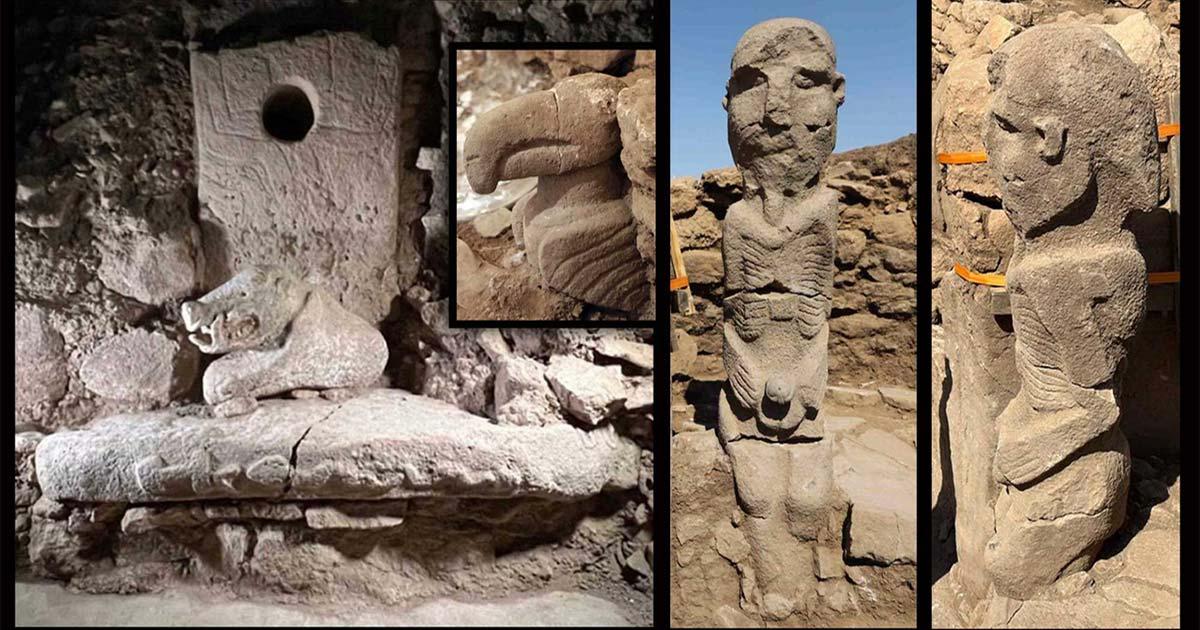


Archeologists Identified a Structure That May Be the Oldest Ever Made by Humans, Preceding the Egyptian Pyramids by Thousands of Years
Located in southeastern Turkey, Göbekli Tepe is one of the most intriguing archaeological sites ever discovered. Dated to approximately 11,500 years, much older than the Egyptian Pyramids, it challenges traditional conceptions about the building capabilities of Neolithic societies.
This monumental complex, composed of large stone blocks and pillars carved with figures of wild animals, suggests advanced architectural planning at a time when humans were still hunter-gatherers.
-
The lack of welders, electricians, and operators becomes a structural threat in 2025, with the construction industry and manufacturing already suffering from delays, cost pressures, and labor shortages in Brazil.
-
Brazil and Paraguay are just 46 meters away from a historic union on the bioceanic bridge that promises to revolutionize trade between the Atlantic and the Pacific.

-
With 55 km over the sea, a cost of US$ 20 billion, and enough steel to build 60 Eiffel Towers, China’s largest project has connected Hong Kong, Zhuhai, and Macau in a colossal bridge that defies the logic of engineering.

-
A trick with joint compound transforms a Styrofoam ceiling into a plaster-like ceiling: leveled panels, wires and mesh at the joints, sand, paint, and change the environment while spending little today.

Göbekli Tepe was built around 9,500 B.C., while the great pyramids of Egypt, such as the one at Giza, date to approximately 2,500 B.C. This means that Göbekli Tepe is about 7,000 years older than the pyramids.


The discovery of Göbekli Tepe was made in 1994 by German archaeologist Klaus Schmidt, who immediately recognized its importance.
He suggested that the site not only represented one of the earliest examples of monumental architecture but could also indicate a revolution in the social and religious organization of early human communities.
Before this discovery, it was believed that complex societies only emerged after the transition to agriculture, but Göbekli Tepe suggests that large social gatherings and coordinated efforts existed long before that time.

The Architectural Complexity of Göbekli Tepe
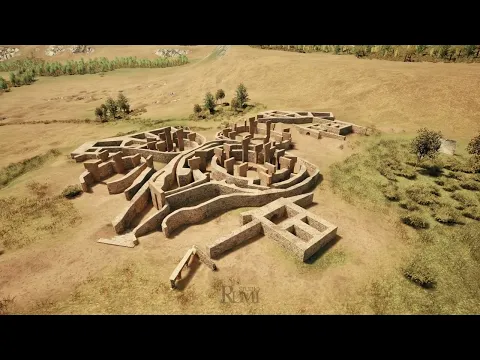
Göbekli Tepe consists of a series of circular structures, each containing monolithic pillars in the shape of a “T” that measure up to 5.5 meters in height and weigh between 10 and 20 tons.
These pillars are richly decorated with sculptures of animals such as snakes, foxes, lions, and vultures, as well as abstract patterns.


The precision and the amount of detail suggest that these constructions were not raised haphazardly but were meticulously planned.
Initial studies indicated that Göbekli Tepe was constructed over several centuries, with different groups of hunter-gatherers adding new elements to the site.
However, more recent research conducted by scientist Gil Haklay from the Israel Antiquities Authority and Professor Avi Gopher from Tel Aviv University suggests that the construction may have been planned as a single structure.
Using an algorithm to analyze architectural patterns, researchers found that the spaces between the monuments form an almost perfect equilateral triangle, indicating intentional geometric planning.
This discovery is significant because it suggests that Neolithic societies mastered mathematical concepts long before previously thought.
Historical and Cultural Implications
The discovery of Göbekli Tepe and its complex architectural structures profoundly challenges traditional theories about the development of early human societies.
It was believed that only after the agricultural revolution, around 10,000 years ago, did humans begin to develop advanced building techniques.
However, Göbekli Tepe proves that geometric knowledge and architectural planning existed long before that.
This raises fundamental questions about the nature of the society that built Göbekli Tepe. If the site was a religious or ceremonial center, it might have played a crucial role in the transition from nomadic groups to more sedentary communities.
Some archaeologists speculate that the gatherings at Göbekli Tepe could have led to the need for mass food production, accelerating the adoption of agriculture.
Moreover, the complexity of the sanctuary suggests the existence of a hierarchical society, with individuals specializing in specific functions such as sculpture, architecture, and labor organization.
This contradicts the traditional view that early Neolithic groups were egalitarian and did not have a clear division of tasks.

Life Around Göbekli Tepe
Recent research indicates that Göbekli Tepe may not have been just an isolated temple, but rather part of a thriving village. Archaeological evidence revealed the presence of small dwellings and signs of animal domestication.
This reinforces the hypothesis that the site was a ceremonial center regularly frequented by different groups over time.
The remains of animals found at the site suggest that hunter-gatherers brought large quantities of meat to be consumed during ceremonies.
This indicates a high level of cooperation among groups and a sophisticated understanding of resource management.
Furthermore, the organization required for the construction of Göbekli Tepe suggests that humans were already developing rudimentary forms of an economy based on collective labor.
The Legacy of the Göbekli Tepe Construction
The archaeological site of Göbekli Tepe continues to astonish archaeologists and historians. Its complex structures, intriguing symbolism, and advanced planning indicate that Stone Age humans were much more sophisticated than previously thought.
The discovery also raises questions about how and why the site was eventually abandoned and buried.
The work of scientists continues, with new excavations and analyses revealing details about the peoples who built and used this mysterious temple.
Meanwhile, Göbekli Tepe remains one of archaeology’s greatest enigmas, challenging our ideas about the past and the very origin of human civilization.
With information from BBC NEWS, Sci.news, and Cambridge.










Enigma é o modo como os historiadores tradicionalmente tratam tudo aquilo que contradiz o discurso oficial
Isso é bem incrível. Quer dizer que nossa história é muito mais rica que pensavam. Essas esculturas refletem a nossa criatividade em fazer coisas “avançadas” para época.
Imaginem o que ainda está para ser descoberto pelo mundo , construções
ainda mais antigas e maravilhosas
refazendo a história da humanidade
somos muito mais antigos.