





 Portuguese
  English
  Spanish
  4 min of reading
  1 comment


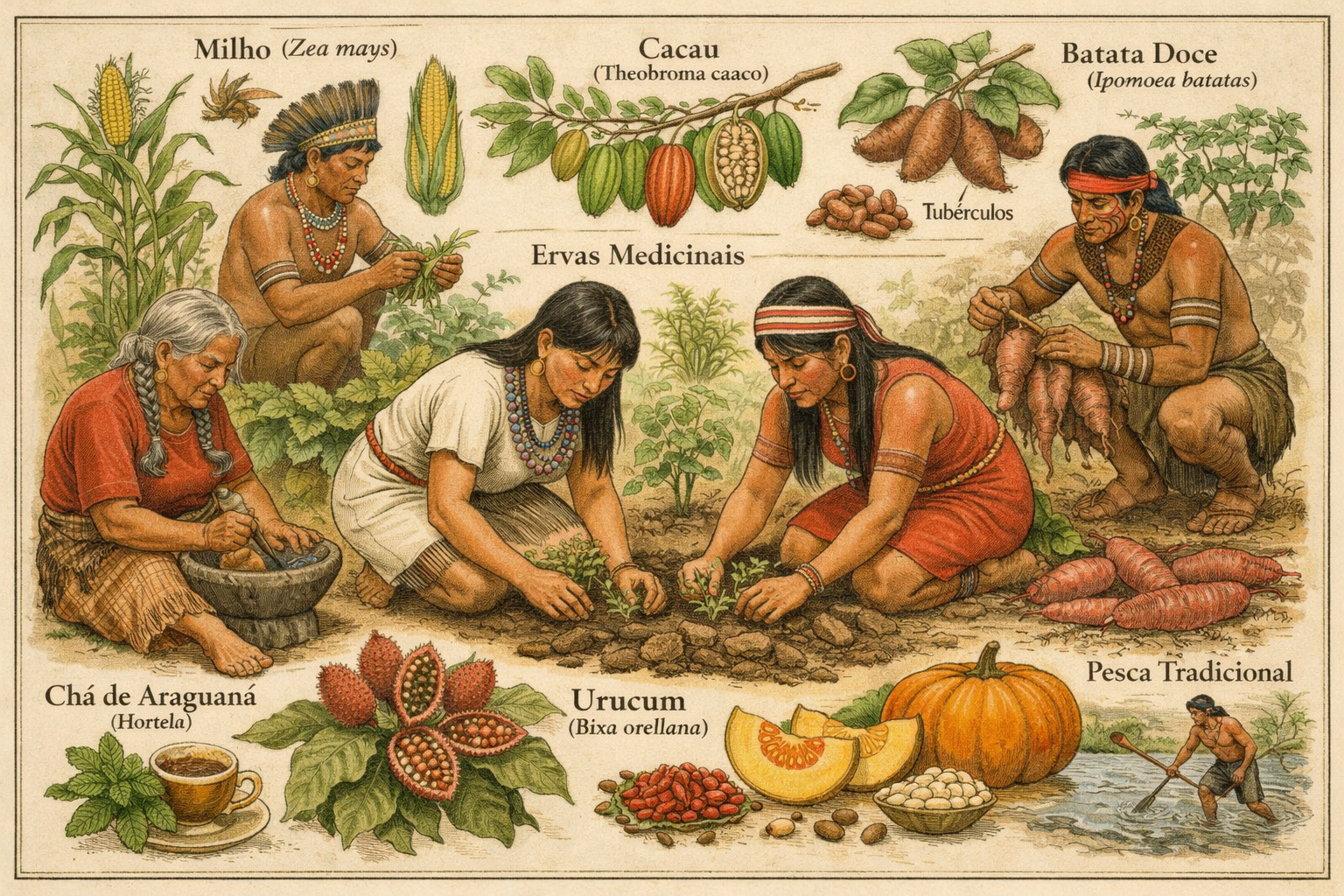


Indigenous Peoples Developed Sophisticated Solutions Over Centuries That Have Only Recently Been Valued by Modern Science in Areas Such as Health, Nutrition, Engineering, and Climate Change
Throughout history, indigenous peoples have made decisive contributions to the advancement of human knowledge. However, many of these contributions remained invisible for centuries. Still, techniques, foods, medicines, and environmental observations created by indigenous communities today support entire areas of modern science, such as medicine, agriculture, biology, and even climate studies.
The information was disclosed by BBC News Mundo, the international service of the BBC, in a report authored by Fernanda Paúl and published on August 9, 2024, in reference to International Indigenous Peoples Day. According to the survey, what Western science has only recently begun to “discover” has already been part of indigenous daily life for hundreds — and in some cases, thousands — of years.
“Ancestral knowledge is as rigorous and valid as modern science,” says Hugo Us Álvarez, a social development specialist at the Inter-American Development Bank (IDB). Similarly, anthropologist George Nicholas from Simon Fraser University in Canada emphasizes that “knowledge is knowledge, regardless of the form it takes.”
-
Spain surprises the world by erecting 62 artificial dunes, mixing sand with natural remains of posidonia, and causing the structure to lose only 1.4% of its volume in 1 year.

-
With 16 Bulava missiles, improvements in acoustic stealth, and a design focused on silent patrols, Russia’s nuclear submarine was born to ensure Moscow’s invisible retaliation and has become one of the pillars of its maritime strength.

-
‘Populous’ city in Rio among the worst in Brazil in national ranking and exposes silent development crisis.
-
Couple buys house in the South Zone of São Paulo, opens a hidden door in the garage, and finds a secret wine cellar with dozens of old wines forgotten since the 1970s.


Medicine, Foods, and Natural Solutions Created Long Before Laboratories
Long before the existence of hospitals and laboratories, indigenous peoples had already mastered sophisticated medical practices. According to the World Health Organization (WHO), around 40% of currently used medicines have a direct origin in traditional knowledge.
An emblematic example is aspirin. The substance that gave rise to the modern medication, salicylic acid, was extracted from willow bark by indigenous peoples of North America hundreds of years ago. They used this compound to relieve muscular and skeletal pain, long before the pharmaceutical industry.
Additionally, during the Covid-19 pandemic, scientists discovered in the quillaia, a tree endemic to Chile, an essential component for vaccines. However, long before this, the Mapuche indigenous people were already using the plant to treat stomach, respiratory, skin, and even rheumatism issues.
Similarly, plants like wild Mexican yam, hawthorn, and foxglove provided active ingredients for contraceptives and cardiovascular treatments. Thus, modern science merely systematized practices that already existed in indigenous tradition.
Superfoods That Indigenous Peoples Have Been Consuming for Centuries

In recent years, foods classified as superfoods have gained worldwide attention. However, many of them have already been part of the indigenous diet for centuries.
Spirulina, for example, now found in shakes, salads, and supplements, was harvested by the Mexica, descendants of the Aztecs, in Lake Texcoco. Rich in protein, the microalga served as an energy source for long journeys.
The same happened with quinoa, a staple food of the Incas, and chia, cultivated by peoples in Central and South America. Furthermore, amaranth, a seed rich in iron and protein, was widely used by Mesoamerican communities.
Only recently has the Western world begun to recognize the nutritional value of these foods, which have always been part of indigenous culture.
Inventions and Techniques That Anticipated Modern Science

Long before modern medicine, indigenous peoples already used instruments similar to syringes. Archaeological evidence shows that communities in South America used bird bones connected to animal bladders to introduce liquids into the body, cleanse wounds, and administer medication.
Likewise, techniques for sun protection also existed centuries ago. Indigenous peoples used natural oils, such as annatto, sunflower, and opuntia, to protect their skin from the sun. Furthermore, the Inuit peoples in the Arctic created the first sunglasses, made of wood or bone, to reduce sunlight reflection on the snow.
These simple yet effective solutions were only recognized by science much later.
Advanced Agriculture and Mastering Plant Hybridization
In agriculture, indigenous knowledge has also proven to be extremely sophisticated. Long before Gregor Mendel, considered the father of genetics, indigenous peoples had already mastered techniques of plant hybridization.
They learned, through observation and practice, that continuous seed selection allowed them to control the diversity of their harvests. Thus, varieties of corn, beans, squash, and potatoes as we know them today emerged.
According to researchers, the Incas managed to domesticate dozens of potato species, creating genetic combinations long before formal science understood these processes.
Indigenous Observations Help Understand Climate Change

Currently, scientists use satellites and computational models to study climate. However, increasingly, researchers are resorting to indigenous knowledge.
This is because these communities maintain detailed oral records about changes in climate patterns, animal behavior, and vegetation alterations over generations.
Anthropologist Richard Stoffle from the University of Arizona states that indigenous peoples have been monitoring climate changes “long before they became a regular public debate topic.” Thus, their observations offer a more complete view of environmental reality.
The “Firehawks” and the Ignored Ancestral Knowledge
One of the most curious examples involves the so-called incendiary raptors, known as “firehawks.” Recent research has shown that these birds intentionally spread fire to force prey to flee.
However, indigenous peoples in northern Australia have known about this behavior for centuries. In fact, traditional ceremonies had already depicted birds carrying fire, something that science ignored for a long time.
Only now has this ancestral knowledge begun to be valued, even as a tool for wildfire control.
An Ancient Knowledge That Remains Relevant
Observing these examples makes it clear that modern science is still “catching up” with indigenous knowledge. Therefore, specialists argue that integrating traditional knowledge into scientific research is not only fair but essential for tackling global challenges.
In your opinion, should modern science more swiftly recognize indigenous knowledge and integrate it into current research?








Conheci um senhor que bastava olhar pro céu e sabia dizer até que horas ia chover. Era um lavrador.