





 Portuguese
  English
  Spanish
  5 min of reading
  1 comment


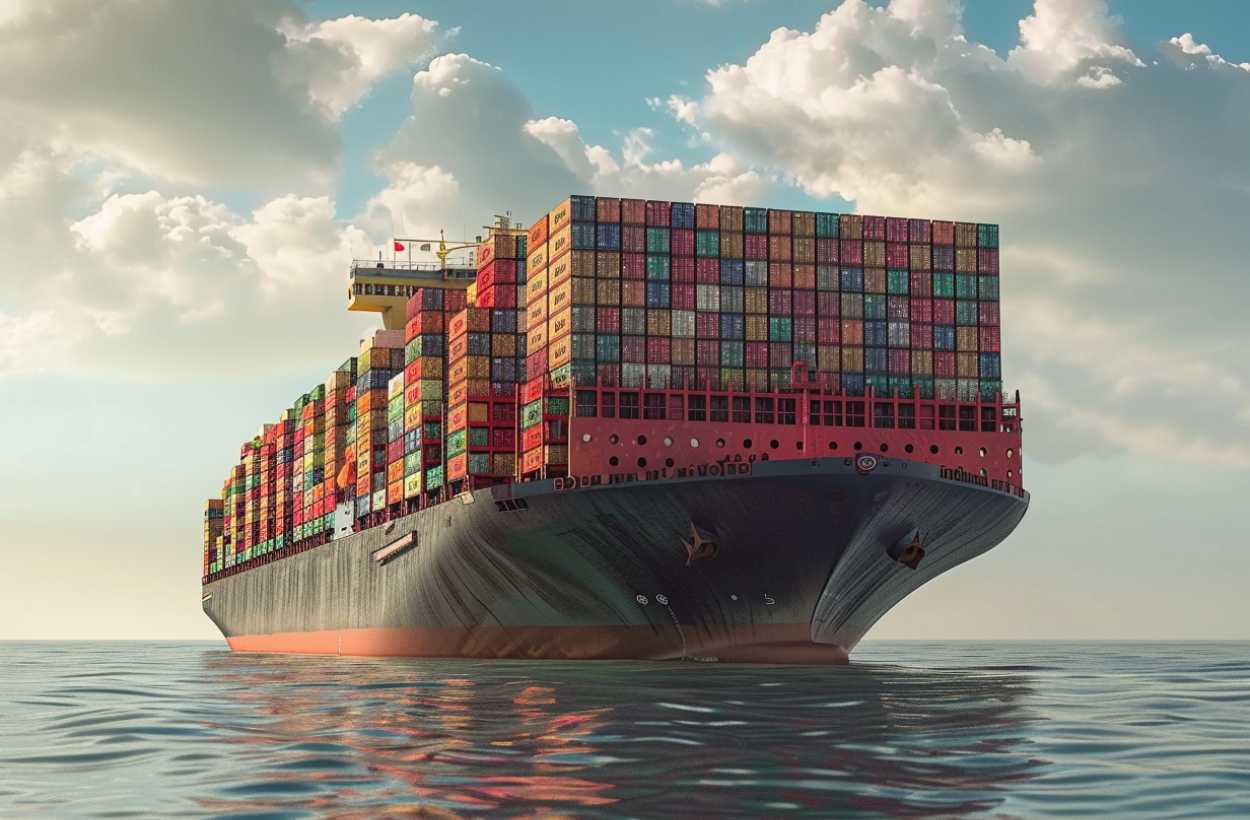


Discover The 7 Essential Types Of Cargo Ships For Global Maritime Transport, From The Vast Container Ships To The Specialized Gas Carriers, Each Playing A Unique Role In The Backbone Of International Trade.
Have you ever stopped to think about the complexity and diversity of the ships that cross the oceans to keep global trade running? Besides the famous container ships, there is a whole world of specialized vessels, each designed to transport different types of cargo across seas and oceans. These giants of the sea are the backbone of maritime transport, a vital sector that moves billions of tons of goods each year, sustaining economies and connecting markets on a global scale.
From robust container ships, through flexible general cargo ships, to specialized oil tankers and gas carriers, each type of ship has characteristics and functionalities that meet the specific demands of international trade. Understanding this diversity not only broadens our perception of maritime logistics but also highlights the importance of these vessels in the global economic landscape.
Container Ships: The Largest Cargo Ships


Structurally, container ships are equipped with holds and guide rails, which facilitate the loading and unloading of containers. These ships are built to withstand the adverse conditions of the sea, ensuring the safety of the cargo during transoceanic trips. The cargo capacity of these ships is impressive, with the largest container ships in the world capable of carrying over 24,000 TEUs (Twenty-foot Equivalent Units), meaning they can load thousands of 20-foot containers in a single trip.
-
São Paulo surprises the world with a colossal railway network project that promises over 1,000 km of tracks, R$ 194 billion in investments, and 40 projects connecting the capital to the interior with fast and sustainable trains.

-
The world’s largest escalator, measuring 905 meters in China, reduces urban travel time from 1 hour to about 20 minutes and transforms mobility in mountainous regions with an engineering solution adapted to the terrain.

-
A R$ 300 million logistics giant is taking shape in Serra with over 100,000 m² and raises a question: how can this transform e-commerce and distribution in the state?

-
Could Uber Rides Lose Minimum Fare? Understand What’s Happening!


Besides cargo capacity, container ships are designed to be efficient and fast, minimizing transit time and ensuring timely delivery of goods. They are the backbone of container maritime transport, an industry that handles a significant portion of global trade. The operational efficiency and mass transport capabilities of container ships have a profound impact on the global economy, facilitating international trade and contributing to the globalization of markets.
General Cargo Ships: The Versatile Traditionalist
Unlike container ships, which are optimized for standardized containers, general cargo ships have multiple holds and cargo spaces that can be adapted to accommodate different types of goods. They can transport loads that vary in size, shape, and storage requirements, including heavy equipment, vehicles, packaged products, bulk goods, and even liquids in specific tanks.
The configuration of the holds of general cargo ships is made in such a way that it can be adjusted with partition walls and platforms to create storage spaces that meet the specific needs of the goods to be transported. Many of these ships are equipped with cranes and other loading and unloading equipment, allowing independent operations in ports that lack infrastructure.
Bulk Carriers: The Specialists In Bulk Cargo
Bulk carriers are specialized ships designed to transport loose or bulk cargo, such as grains, coal, iron ore, fertilizers, and other granulated or powder materials. These vessels are fundamental to global maritime transport, given that many essential commodities for the world economy are moved this way.
They are characterized by having large cargo holds, known as holds, that can be filled directly with bulk cargo. These holds are vast spaces without partitions, allowing for the efficient storage of large quantities of goods. The structure of bulk carriers is optimized to facilitate rapid loading and unloading, which is crucial to minimize waiting time in ports.
Oil Tankers: The Titans Of Oil
Oil tankers are specialized tank ships for transporting large quantities of oil and its derivatives, such as gasoline, diesel, and crude oil. They are crucial elements in the global energy supply chain, playing a fundamental role in the fossil fuel market.
These vessels possess specific design and construction to handle the volatile and dangerous nature of the products they transport. Their size and structure are adapted to maximize cargo capacity and ensure safety during navigation. Oil tankers vary in size, from small “chemical” tankers to gigantic VLCCs (Very Large Crude Carriers) and ULCCs (Ultra Large Crude Carriers), which can transport hundreds of thousands of metric tons of oil.
Ro-Ro Ships: Efficiency On Wheels
Ro-Ro ships (Roll-on/Roll-off) are designed to transport loads that are rolled on and off the ship, such as vehicles, trailers, trucks, tractors, and even heavy equipment on wheels. This category of ship stands out for its ability to load and unload goods quickly and efficiently, making them a preferred choice for transporting vehicles and heavy machinery.
The main feature of Ro-Ro ships is their access ramp, which allows loads to be driven or towed directly into the ship, eliminating the need for cranes to load and unload. This not only significantly speeds up the loading and unloading process but also reduces the risk of damage to the goods, as they are handled less frequently.
Live Cargo Ships: Transporting Life
Live cargo ships are specialized in transporting animals, such as cattle, sheep, and horses, across the oceans. These vessels are designed to ensure the safety, well-being, and comfort of the animals during long maritime crossings, playing a crucial role in the international trade of live animals.
The internal layout of a live cargo ship is comparable to that of a floating stable, where spaces are divided into stalls and specific areas for feeding, resting, and veterinary care. Adequate ventilation, temperature control, and constant access to fresh water are essential aspects of the design of these ships to maintain a healthy and comfortable environment for the animals during the journey.
Gas Carriers: Essential In Sensitive Maritime Transport Of Gases
Gas carriers are vessels designed for transporting liquefied gases, such as liquefied natural gas (LNG), propane, butane, and ammonia. These ships are essential for the global gas trade, facilitating the movement of crucial energy and chemical resources between different regions of the world.
The design of these ships is highly specialized to keep gases in a liquid state, which is usually achieved through refrigeration or pressurization. The storage tanks aboard gas carriers are built with materials that can withstand the low temperatures necessary for the liquefaction of gases, keeping them stable and safe during transport.
This overview of the types of cargo ships reveals the complexity and diversity of maritime transport, a vital sector for the global economy, showing that there is much more than just container ships dominating public perception.









Gostaria de saber mas sobre esse modal de transporte marítimo.
Eu estudo na area de tecnológico em logística no ifes campo avançado de Viana ES.