Portuguese
  Spanish


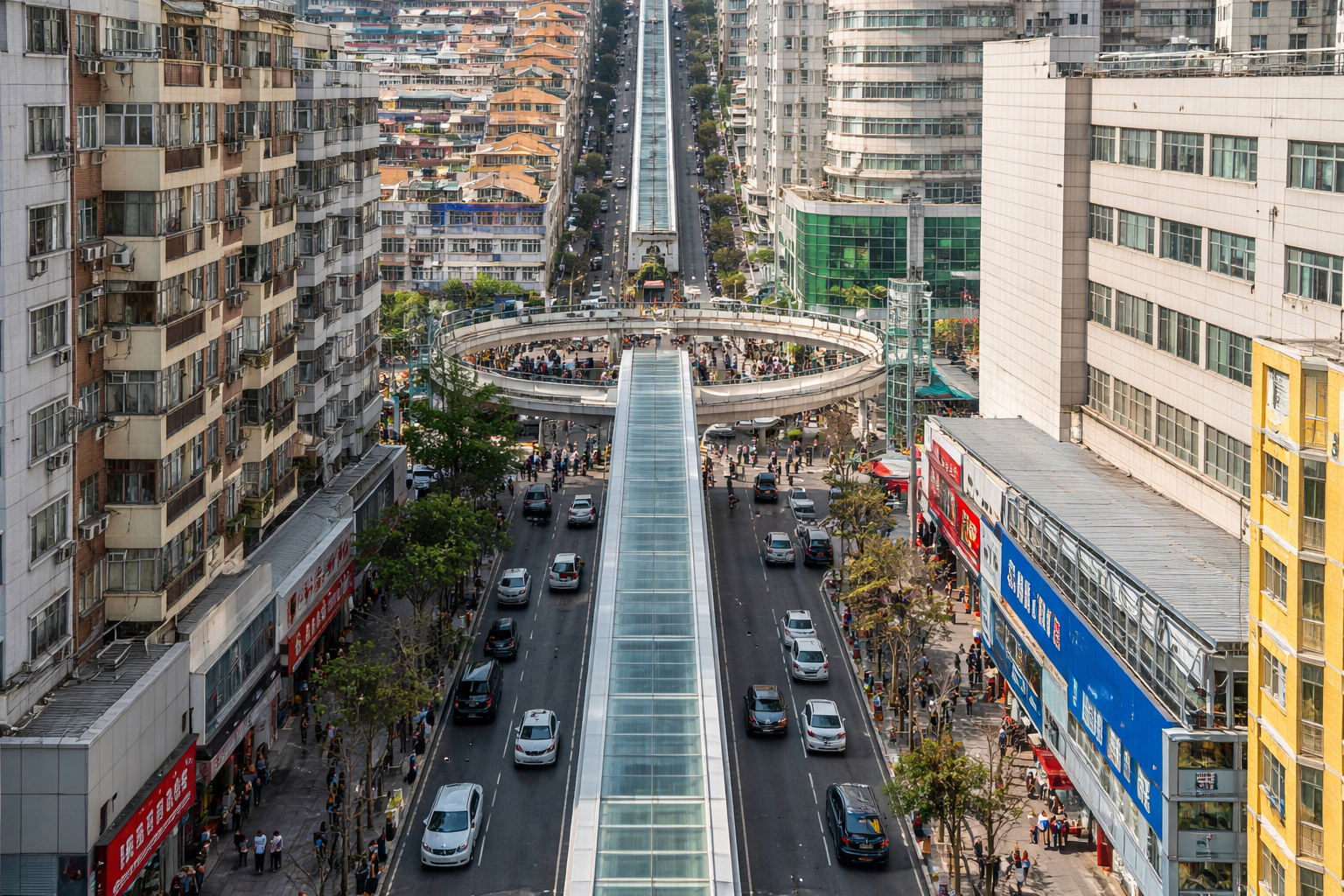

The largest escalator in the world redefines urban movements, shortens routes, and improves mobility in steep areas of China
A large-scale urban mobility solution was recently presented in China, attracting international attention.
The largest escalator in the world, with 905 meters of extension, began operation in 2026 and started transforming the routine of thousands of residents.
According to information released based on data from Chinese local authorities, the structure was created to reduce a route that used to take about 1 hour.
Now, the journey can be made in approximately 20 minutes, which directly alters the urban dynamics of the region.
Challenging terrain drives engineering solution
The construction was planned to meet an area of steep terrain.
Before the installation, residents faced long climbs, which required constant physical effort and increased travel time.
The project was developed as a functional and accessible alternative for the local population.
The escalator follows the natural slope of the land and demonstrates direct adaptation to geographical conditions.
The solution caters to different user profiles, including the elderly and workers who use the route daily.
Reduction in travel time transforms routine
With the operation of the structure, travel time has significantly reduced.
Previously, the entire route could exceed 60 minutes, especially in unfavorable weather conditions.
Now, the journey takes about 20 minutes, according to data from Chinese authorities.
The change directly impacts the productivity and well-being of residents.
The time savings contribute to a more efficient routine.
-
The Port of Itaqui closes the best first semester in history with over 17 million tons and takes off as the locomotive of the Northern Arc.

-
Brazil’s North-South Railway to Auction Two Grain Terminals in Central Tocantins

-
AI-powered traffic cameras in São Paulo now issue fines for cellphone use and seatbelt violations around the clock

-
Free Upgrade to Professional Driver’s License Categories in Over 130 Locations in Brazil, Including Exams and Courses



Direct impact on local urban mobility
The new escalator has taken on a strategic role in the region’s mobility.
The flow of people between lower and higher areas has become faster and more organized.
The structure facilitates access to services, commerce, and transportation.
Urban integration has been enhanced, improving circulation within the city.
The solution helps to reduce the physical effort required for daily commuting.
Technical project prioritizes safety and adaptation
The construction required detailed technical planning due to the characteristics of the terrain.
The engineering was adapted to ensure stability and continuous operation.
Specific solutions were adopted to accommodate the mountainous terrain.
The escalator operates safely and efficiently, even in challenging conditions.
The project demonstrates how engineering can overcome natural limitations.

Urban solution that addresses historical challenges
The installation of the escalator represents a direct response to an old problem in the region.
Traveling made access to different areas of the city difficult before the construction.
The infrastructure offers a practical and functional alternative.
Similar initiatives have been observed in other regions with complex terrain, according to urban sector analyses.
The project reinforces the importance of solutions adapted to local realities.
The role of infrastructure in the transformation of cities
The implementation of this structure highlights how investments in mobility can impact quality of life.
The reduction in travel time improves access to opportunities and services.
Integration between different urban areas becomes more efficient.
The Chinese experience serves as a reference for other regions facing similar challenges.
In light of this scenario, the adoption of solutions like this raises an important question: will cities with difficult terrain invest more in infrastructure to transform urban mobility?