





 Portuguese
  English
  Spanish
  5 min of reading
  0 comments


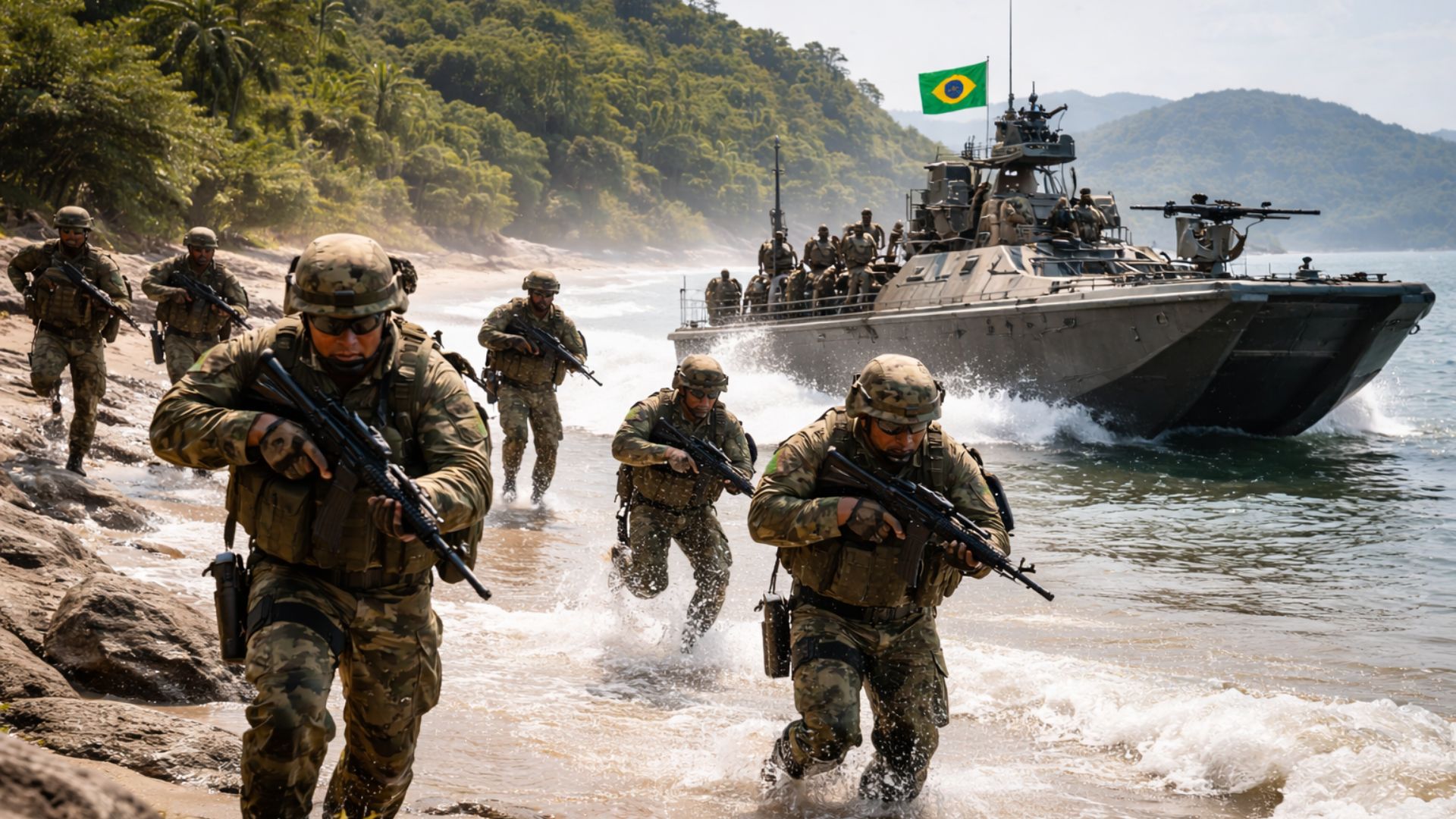
Restructuring of the Naval Marines Introduces Attack Drones, Fast Vessels and Integration of Anti-Ship Missiles into the ASTROS System, Expanding Presence Along the Coast, Rivers and National Defense Operations, as well as Strengthening Disaster Response Capacity and International Military Cooperation.
The Brazilian Marine Corps turned 218 years old on March 7, with a restructuring completed after two years of internal changes.
The reform, initiated in 2023 and aligned with the review of the National Defense Strategy of 2024, reorganized the troops into four operational fronts and incorporated new means to enhance readiness in military operations, along the coast, in riverine areas, and also in support actions for the population.
The advances were presented by the Navy on March 5, during an event held at the Fortaleza de São José, in downtown Rio de Janeiro.
-
Stephen Hawking said that the worst enemy of knowledge is not ignorance but the illusion of knowledge, and he dedicated his entire career to proving that science dies when people act as if they already have all the answers.

-
A man gathered Styrofoam, PET bottles, sand, and cement to build a recycled block using a mold made from an old board and a 50mm pipe to easily raise walls.

-
Man uses technique to save plaster with 20mm polystyrene panels, promises efficient thermal insulation and impresses with low cost in the construction.

-
Man digs a pool in his backyard, finds bars and coins of gold hidden, and discovers a treasure of nearly R$ 4 million buried for years.


New Operational Structure of the Naval Marines
The new structure divides the operations of the Naval Marines into amphibious, riverine, coastal and protective branches.
In practice, the change seeks to adapt the Force to more varied scenarios, without increasing the personnel, according to the command of the corporation.
The amphibious front preserves the historical vocation of projecting power from sea to land, while the riverine expands presence in strategic fluvial regions.
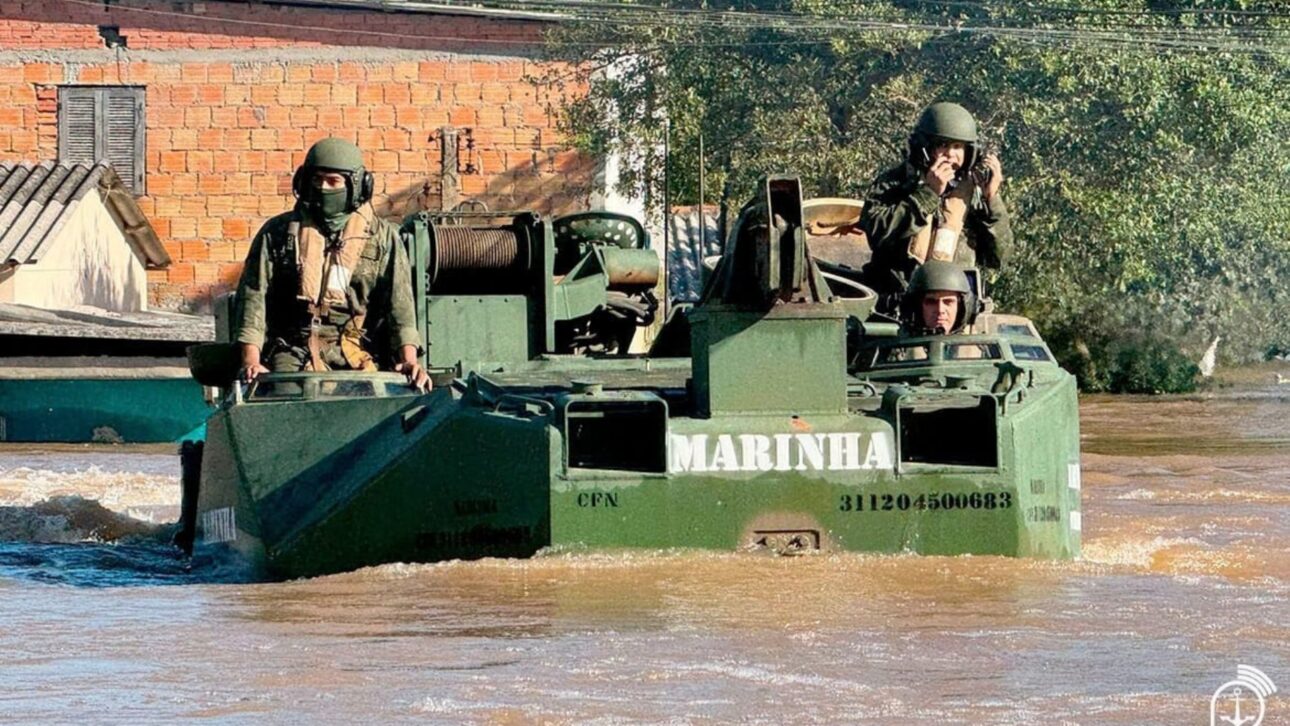
Today, three Riverine Operations Battalions operate in this mission of protecting sovereignty in areas of the country’s interior.
According to the chief commander of the Marine Corps, Admiral Carlos Chagas Vianna Braga, the reorganization was directly born from the guidelines of the recent strategic review.
When presenting the new structure of the Force, he stated that units were created focused on each of these areas without increasing the personnel, to enhance response capacity in light of current and future challenges.
This statement emphasizes that the restructuring was not limited to the purchase of equipment, but also altered the way the troops are employed.
Fast Vessels Expand Mobility in Operations
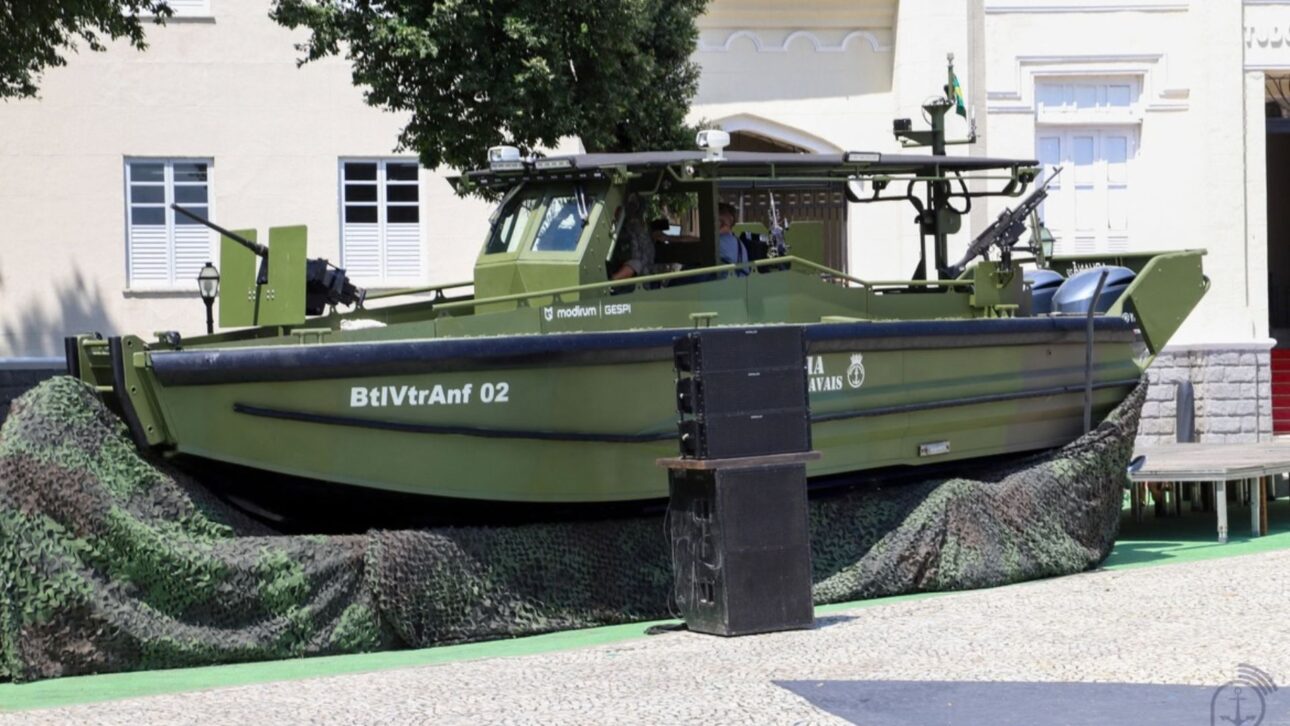
In the field of operational means, one of the innovations is the incorporation of Coastal Landing Craft (EDLit), designed and produced in Brazil.
Armored and highly mobile, they were designed for the rapid insertion of military personnel in coastal or fluvial sections with little infrastructure.
According to the Navy, these vessels can reach speeds of about 74 km/h, transport up to 13 military personnel, and operate with heavy machine guns, sensors, and thermal cameras.
This combination enhances tactical mobility in hard-to-reach areas and in immediate response operations.
Military Drones Integrate CFN Operations
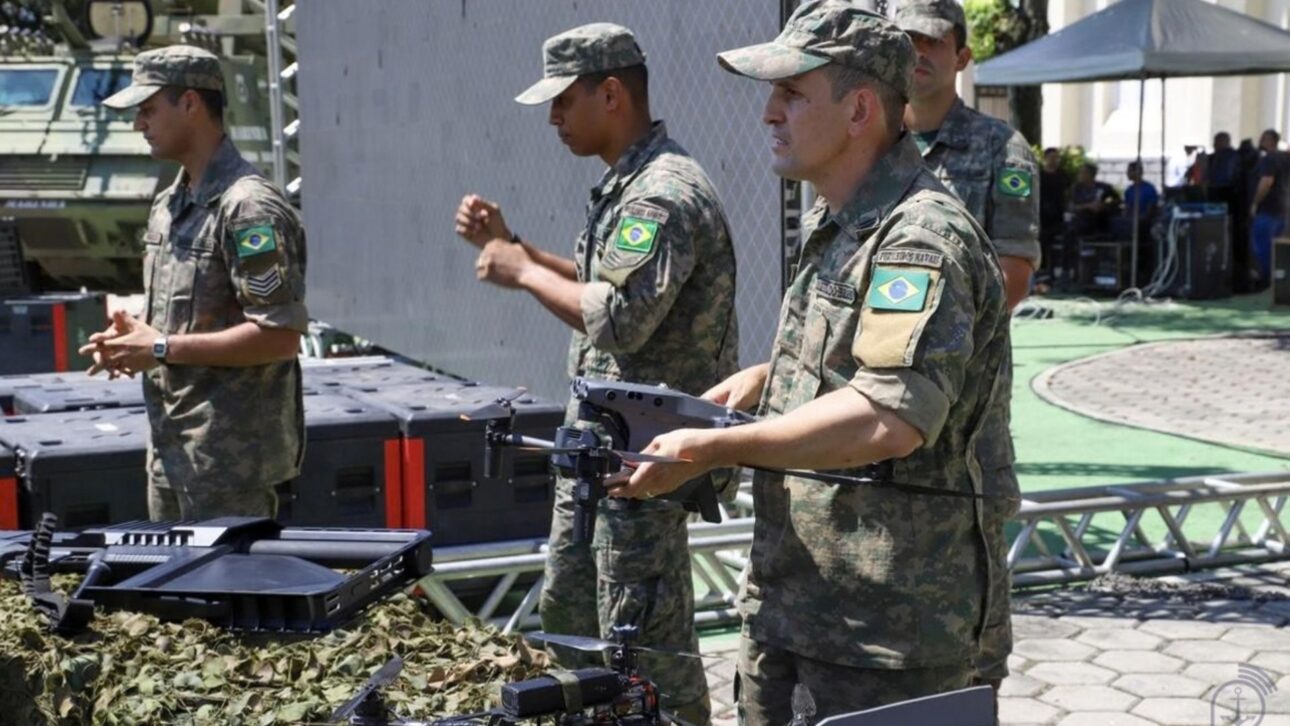
Another area of expansion involves unmanned systems.
The Marine Corps activated a Tactical Drone Squadron for Reconnaissance and Attack, equipped with remotely piloted aircraft aimed at reconnaissance, surveillance, and support for operations.
Among the systems are quadcopters with electro-optical, infrared, and thermal sensors, employed in both military fields and search and rescue missions.
The structure also includes fixed-wing drones intended for controlled attack missions, increasing engagement capacity without directly exposing military personnel on the ground.
Detailing the role of these systems, Rear Admiral Cláudio Lopes de Araujo Leite, commander of Marine Material, stated that “the equipment referred to as drones, as well as anti-drones on the other side, become an essential necessity.”
According to him, these technologies are relevant not only on the battlefield but also in dual-use activities, such as supporting the population in situations of environmental disaster.
The assessment helps explain why the Navy decided to consolidate training in this area with the creation of the Drone School at the Almirante Sylvio de Camargo Instruction Center, in the Naval Complex of Ilha do Governador, in Rio.
The inauguration of the new structure is scheduled for March 17.
Coastal Defense with Brazilian Anti-Ship Missile
The coastal branch is one of the significant changes to the traditional logic of employing the Naval Marines.
Historically focused on operations from sea to land, the troops now increasingly incorporate the capability to defend the coast from the mainland.
In this context, the integration of the ASTROS system with the National Surface-to-Ship Missile (MANSUP), developed in Brazil, comes into play.
According to the Navy, the missile has an approximate range of 70 kilometers, flies low over the sea, and can be fired from both Fleet ships and land platforms.
These systems form mobile coastal defense batteries and enhance deterrence capability in the so-called Blue Amazon.
Anti-Tank System Strengthens Terrestrial Combat Power
The modernization also includes the Expeditionary Anti-Tank Missile System (SMACE).
The set consists of a high-mobility armored vehicle equipped with the MSS 1.2 MAX missile.
Laser-guided, the armament has been described by the Navy as capable of piercing heavy armor.
Thus, the restructuring combines means for amphibious operations, coastal defense, and facing armored threats in terrestrial combat scenarios.
Military Capacity Applied to Environmental Disasters
The restructuring also strengthened the capacity for employment in civil emergencies.
One example is the Immediate Response Force for Environmental Disasters (FRIDA).
The initiative was created in partnership between the Navy, BNDES, and Cemaden.
The troop is equipped with vehicles, vessels, and a field hospital.
The structure has already been deployed in its first mission during the heavy rains that hit North Fluminense.
In the assessment presented by the corporation itself, the logistics used in combat scenarios are similar to those required in natural disasters.
This characteristic allows for the rapid mobilization of personnel and equipment when roads are blocked and communities become isolated.
International Exercises and Female Presence in the Troops
The transformation of the Naval Marine Corps extends to training, doctrine, and personnel management.
The Navy reported that military personnel regularly participate in exercises with forces from countries such as France, Italy, the United Kingdom, Chile, and Portugal.
The activities include operations and training such as Jeanne d’Arc, Dragão, Catamaran, Unitas, and Integrated Training Exercise.
This type of exchange helps to adjust procedures, standardize practices, and keep the troops exposed to more complex and varied scenarios.
In this process, the female presence is also growing in operational activities.
According to the Navy, more than 400 women are already serving in the Naval Marine Corps.
The military personnel are distributed across areas such as infantry, artillery, engineering, and armored operations.
One of the examples cited by the Force is that of Second Lieutenant Caroline Ávila. The officer commanded a platoon during COP30 and remained on board for 83 days.
In addressing this integration, Vice Admiral Pedro Luiz Gueiros Taulois stated that the female participation has already become a reality in different operational sectors of the corporation.







-

Uma pessoa reagiu a isso.