





 Portuguese
  English
  Spanish
  4 min of reading
  0 comments


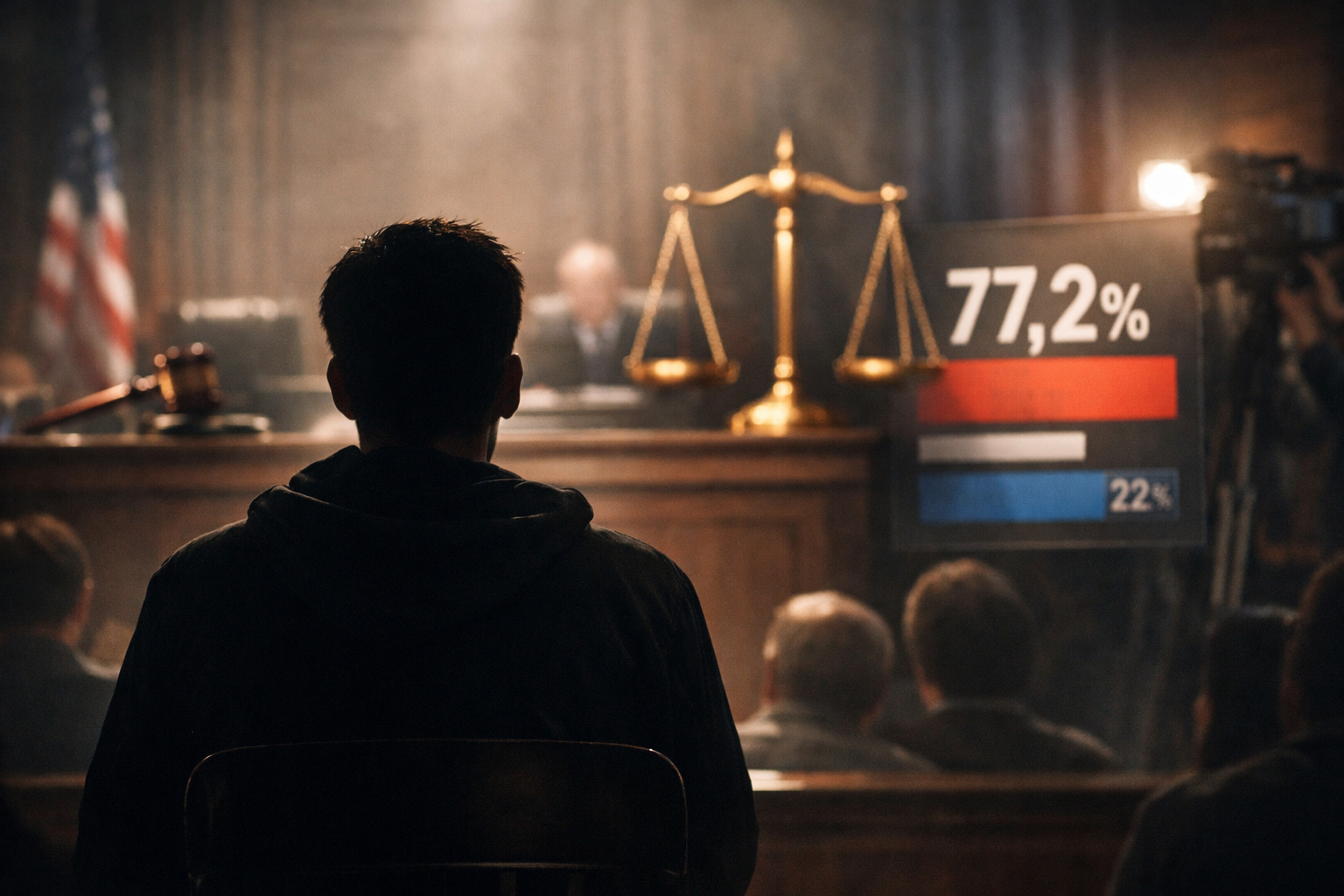
National survey reveals advancement of popular support for revising penal rules in Brazil, with an expressive majority defending changes in light of the public safety scenario
The debate over reducing the age of criminal responsibility in Brazil has returned to the center of national discussions after a recent survey revealed a compelling fact: 77.2% of Brazilians support changing the current legislation. This significant number thus highlights a growing dissatisfaction among the population with the current model and reinforces the pressure for reforms in the Brazilian penal system.
The information was disclosed by “Rádio Bandeirantes,” based on a survey by the Paraná Pesquisas institute, presented on the program Jornal Gente this Tuesday (31). According to the data, while the vast majority supports reducing the age of criminal responsibility, only 18.1% are against and another 4.7% did not know or preferred not to comment, which demonstrates a significant consensus around the topic.
International comparison and impact on public safety expand the debate in Brazil
Furthermore, the Brazilian scenario draws even more attention when compared to other countries. Currently, Brazil maintains the age of criminal responsibility set at 18 years, being one of the few — possibly the only one — to adopt this limit, even allowing young people aged 16 to vote for president, for example.
-
The law that many elderly people are still unaware of protects those aged 60 and over against abusive charges from banks, guarantees debt renegotiation, and prevents loans and credit cards from consuming their entire retirement pension.

-
Portugal approves Nationality Law: Brazilians from CPLP will have to live for 7 years to obtain citizenship (waiting for title does not count), rules tighten for children born in the country, Sephardim are excluded, and it awaits a decision from President António José Seguro.

-
Your neighbor is undergoing construction and debris has fallen on your property? This could lead to compensation and make the owner, responsible party, and construction company pay for the damages.

-
The noise law will no longer be in effect at 10 PM starting in June with a new rule valid during the 2026 World Cup.


Meanwhile, countries like Argentina and Sweden have already adopted stricter measures. Argentina recently reduced the criminal age from 16 to 14 years, about a month ago, while Sweden lowered it from 15 to 13 years, after the police dismantled a gang of contract killers made up of minors under 15 years old. Thus, the international comparison reinforces the argument of those advocating for changes in Brazil.
On the other hand, experts and political sectors warn of the challenges of this change. Still, the perception grows that the current legislation may be used by criminal organizations for strategic purposes.
Use of minors by criminal organizations intensifies pressure for changes
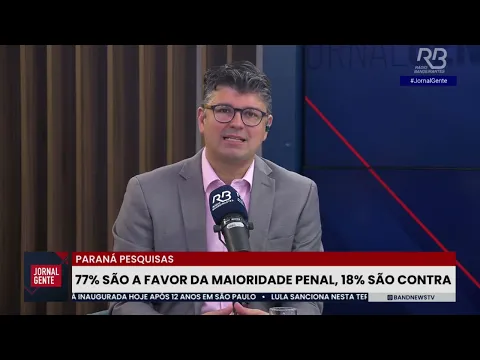

In this context, one of the most debated points is the use of adolescents by criminal factions. This is because the Brazilian legislation stipulates that juvenile offenders cannot be detained for more than 3 years, regardless of the severity of the crime committed. As a consequence, criminal organizations end up recruiting young people — often with fully developed physical constitutions — to commit serious crimes, taking advantage of this legal limitation.
Consequently, this scenario has fueled the increase in popular support for reducing the age of criminal responsibility. The survey shows that this support is present in all regions of Brazil, as well as crossing different levels of education.
When analyzed by age group, the numbers are also impressive. Among young people aged 16 to 24 years, support reaches 69.2%, while 27.2% are opposed. Among people aged 25 to 34 years, the rate rises to 74.4%. Among Brazilians aged 35 to 59 years, support exceeds 80%, while in the group over 60 years, it reaches 76.8%.
Additionally, there is a difference between genders: 79.2% of men are in favor of the reduction, compared to 75.4% of women. These data show that, although there are variations, support remains majority in almost all analyzed segments.
Political context and ideological divergences regarding the proposal
However, despite the strong popular support, the topic continues to generate divergences in the political landscape. The government of President Luiz Inácio Lula da Silva (PT) and sectors of the left are positioned against reducing the age of criminal responsibility.
In fact, during the processing of the Public Safety PEC, this point was removed from the final version of the text. The decision significantly altered the report presented by Deputy Mendonça Filho (União-PE), which began to focus on measures such as decentralization of security, greater autonomy for states, and restrictions on the progression of sentences for heinous crimes.
Thus, the debate remains open and is expected to continue being one of the main topics on the public agenda in the coming years, especially in light of the popular pressure evidenced by the data.
Finally, it is worth noting that the survey interviewed 2,060 voters in the 26 states and the Federal District, between 27 and 30 of this month, with a margin of error of 2.2 percentage points, plus or minus — which reinforces the reliability of the results presented.
In light of this scenario in which 77.2% of Brazilians show support for reducing the age of criminal responsibility, considering also international comparisons, the use of minors by criminal organizations, and the political divergences on the subject, do you believe that Brazil should revise its current legislation to align public safety and social justice, or are there more effective alternatives to combat crime without changing the criminal age?






Seja o primeiro a reagir!