





 English
  Francês
  Alemão
  Italiano
  Japonês
  Norueguês
  Portuguese
  Spanish
  3 min of reading
  0 comments



Extensive Uninhabitable Areas And Severe Climatic Conditions Explain The Low Population Density In Canada
Canada, the second largest country in the world by land area, impresses with the contrast between its vast territory and small population. With approximately 38 million inhabitants, the country has an incredibly low population density, especially when compared to other countries of similar size. The reason for this is directly related to a combination of geographical and climatic factors that make much of Canada uninhabitable for human habitation, according to the video from the Capital Finance channel.
Severe Climate: The Great Villain For The Lack Of Population
The climate is undoubtedly the greatest obstacle to Canada’s population. Much of the country is located at high latitudes, near the Arctic Circle, resulting in long and extremely cold winters. Regions like Nunavut, which covers an area almost as large as Mexico, have average annual temperatures below zero, which severely limits the development of economic activities and the viability of human settlements.


The northernmost provinces, such as Yukon and the Northwest Territories, also suffer from these adverse conditions. Combined with the extreme cold, the presence of permafrost — permanently frozen soil — further complicates the construction of infrastructure and agricultural practices. In these regions, the population density is so low that there are often more wild animals than people.
-
If the USA were to go to war with Brazil, Washington’s greatest fear would not be the attack itself, but facing a vast territory, prolonged resistance, and a costly, chaotic, and unpredictable occupation.

-
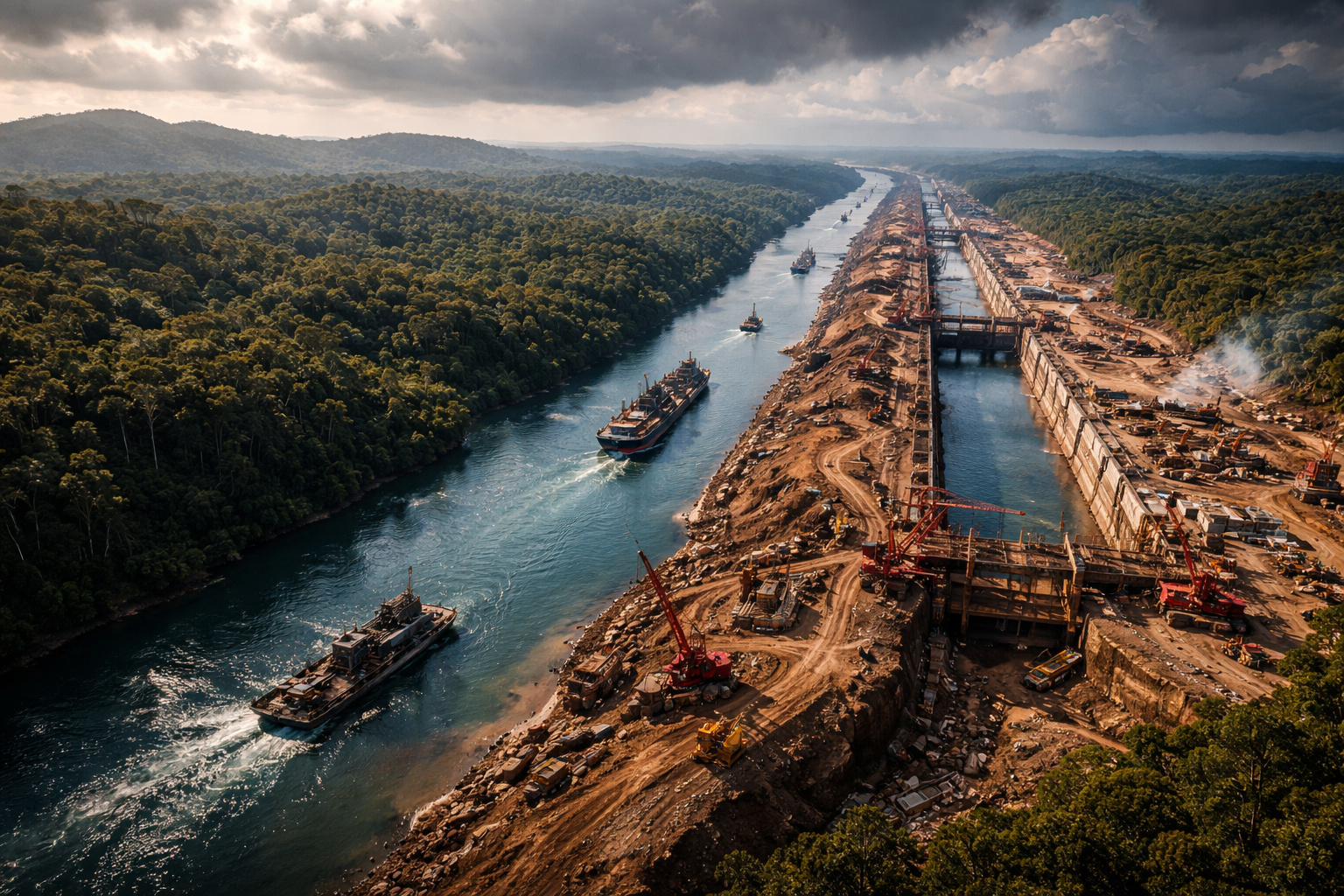
In 2013, Nicaragua sold the concession for a canal to rival Panama to a Chinese billionaire who lost 85% of his fortune, disappeared, and was declared bankrupt. Now the project resurfaces with a new route, a new Chinese partner, and a cost of $64.5 billion.
-
The USA announces a mysterious billion-dollar vault project to store critical minerals, but what intrigues experts is not just the plan itself, but why Latin America, including Brazil, has entered the center of this global dispute against China.

-
Trump Announces Bombing of U.S. Military Targets on Iranian Island Responsible for About 90% of Iran’s Oil Exports, Warns of Further Attacks if Navigation in Strategic Strait of Hormuz Is Threatened


Population Concentrated In The South
Due to the challenging conditions of the north, most of the Canadian population is concentrated in urban areas in the southern part of the country. Cities like Toronto, Montreal, Vancouver, Calgary, and Ottawa, located near the border with the United States, house nearly 40% of the total population of Canada. These cities not only offer a milder climate but also better job opportunities, education, and infrastructure, attracting both Canadians and immigrants.
This population concentration is also the result of increasing urbanization and a continuous migration to large urban centers, where economic development is more robust. Canada’s immigration policies, which encourage the arrival of new residents, also tend to direct these individuals to these large cities, further increasing the population concentration in the south.
Challenging Geography
In addition to the climate, Canada’s geography also presents significant challenges to settlement. The Canadian Shield, a vast area of ancient rocks that covers much of the northern part of the country, is a region of poor soils, unsuitable for agriculture, and filled with lakes and dense forests. This makes the area economically unviable for most human activities, contributing to its low population density.
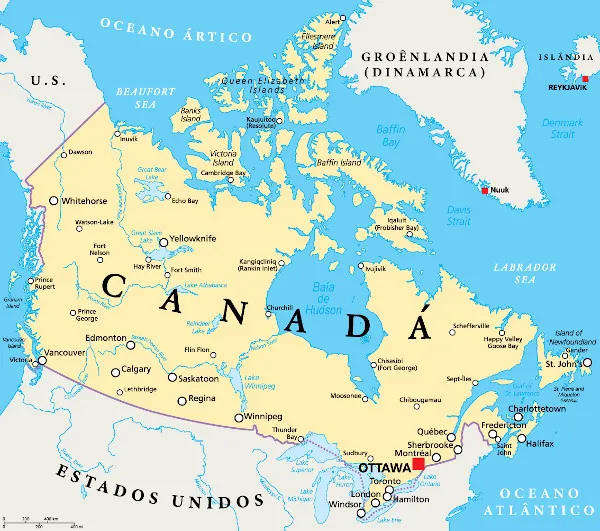
Another important geographical barrier is the Rocky Mountains, which extend from north to south across Canada, creating a natural barrier to human development. To the west, the combination of mountains and boreal forests further limits the areas available for settlement.
Historical And Economic Impact
Historically, the development of Canada has been centered in the south, where the milder climate allowed for agriculture and trade with the United States and Europe. During the 18th and 19th centuries, the Gulf of St. Lawrence and the Great Lakes became the main axes of economic development, with cities like Montreal and Quebec emerging as commercial and industrial centers.
This trend of development has persisted over the centuries, leaving the northern part of the country largely unexplored and uninhabited. Today, with the globalized economy, the southern regions continue to be the most attractive for investments and new opportunities, while the north remains a vast wilderness.









Seja o primeiro a reagir!