





 Português
  Inglês
  Espanhol
  3 min de leitura
  0 comentários


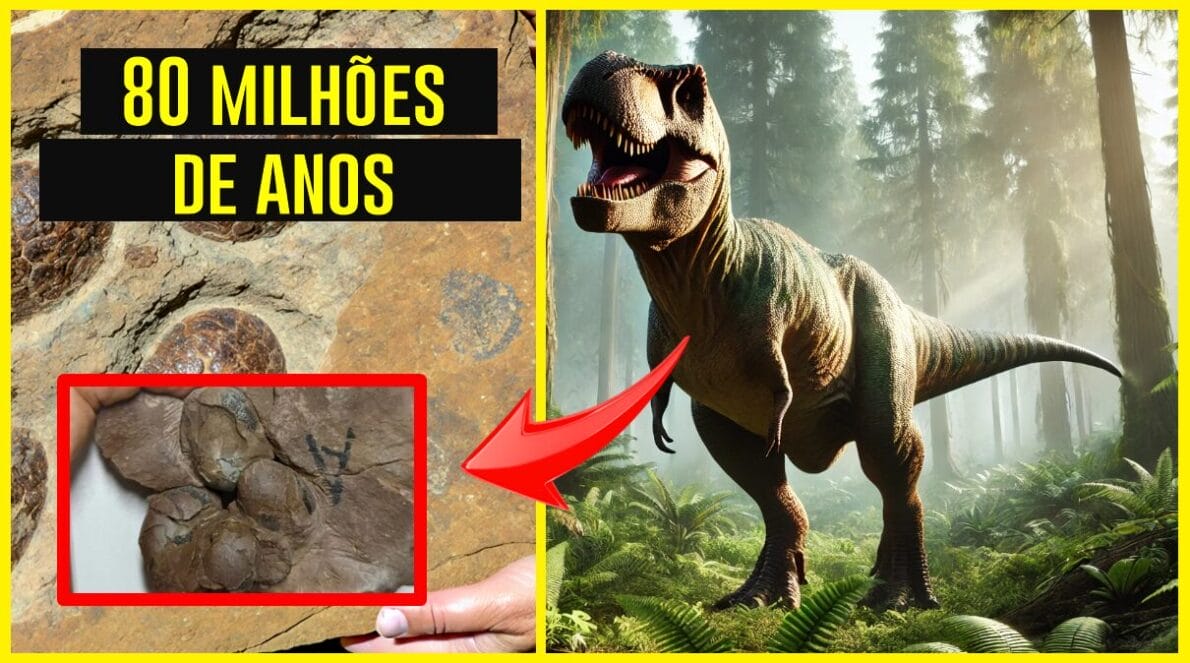
An Amazing Discovery! An Intact 80 Million-Year-Old Dinosaur Egg Fossil Was Found and Studied with Innovative Techniques That Preserve Its Structure. Discover How This Discovery Can Bring New Information About Dinosaurs!
A dinosaur egg fossil measuring just 29 millimeters in length was discovered in Ganzhou, Jiangxi Province, in eastern China. This is the smallest complete fossilized egg ever found to date, belonging to a new species of dinosaur within the oval-shaped egg family, according to the Xinhua news agency.
Named the “Ganzhou Mini Egg,” the fossil represents an important milestone in paleontology, as it provides valuable information on the reproduction and diversity of dinosaurs. The research was recently published in the academic journal Historical Biology, significantly contributing to the study of dinosaur evolution.
The Ganzhou Basin, located in southern China, is one of the richest fossilized egg sites from the Late Cretaceous, widely recognized for its abundant nests of fossilized eggs.
-
Drought may be creating stronger superbugs in the soil and helping antibiotic resistance reach hospitals, warns a study highlighting a problem that could grow alongside extreme weather.

-
The biggest scam in history: Napoleon’s France deceived the United States by selling them a territory that was Spanish.

-
Why is the Danakil Desert so dangerous? It has unstable terrain and how extreme temperatures and toxic gases turn the region into one of the most hostile environments on Earth.

-
With a height of 221 meters and a capacity for trillions of liters, Hoover Dam still holds a trick that makes water defy logic.

This site has stood out for producing embryonic eggs and exquisite nests, especially of oviraptorosaurs, a group of dinosaurs known for their beaks and feathers. In addition to oviraptorosaurs, fossilized eggs of other species, such as hadrosaurs and troodontids, have also been discovered, though in smaller quantities.
These eggs vary considerably in morphology, reflecting the diversity of species that inhabited the area during the Late Cretaceous. However, a common characteristic among many of them is their relatively large size.
Comparison with Previous Discoveries
The “Ganzhou Mini Egg” surpassed the previous record for the smallest fossilized egg, held by the “Jingguo Micro Ellipsoid Egg,” discovered in Zhejiang Province, also in China, which measured approximately 45.5 mm × 40.4 mm × 34.4 mm.
The fossil was found in 2021 by a team led by Lou Fasheng, chief engineer at the Jiangxi Geological Research and Exploration Institute.
During excavations at a construction site in Meilin, in the Ganxian district, a well-preserved nest containing nearly six intact dinosaur eggs was discovered.
Dinosaur Egg: The Study of the Fossil
After three years of study, in collaboration with specialists from the China University of Geosciences and the Institute of Vertebrate Paleontology and Paleoanthropology of the Chinese Academy of Sciences, the team confirmed that the fossils were indeed dinosaur eggs. The eggs were dated to the Late Cretaceous period, approximately 80 million years ago.
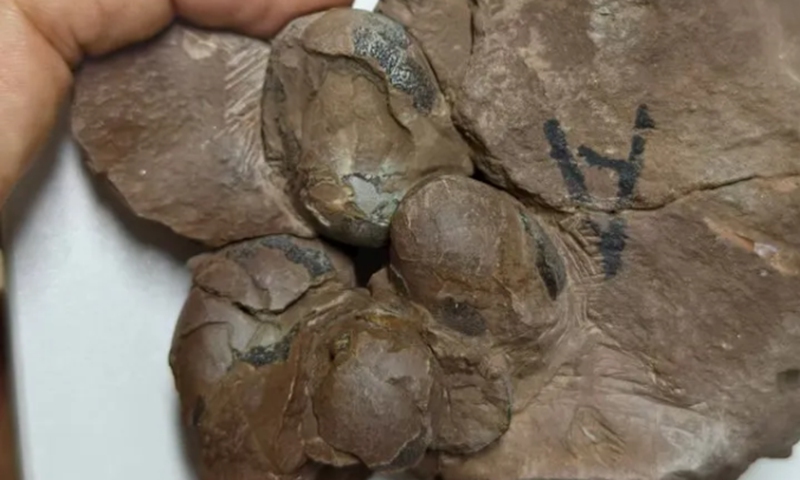
The study included the use of techniques such as scanning electron microscopy and backscattered electron diffraction to analyze the microstructure of the eggshell.
Based on the macroscopic shape and the ornamentation of the shell, as well as the basic structure of the shell units, the researchers classified the fossil within the family of dinosaur ellipsoidal eggs.
The New Species
The new fossil showed significant differences compared to previously known eggs, such as size, shell thickness, pore system, and ultrastructure. These differences allowed scientists to create a new genus and species for the egg.
According to Han Fenglu, associate professor of vertebrate paleontology at the China University of Geosciences, the analysis of the fossils suggests that these eggs belonged to a small theropod dinosaur.
This discovery contributes to the understanding of reproductive strategies of these dinosaurs and the diversity of eggs in the Late Cretaceous.
Next Steps in the Research
The next step in the research is to use micro-CT techniques to reconstruct the overall burial state of the fossilized eggs, which may provide more details about how the eggs formed and help identify the exact type of dinosaur that laid them, as well as study their reproductive behaviors.
This new phase of studies promises to reveal even more about the life and ecology of these ancient creatures, offering a unique window into the distant past.









-

Uma pessoa reagiu a isso.