Portuguese
  Spanish


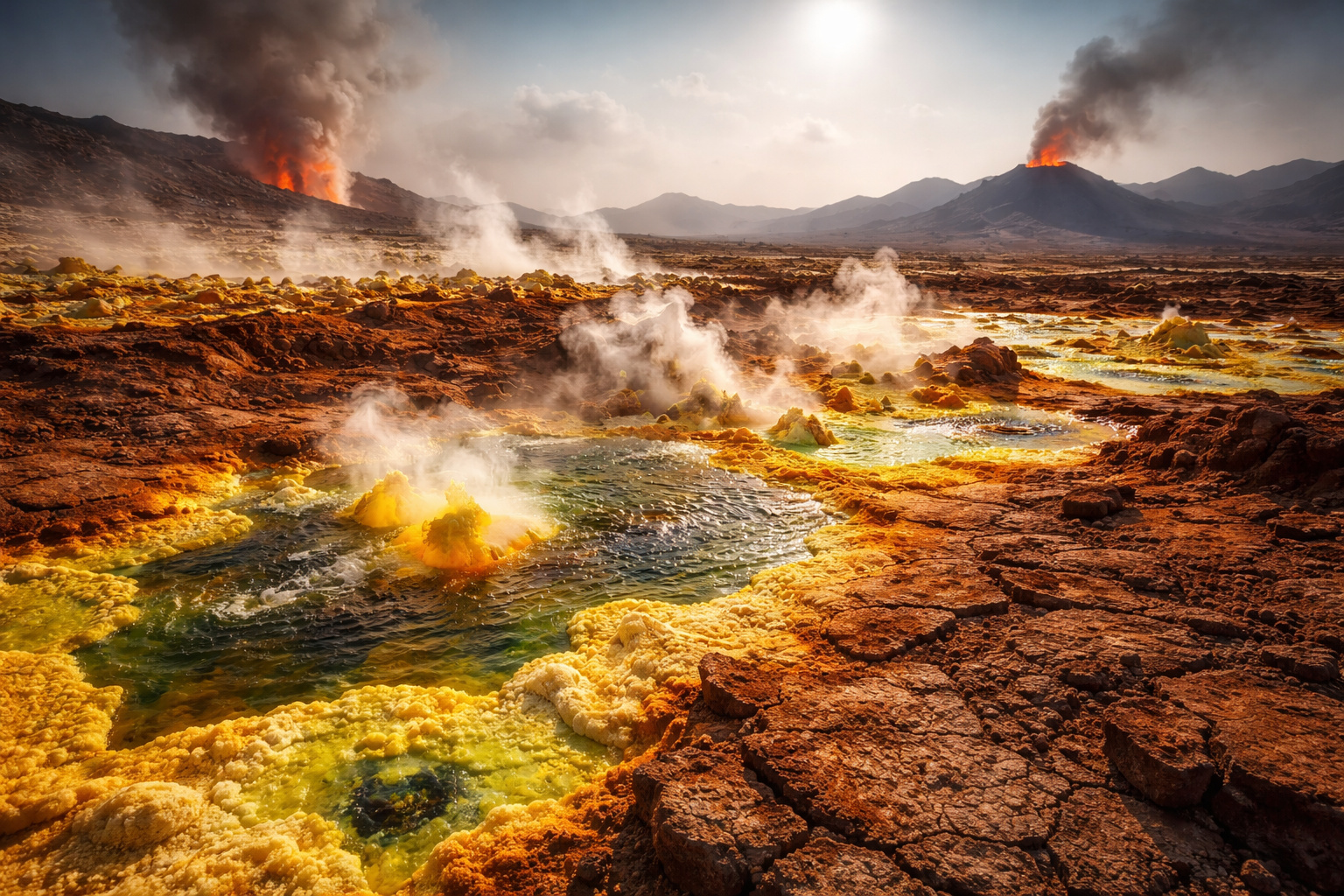

The Danakil Desert brings together extreme heat, volcanic activity, and chemical risks that challenge human survival and make the region one of the most hostile in the world
The Danakil Desert, located in Ethiopia, is considered one of the most extreme environments on the planet. The combination of intense heat, geothermal activity, and aggressive chemical conditions transforms the region into a practically uninhabitable scenario. The set of natural factors creates constant risks, from chemical burns to accelerated dehydration.
The landscape is impressive but hides severe threats. Among toxic vapors and unstable soils, any carelessness can result in serious consequences, reinforcing the location’s reputation as one of the most dangerous on Earth.

Extreme temperatures put the human body to the test
The heat in the Danakil Desert frequently exceeds 50°C, reaching up to 60°C. This level of temperature quickly compromises the functioning of the human body.
-
New York removed the tracks from over 2,500 subway cars and dumped everything at the bottom of the Atlantic, and what seemed like trash turned into an artificial reef teeming with fish and divers.

-
From matches sold by bicycle at age 5 to a global furniture empire: the lumberjack’s son founded IKEA at 17 in his uncle’s kitchen and transformed a small company into the largest furniture retailer on the planet.
-
The mansion in Flamengo, built in 1865 for the Baron of São Clemente and closed for 20 years, has become a spa, event hall, and gym for “Symphony,” a luxury condominium that sold 70% of its gross development value in the first month on the R$ 60 million land of the former Bennett College.

-
The Ipiranga convent, a 1924 building adjacent to the Museum that remained vacant for a decade and became home to dozens of cats, is reborn as “Alma Mater,” a luxury development worth R$ 130 million with a pool in the courtyard and a clubhouse in the former nuns’ chapel.





Prolonged exposure can cause severe sunstroke and dehydration in a short time. The absence of shade and sources of drinking water further intensifies the risk.
In this scenario, prolonged stay becomes practically unfeasible, even for people accustomed to hot climates.
Geothermal activity creates an aggressive chemical environment
The region hosts highly acidic hot springs, as well as lakes with corrosive chemical compositions. Contact with these substances can cause severe chemical burns.
The Dallol volcano constantly releases sulfurous gases. These vapors are toxic and can cause damage to the respiratory system when inhaled.
Danakil Desert, an African region known for extreme and hostile environmental conditions, also features visible sulfur fields, reinforcing the aggressive chemical nature of the environment.
Unstable terrain increases the risk of fatal accidents
The soil of the desert is made up of solidified lava, tectonic fissures, and fragile saline areas. This combination creates unpredictable terrain.
Walking through the region requires extreme caution, as there is a constant risk of falling into crevices or coming into contact with scalding surfaces.
Moreover, the lack of vegetation eliminates any possibility of natural shelter against heat or the gases released into the environment.
Lack of natural resources aggravates the extreme scenario
The total scarcity of drinking water makes survival even more difficult. Without natural sources of hydration, the risk of physical collapse increases rapidly.
The absence of vegetation also prevents the formation of milder microclimates. This causes heat and gases to concentrate, amplifying harmful effects.
This set of factors transforms the desert into an environment where staying depends on extreme preparation and rigorous planning.
Human presence does not reduce natural dangers
Despite the salt extraction activity in the region, therefore, natural risks remain high. Local workers face adverse conditions daily.
The proximity to unstable border areas requires, in some cases, the use of armed escorts. This adds an additional risk factor to the region.
Even with human presence, the environment remains dominated by intense and unpredictable natural forces.
The Danakil Desert thus combines characteristics that, individually, would already be dangerous. When combined, they create one of the most extreme scenarios on the planet.
Amid intense heat, toxic gases, and unstable soil, the region demands absolute respect. The experience in the area depends on preparation, knowledge, and constant caution.
If you found this content interesting, share it with others or leave your opinion in the comments.