





 Portuguese
  English
  Spanish
  5 min of reading
  0 comments


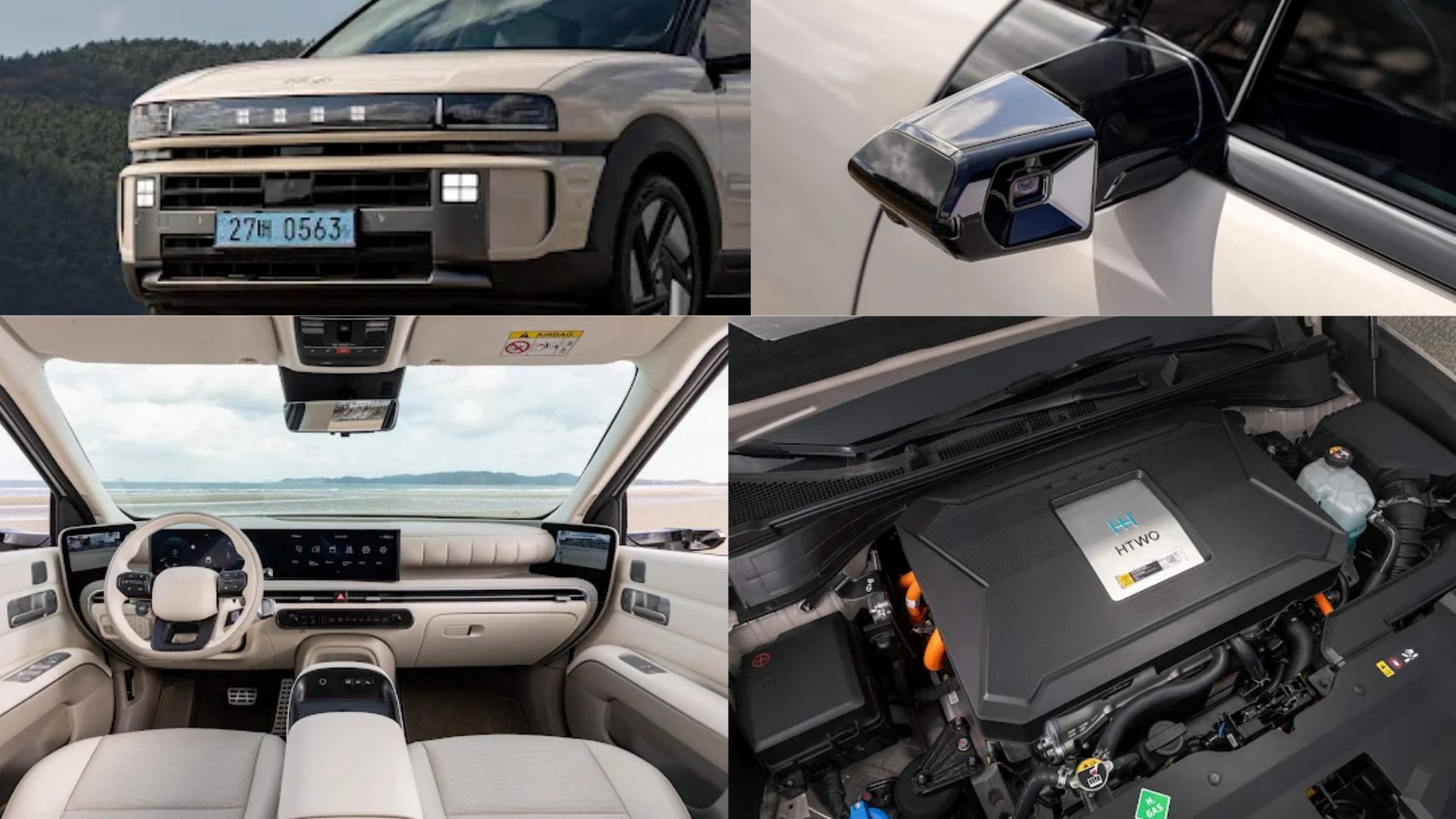
The New Hyundai NEXO Arrives With Advancements in Efficiency, Range, and Embedded Technologies, Gathering More Powerful Engine, Fast Charging, Structural Improvements, and Safety Features to Strengthen the Brand Strategy in Hydrogen-Powered Vehicles.
Engine, Fuel Cell, and FCEV System Performance
Hyundai has revealed the new NEXO, its next generation of hydrogen fuel cell electric vehicle.
The model is designed to run up to 826 km on the WLTP cycle with a single tank.
A refill takes approximately five minutes. The SUV will debut globally in early 2026.
-
The car stored for 38 years: when opening the barn door, what appears is breathtaking and looks like a scene from a movie!

-
Fiat works miracles in the Brazilian market, lowers the price of its 0 km hatch to R$ 69,990, reestablishes the model as the cheapest car in the country, and reignites the battle against Kwid and C3.
-
Chevette with cooking gas: How the gas cylinder ends up being used in cars clandestinely and why this makeshift solution can result in leaks, explosions, damaged engines, and seized vehicles.

-
Fiat launches the new 2027 Toro hybrid with 48V, 176 hp, an electric motor of 15.5 hp, a 0.85 kWh battery, up to 7% fuel savings, 8% fewer emissions, and possible exemption from IPVA.


It arrives with more power, greater range, and a package of technologies aimed at making hydrogen more viable for daily use.
The automaker positions the NEXO as a showcase of its hydrogen mobility strategy.
It combines a more efficient fuel cell set, a stronger electric motor, and improvements in power electronics, aerodynamics, safety, and connectivity.
The specifications released mainly refer to the European model, serving as a base for future markets.
The NEXO now delivers 190 kW of total power, an improvement over the previous 135 kW.
This gain comes from a redesigned fuel stack. The cell now reaches a gross power of 110 kW and 94 kW of net output.

The front electric motor generates 150 kW and 350 Nm of torque. As a result, the acceleration from 0 to 100 km/h drops to 7.8 seconds, down from 9.2 seconds.
Range, Tanks, and Energy Efficiency
The projected range of 826 km is achieved with 18-inch wheels. The system uses three hydrogen tanks with a total of 162.6 liters.
The set allows storing up to 6.69 kg of usable hydrogen. Previously, it was 6.33 kg.
Hyundai indicates a charging time of about five minutes. The approved European consumption is 0.81 kg/100 km with 18-inch wheels.
With 19-inch wheels, it reaches 0.89 kg/100 km. There are also improvements in storage density.
The efficiency of the fuel cell has been enhanced. The system received adjustments for operation at lower temperatures.
Power Electronics and Driving Technologies
The new NEXO adopted an updated power electronics system. The high voltage battery output has been doubled to 80 kW, up from 40 kW.

It has 2.64 kWh of energy. In the SUV, the e-Handling feature controls the motor’s torque.
This improves traction, stability, and steering response. The Smart Regenerative System (SRS) automatically adjusts the regeneration.
It uses navigation data and the distance to other vehicles. The aim is to reduce manual interventions.
The model features aerodynamic optimizations under the floor. The management of airflow around the body has also been revised. The improvements aim to enhance efficiency.
Interior, Space, and Connectivity Technologies
Inside, the NEXO offers practical solutions. The gear lever is located on the steering column.
This frees up space in the center console. The trunk features a modular platform.
Capacity reaches 1,719 liters with the first row folded. Behind the second row, there are 993 liters.
The central panel adopts two curved 12.3-inch screens. They integrate the Connected Car Navigation Cockpit (ccNC).
The system receives OTA updates. It includes Apple CarPlay and Android Auto wirelessly. It features a voice assistant with generative AI.
The model may offer a head-up display. There is a vehicle-to-load (V2L) feature with direct external output.

The digital center mirror may be present. Digital side mirrors are offered in some markets.
The NEXO may also feature front and rear cameras with recording capabilities. It includes parking monitoring. There is fingerprint authentication.
The model adopts Digital Key 2 via NFC for up to 15 devices. Smartphone charging offers 15 W via USB.
In some European markets, the vehicle can tow up to 1,000 kg. Hyundai claims it is the first FCEV with this capability.
Structure, Safety, and ADAS
The structure has been developed to achieve high scores in global testing. The body uses high-strength steels, parts in hot-stamping, and multi-skeleton architecture.
The airbag package can reach nine units. The ADAS suite includes autonomous emergency braking with forward detection.
It features lane-keeping assistance. It has blind-spot monitoring with active intervention.
It includes intelligent cruise control. The second-generation lane-keeping assistant is present.

The model integrates highway driving assistance. It offers second-generation remote parking.
The protection of the hydrogen system is given special attention. The architecture surrounding the tanks and the cell reduces deformation in collisions. It maintains the integrity of the cylinders and the safety of the occupants.
Acoustic Comfort, Finishing, and Design
The NEXO has received improvements in NVH. The SUV features active road noise cancellation (Active Noise Control-Road, ANC-R).
The tires have sound absorption technology. The suspension and insulation have been recalibrated.
These changes aim to enhance internal comfort. In design, Hyundai presents the “Art of Steel” language.
The lines emphasize robustness and visual presence. The “HTWO” lamps reinforce the hydrogen-related identity.
The “4 Dot Lamps” create a unique lighting signature. The SUV will be sold in six exterior colors.

The interior uses sustainable materials. There are bio-processed leathers, recycled fabrics, and bioplastics.
Dimensions, Technical Specifications, and Global Launch
The European model measures 4,750 mm in length. The wheelbase is 2,790 mm.
The width reaches 1,865 mm. The height is 1,640 mm, or 1,675 mm with a roof rack. The total power is 190 kW.
The fuel stack delivers 110 kW gross and 94 kW net. The electric motor has 150 kW and 350 Nm.
The high voltage battery provides 80 kW and 2.64 kWh. The tanks sum 162.6 liters and up to 6.69 kg usable.
The projected WLTP range is 826 km with 18-inch wheels. Hyundai states that the model will be launched in early 2026.
Variations in consumption and equipment depend on the market. It remains to be seen whether hydrogen infrastructure will evolve at the same pace to bring the NEXO into the daily lives of more drivers.









-

-

-

-

-

-

18 pessoas reagiram a isso.