





 Portuguese
  English
  Spanish
  4 min of reading
  0 comments


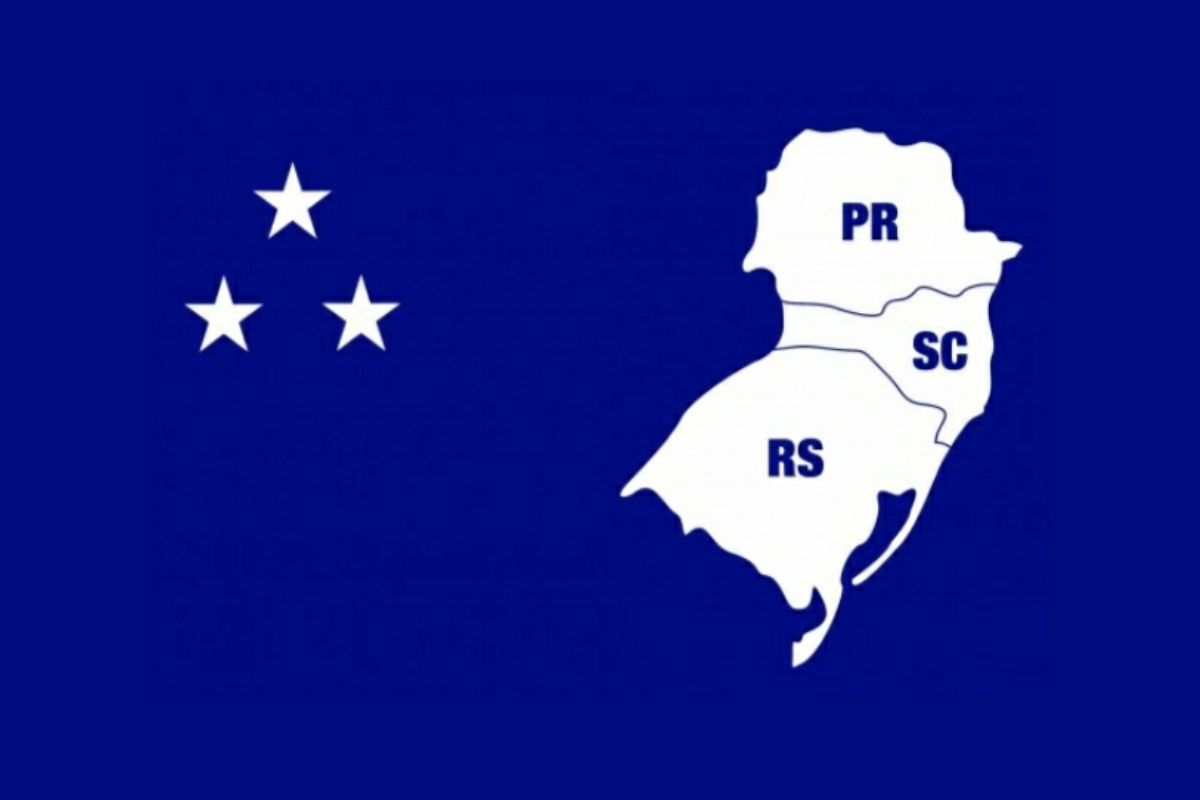
Separation Movement Gains Strength in the Southern States of Brazil, but Faces Legal Barriers and Practical Challenges. Understand the Idea, the Critics, and the Consequences.
In 2016, more than 600,000 people in the South voted “yes.” The idea: to transform the Southern states of Brazil into a new country. The separatist movement “The South is My Country” is more organized than it seems. Arguments involve economy and regional identity.
But would it be viable? What would be the consequences of separating the Southern region? Let’s analyze.
The Separatist Dream: The Movement “The South is My Country” and Its Motivations
The idea of separation in the South of Brazil is not new, dating back to the War of the Farrapos (19th century). The movement “The South is My Country” (OSMP) has existed since 1992. It is a private non-profit association. Its goal is the independence of the three Southern states of Brazil in a peaceful and democratic manner. Its headquarters is in Rio Grande do Sul, but it is present in 1,191 municipalities.
-
A forgotten cord on the floor of a basement in Vienna leads a plumber to a box containing 30 kilograms of gold with Mozart’s face, hidden before World War II. The treasure, worth 2.3 million euros, was just centimeters away from a worker who ignored the sign a day earlier.

-
A couple buys an old chalet, breaks the kitchen floor for renovation, and finds over a thousand coins of gold and silver hidden since the English Civil War over 4 centuries ago.

-
Rigid bags with their days numbered: new trend prioritizes comfort in 2026.

-
YouTuber creates an excavator equipped with a giant 4.5-meter sword to challenge his brother to a rematch, and the invention quickly goes viral on social media.

The OSMP promotes debates and consultations, such as the Plebisul (2016/2017). In this symbolic vote, 95.74% of the 616,917 participants said “yes” to separation. The movement claims to repudiate violence and discrimination. Its argumentative base includes the sulista cultural identity, seen as distinct from the rest of Brazil (mixed European origin, “warrior” personality, history of revolts). The group’s manifesto even states that Brazil “will never work.”
Legal Obstacles and Criticisms: Why Is the Separation of the South Almost Impossible?

Despite the organization, separatism in the South of Brazil runs into the law. The Brazilian Constitution of 1988 defines the country as an indissoluble union. There is no legal basis for a state or region to separate. Other movements (Northeast, São Paulo) face the same impediment.
Critics point out that the OSMP lacks a clear practical plan for a new country (currency, laws, security, etc.). Its documents are seen as confusing and contradictory. The legal basis the movement tries to use (Art. 4 of the Constitution and UN Resolution 1514) is considered misguided. Resolution 1514 addresses the self-determination of colonized peoples, which does not apply to the Southern states of Brazil, which have full democratic representation.
Separatism Around the World: Examples of Success, Failure, and the Case of the Southern States of Brazil
Separatist movements exist all over the world. Some have had partial or total success, such as Kosovo and South Sudan, although they face challenges. Others have failed or generated crises, such as Crimea (annexed by Russia) and Catalonia (illegal referendum repressed by Spain). Scotland had a legal referendum in 2014, but voted to remain in the United Kingdom. Somaliland declared independence in 1991, but is not internationally recognized. These examples show that separation depends on legitimacy, international support, and historical context, factors that do not favor the movement in the Southern states of Brazil.
Drastic Consequences: The Economic and Social Impact for Brazil
If the separatist movement in the South of Brazil were to take concrete actions with violence, the federal government could use mechanisms such as Federal Intervention or State of Siege. The current law (14.197/2021) provides for imprisonment for violent separatist acts.
Even a hypothetical peaceful separation would have serious consequences. Brazil would lose 17.4% of its GDP. Federal revenue would drop drastically, worsening the imbalance of the federative pact (where richer states like those in the South already subsidize others). This would deepen regional inequalities and the gap in public accounts. The idea of a “united nation” would be shaken, hurting national identity. Productive chains (agribusiness, industry) would be disrupted.
A New Country in the South? The Practical Challenges of Creating a Nation
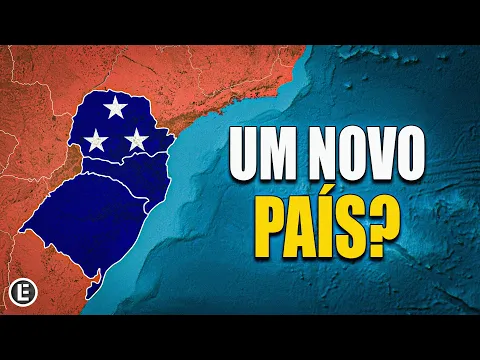

Creating a new country from the Southern states of Brazil would be extremely complex. The first problem would be international recognition, without which the country does not exist diplomatically (without the UN, treaties, etc.). It would be necessary to create a currency and monetary policy. Defining the nationality of the 30 million inhabitants would be delicate.
Federal services (Social Security, SUS, universities) would have to be replaced or renegotiated. It would be necessary to set up the entire structure of a State (justice, health, defense, diplomacy) from scratch, at a very high cost. Although the Southern region has an economic base (agriculture, industry), the transition would be turbulent and full of uncertainties. Perhaps the strength of the movement reflects more frustration with current Brazil than a viable separatist project.









-

-

-

10 pessoas reagiram a isso.