





 Portuguese
  English
  Spanish
  5 min of reading
  1 comment


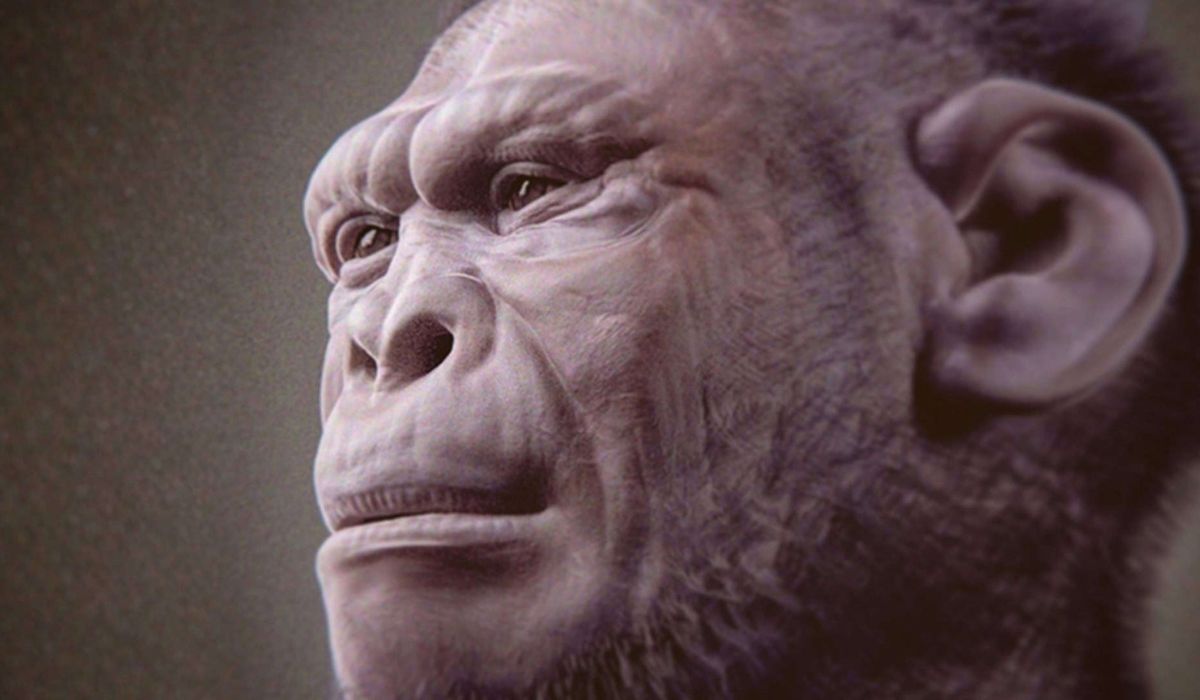


Find in Kenya Assembles Rare Bones and Helps Clarify Physical Characteristics of One of the Earliest Species of the Genus Homo, Expanding Scientific Knowledge on Diversity, Coexistence, and Human Evolution in the Early African Pleistocene.
Researchers from various institutions announced the identification of what they describe as the most complete set of bones ever attributed to Homo habilis, an ancestral species of the genus Homo, and possibly one of the earliest records associated with this group.
The fossils were recovered in northern Kenya and dated between 2.02 and 2.06 million years, a timespan that places the material among the oldest related to the species, according to the study published in the scientific journal The Anatomical Record.
The specimen was designated KNM-ER 64061.
-
Motorola launched the Signature with a gold seal from DxOMark, tying with the iPhone 17 Pro in camera performance, Snapdragon 8 Gen 5 that surpassed 3 million in benchmarks, and a zoom that impresses even at night.

-
Satellites reveal beneath the Sahara a giant river buried for thousands of kilometers: study shows that the largest hot desert on the planet was once traversed by a river system comparable to the largest on Earth.

-
Scientists have captured something never seen in space: newly born stars are creating gigantic rings of light a thousand times larger than the distance between the Earth and the Sun, and this changes everything we knew about stellar birth.

-
Geologists find traces of a continent that disappeared 155 million years ago after separating from Australia and reveal that it did not sink, but broke into fragments scattered across Southeast Asia.

It was associated, through taphonomic and stratigraphic analyses, with an almost complete mandibular dentition found in the same area, identified as KNM-ER 64060.
According to the authors, the association between teeth and bones of the rest of the body is unusual for such ancient fossils.
This link helps reduce uncertainties in the taxonomic classification of the individual.
Discovery of Fossils in Northern Kenya

The fragments were located during field campaigns that started in 2012.
They were preserved in sediments from the Koobi Fora Formation, in the Ileret region, near Lake Turkana, in northern Kenya.
Instead of an articulated skeleton, researchers recovered scattered pieces.
These fragments were distributed across different geological layers of the early Pleistocene.
According to the scientific description, the set includes clavicles, parts of scapulas, and bones of the upper limbs, such as humeri, ulnae, and radii.
The material also includes portions of the sacrum and pelvis bones.
Additionally, there are additional fragments mentioned in the study, such as parts of vertebrae, ribs, and one bone from the lower limb.
The authors highlight that, even without complete preservation of the legs, the set allows for a more comprehensive body reconstruction than any other previously attributed to Homo habilis.
In statements released alongside the publication, paleoanthropologist Fred Grine, one of the authors of the study, stated that “there are only three other extremely fragmented partial skeletons known for this species.”
This observation reflects a recurring limitation in paleoanthropology.
In this field, fossils considered central to understanding human evolution are often represented by reduced samples.
Size and Body Proportions of Homo habilis
The estimates presented by the researchers indicate that the individual had a relatively short and light build.
Based on the length of the humerus, height was estimated to be about 1.60 meters.
Body mass was calculated to be between 30.7 and 32.7 kilograms.
These values are within the range observed in other fossils attributed to Homo habilis.
They also fall below the averages associated with Homo erectus, a species that appears later in the fossil record.
One of the points analyzed in detail in the study is the morphology of the arms.
The authors describe bones with thick cortices and signs of robustness.
These features are comparable to those observed in australopithecines and very ancient fossils of the genus Homo.
Furthermore, the upper limb proportions indicate relatively long forearms compared to those of Homo erectus.
According to the researchers, this data is relevant for discussions about locomotor patterns and body use.
Despite this, the authors themselves emphasize that it is not possible to draw definitive conclusions about behavior from these elements.
The interpretation that longer and more robust arms could be related to greater use of trees is presented as a hypothesis discussed in the scientific literature.
This analysis, however, is limited by the absence of sufficiently preserved leg bones.
In a statement associated with the study, researcher Ashley Hammond stated that “fossils of lower limbs of Homo habilis are still needed to more confidently assess how this species moved.”
Importance of Homo habilis for Human Evolution
Homo habilis is often cited as one of the first representatives of the genus Homo.
In various studies, the species appears associated with the early use of stone tools.
Researchers highlight, however, that the relationship between specific species and lithic technologies is not always straightforward.
This occurs because different hominins may have produced or used similar tools in the same timeframe.
From an anatomical perspective, the species is often described in the scientific literature as exhibiting a set of mixed characteristics.
Comparisons with australopithecines, such as the skeleton known as “Lucy,” indicate that Homo habilis displayed some adaptations closer to those observed in later humans.
At the same time, it retained features considered more ancient in other parts of the body.
In the case of KNM-ER 64061, the authors note that certain aspects of the ischium, part of the pelvis, resemble more the patterns found in species of the genus Homo.
These traits differ from those observed in australopithecines.
On the other hand, the robustness of the upper limbs and some body proportions keep the debate open on how this species combined terrestrial movement and exploration of wooded environments.
This discussion is particularly relevant for East Africa, a region marked by varied ecosystems in the early Pleistocene.
Coexistence of Ancient Human Species
The description of the new fossil also fits into a scenario widely discussed by paleoanthropology.
Various studies point to the coexistence of multiple species of hominins within the same timeframe.
Fossil evidence indicates that, in eastern Africa, different ancient human groups occupied nearby regions between 2.2 and 1.8 million years ago.
According to the authors, this context reinforces the interpretation that human evolution occurred in a branching manner.
In this model, distinct lineages shared space and resources over time.
Within this framework, Homo habilis represents one of the forms present in the period, but not the only one.
The exact position of the species in this evolutionary mosaic remains a topic of debate.
The researchers emphasize that this definition depends on expanding the available fossil record.
With the identification of a more complete partial skeleton and an associated dentition, KNM-ER 64061 is likely to be used as a reference in comparative studies.
These analyses involve body proportions and anatomical variation of Homo habilis.







Australopithicus anemensis 4.2 MYA was bipedal. Why wouldn’t H.habilis also show bipedalism at 2MY