





 Portuguese
  English
  Spanish
  4 min of reading
  0 comments


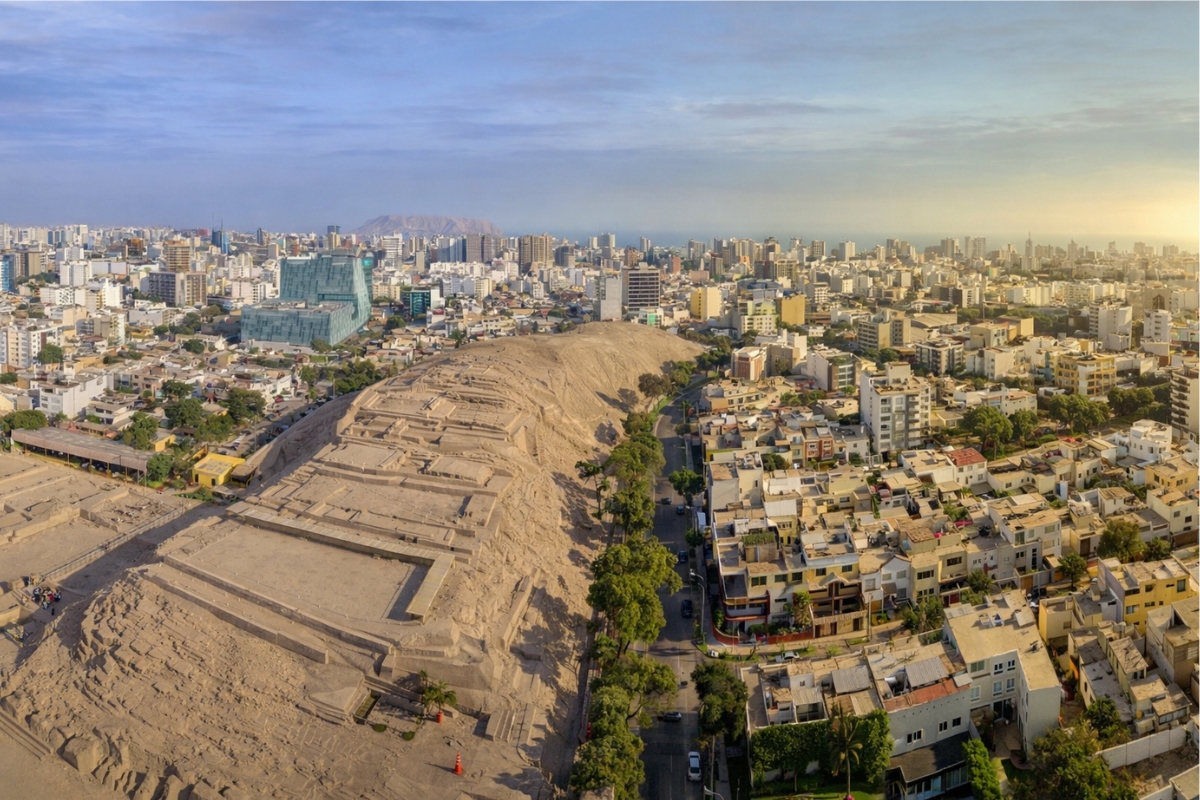
In Lima, Cultural Authorities and Archeologists Conducted Intensive Excavations Starting in 1981 at the Huaca Pucllana Pyramid, a Structure of About 25 Meters Built Around 500 A.D., to Preserve the Site, Transforming It into Cultural Heritage and Attracting Attention from Tourists Around the World.
In the middle of the modern Miraflores neighborhood in Lima, an adobe pyramid stands imposing among buildings, busy streets, and upscale restaurants. What many visitors do not expect to find in the Peruvian capital is a monumental structure with nearly 1,500 years of history.
The Huaca Pucllana almost disappeared under the urban expansion of the 20th century. Buildings occupied parts of the ancient archaeological complex, putting one of the largest remnants of pre-Inca culture in the region at risk.
The change began in 1967 when the site began to receive more attention. In 1981, excavations led by Dr. Isabel Flores Espinoza initiated a process that would change the destiny of the pyramid forever.
-
Friends have been building a small “town” for 30 years to grow old together, with compact houses, a common area, nature surrounding it, and a collective life project designed for friendship, coexistence, and simplicity.

-
This small town in Germany created its own currency 24 years ago, today it circulates millions per year, is accepted in over 300 stores, and the German government allowed all of this to happen under one condition.

-
Curitiba is shrinking and is expected to lose 97,000 residents by 2050, while inland cities in Paraná such as Sarandi, Araucária, and Toledo are experiencing accelerated growth that is changing the entire state’s map.

-
Tourists were poisoned on Everest in a million-dollar fraud scheme involving helicopters that diverted over $19 million and shocked international authorities.


Lima Culture Built Pyramid Around 500 A.D. Using Technique That Absorbed Earthquakes
The Huaca Pucllana was built by the Lima culture, which occupied central coastal Peru between 200 and 700 A.D. The main pyramid was erected approximately in the year 500 A.D., during a time when the region consisted of fertile agricultural lands irrigated by canals derived from the Surco River.
To raise the structure, the builders used the so-called librero technique, also known as the library technique. The adobe bricks were placed vertically, with small spaces between them.
The detail that caught the most attention was the solution for the frequent earthquakes in the region. The spaces allowed the structure to absorb the tremors, increasing its resistance. The walls were also trapezoidal, wider at the base than at the top, a strategy similar to that seen in Machu Picchu.

The Structure Has Been a Venue for Rituals, Sacrifices, and Occupations Between 800 and 1532
At about 82 feet tall, approximately 25 meters, the main pyramid is surrounded by ramps, patios, and a lower square. Archeologists believe that the complex was even larger before undergoing urban interventions in the last century.
The Lima culture used the temple for ceremonial purposes. Banquets, rituals of breaking large ceramic vessels, and human sacrifices took place there. Most victims were young women, although remains of young men and boys were also found.
Between 800 and 900 A.D., the Wari culture, originating from the Ayacucho region, took control of the area. Evidence indicates that this expansion occurred primarily through alliances and agreements.
The Wari used the top of the pyramid as a burial site for elite members. Bodies were buried in funerary bundles made with finely worked fabrics, accompanied by masks and personal objects that revealed their occupations.
From Pre-Inca Cemetery to Spanish Conquest in 1535
After the Wari period, the Ychsma culture occupied the region between 1000 and 1532. The pyramid continued to be used as a cemetery and a space for ritual offerings.
This culture became known for offering ceramic vessels in the shape of women, considered symbolic substitutes for human sacrifices. Examples of these objects were found during excavations.
The history of the site took a new turn in 1535 when Francisco Pizarro founded the city of Lima, three years after defeating the Inca leader Atahualpa. From then on, Spanish dominance completely redefined the political and cultural landscape of the region.
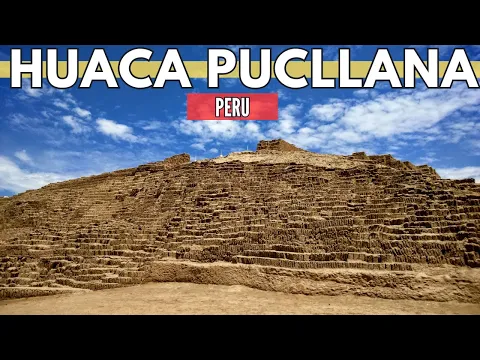

Excavations Starting in 1981 Transformed Forgotten Ruin into Cultural Heritage
Despite its historical importance, the Huaca Pucllana was practically forgotten until the second half of the 20th century. Buildings advanced around and even over the archaeological site.
In 1981, intensive excavations began with the support of the Miraflores Municipality and the Ministry of Culture of Peru. The impact was immediate. What seemed doomed to neglect gained new life.
In 1984, the site was declared a cultural heritage. In the same year, an exhibition room was inaugurated with artifacts from the Lima, Wari, and Ychsma cultures, along with photographic records of the excavations.
Today, the Huaca Pucllana Museum offers a tour of the ruins, recreations of ancient rituals, and an area dedicated to local flora and fauna, including guava and the cuy, a traditional Andean guinea pig.
Visitation, Prices, and Night Experience Attract Tourists Year-Round
The Huaca Pucllana is open from Wednesday to Monday, from 9 AM to 5 PM. Tickets cost 15 soles for adults and 7.50 soles for children under 12, students, and teachers.
There is also night visitation from Wednesday to Sunday, from 7 PM to 10 PM. During these hours, the price is 17 soles for adults and 8.50 soles for children under 12 and seniors.
Peruvians enjoy free entry on the first Sunday of each month, which often increases visitor flow on these dates.
The ticket includes a guided tour in English or Spanish, lasting between 45 minutes and 1 hour and 15 minutes. Private tours for groups of up to 20 people cost 30 soles per group. Only museum-certified guides are allowed to conduct visits within the site.
Next to the ruins, the Huaca Pucllana Restaurant combines classic flavors of Peruvian cuisine with local ingredients, especially seafood and vegetables. At night, the illuminated pyramid creates a setting that surprises even the city’s residents.
The presence of a pre-Inca pyramid of 25 meters in the middle of the Peruvian capital shows that the country’s history goes far beyond Machu Picchu and Cusco. The transformation of a nearly lost site into cultural heritage visited by thousands reveals how preservation and archaeology can change the fate of a historical treasure.
Would you visit a pyramid that is nearly 1,500 years old in the middle of a major metropolis? Share your thoughts in the comments.










-

-

-

-

-

-

52 pessoas reagiram a isso.