





 Portuguese
  English
  Spanish
  3 min of reading
  0 comments


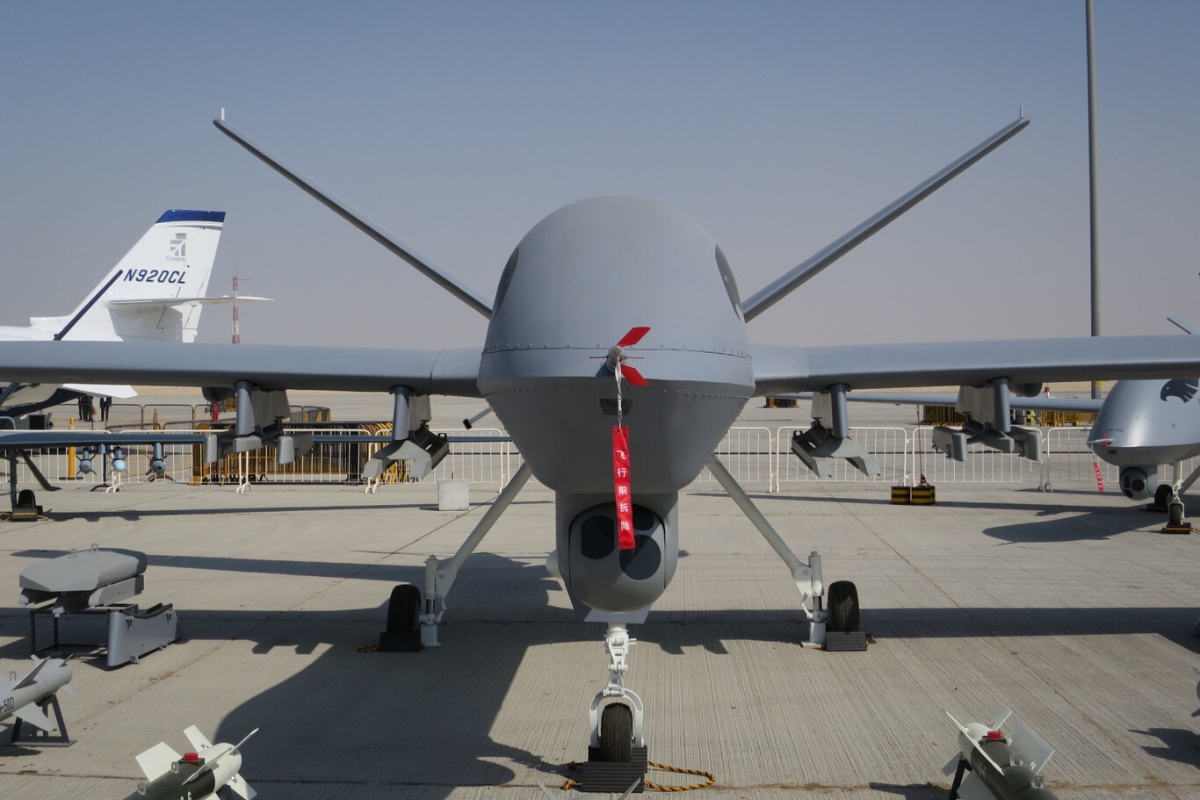
Investigation Reveals That Wing Loong 2 Drone Took Off From Hainan, Charted Star-Shaped Routes Over Sensitive Areas, and Alternated 24-Bit Transponders to Simulate Military and Civilian Aircraft Before Global Tracking Platforms
In modern aviation, each aircraft carries a kind of electronic “fingerprint” that allows it to be identified in real-time by radars and monitoring platforms around the world. The system was created to enhance the safety and transparency of global air traffic. However, a recent case showed that what appears on the screen may not exactly correspond to what is crossing the skies.
An international investigation revealed that a Chinese military drone had carried out dozens of flights over the South China Sea using false flight identities. Instead of simply flying without emitting a signal, it had done the opposite: transmitted altered codes to pose as different civilian and military aircraft, confusing open tracking systems.
An Identity That Changes In Flight
Records indicate that since August of last year, at least 23 flights have been associated with the call sign YILO4200, linked to a Chinese long-endurance drone. However, the signals captured by civilian platforms showed a different reality. At distinct moments, the aircraft appeared as a sanctioned Belarusian freighter, a British Typhoon fighter, a North Korean airplane, and even a Western business jet.
-
Motorola launched the Signature with a gold seal from DxOMark, tying with the iPhone 17 Pro in camera performance, Snapdragon 8 Gen 5 that surpassed 3 million in benchmarks, and a zoom that impresses even at night.

-
Satellites reveal beneath the Sahara a giant river buried for thousands of kilometers: study shows that the largest hot desert on the planet was once traversed by a river system comparable to the largest on Earth.

-
Scientists have captured something never seen in space: newly born stars are creating gigantic rings of light a thousand times larger than the distance between the Earth and the Sun, and this changes everything we knew about stellar birth.

-
Geologists find traces of a continent that disappeared 155 million years ago after separating from Australia and reveal that it did not sink, but broke into fragments scattered across Southeast Asia.

These were not isolated technical failures. Experts point to a deliberate manipulation of the 24-bit transponder codes, responsible for transmitting position, altitude, heading, and speed. The most surprising aspect was the ability to switch these identities during the flight path itself, creating a sort of real-time digital camouflage.
The Drone Behind the “Illusion”
The identified equipment would be a Wing Loong 2, a large drone with about 20 meters of wingspan. The takeoffs would have occurred from Hainan Island, with routes forming repetitive star or hourglass patterns over sensitive areas, including strategic maritime routes and regions of military interest.
In one of the most striking episodes, the drone would have alternated the identity of an RAF fighter with that of other aircraft in a matter of minutes, before “ending” the flight virtually as a European freighter. On another occasion, it simulated being that same freighter while the real airplane took off simultaneously on another continent, amplifying confusion in open tracking systems.
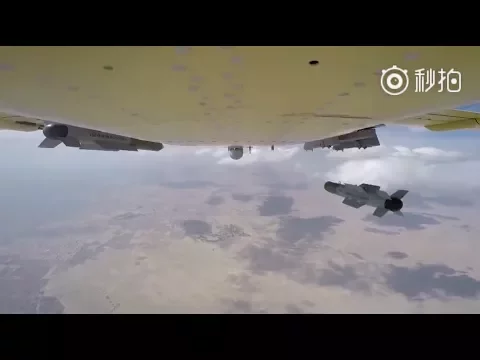

Taiwan In The Center Of The Board
The trajectories did not appear to be random. Several flights headed towards the Bashi Channel, a strategic point between Taiwan and the Philippines. When overlaid on the map, the routes intersected areas near military installations around Taipei and also regions close to U.S. and Japanese bases in Okinawa and the Ryukyu Islands.
For analysts, the pattern suggests a broader operational test. In highly automated conflict scenarios, milliseconds can define critical decisions. Introducing noise, false identities, and contradictory signals can delay responses, create doubts in command chains, and allow room for misinformation operations.
The War That Begins On The Screen
Although advanced military radars have additional layers of verification, the strategy demonstrates a new dimension of modern warfare: the manipulation of perception. It is not just about disappearing from the radar, but about appearing as something else, buying time, and sowing uncertainty.
The most unsettling point is not just the occasional use of this technique, but its repetition over months, as if it were a rehearsal. In a potential crisis scenario in the Taiwan Strait, the first warning sign may not be a missile on the horizon, but an identification flashing on the screen that does not correspond to reality. And in this game of digital shadows, doubt can be as powerful as any weaponry.








-

-

-

6 pessoas reagiram a isso.