





 Portuguese
  English
  Spanish
  4 min of reading
  0 comments


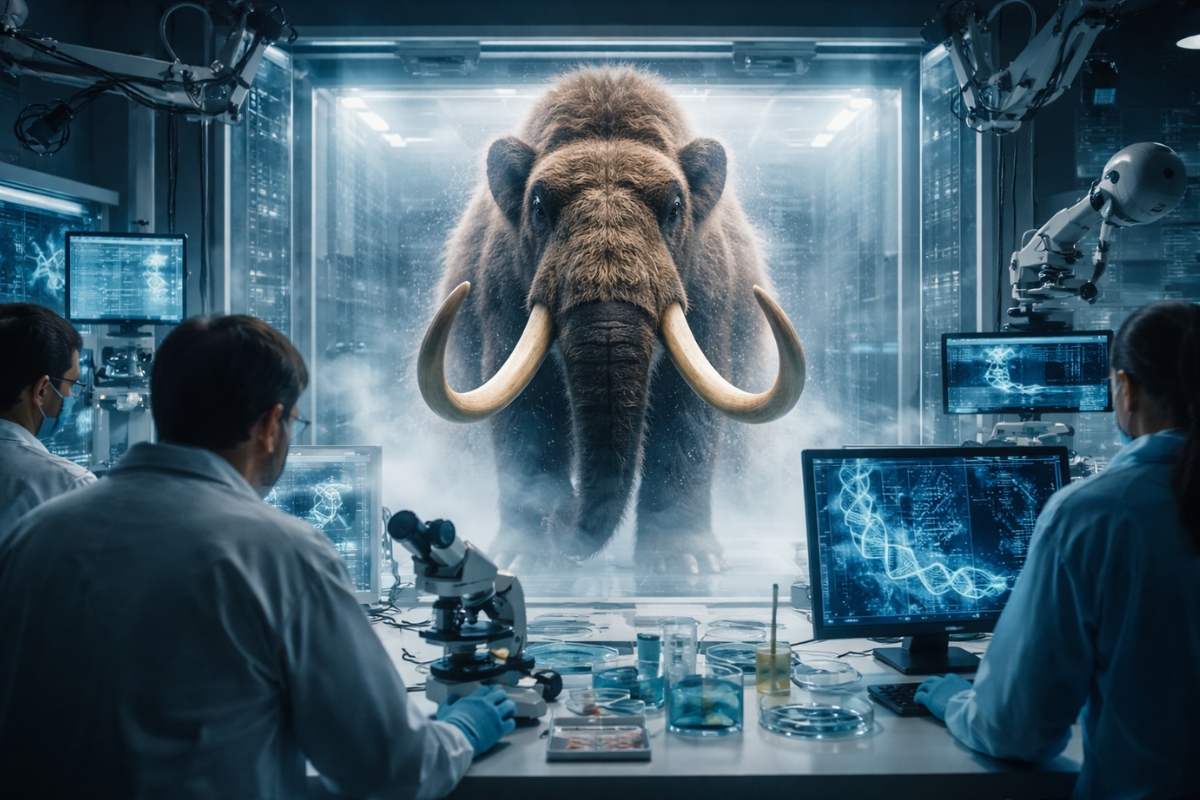
Colossal Biosciences Wants to Register Edited Animals in Dallas, Seeking Commercial Exclusivity and Influence Over Conservation and Climate Market.
Colossal Biosciences, a biotechnology startup based in Dallas, has put extinction at the center of its business. The promise is to create modern versions of extinct species, using genetic editing to transfer mammoth traits to the Asian elephant.
The move goes beyond the lab and becomes a market territory dispute. The strategy involves exclusive rights that could limit who enters the game, as if it were a legal radar controlling the advancement of other projects.
Patent Targets Elephants With Mammoth Traits
The company is trying to secure broad protection for cells and animals with segments of mammoth DNA. In practice, the idea is to cover any edited elephant that carries genes associated with the mammoth, even if created by third parties.
-
Motorola launched the Signature with a gold seal from DxOMark, tying with the iPhone 17 Pro in camera performance, Snapdragon 8 Gen 5 that surpassed 3 million in benchmarks, and a zoom that impresses even at night.

-
Satellites reveal beneath the Sahara a giant river buried for thousands of kilometers: study shows that the largest hot desert on the planet was once traversed by a river system comparable to the largest on Earth.

-
Scientists have captured something never seen in space: newly born stars are creating gigantic rings of light a thousand times larger than the distance between the Earth and the Sun, and this changes everything we knew about stellar birth.

-
Geologists find traces of a continent that disappeared 155 million years ago after separating from Australia and reveal that it did not sink, but broke into fragments scattered across Southeast Asia.

This type of patent expands the company’s influence over the breeding, reproduction, and commercial use of these animals. The effect is similar to blocking routes on a board, imposing licenses and conditions on anyone who wants to operate in the same space.

Project Targets Mammoth, Dodo, and Thylacine Since 2021
Colossal was co-founded in 2021 by Ben Lamm and geneticist George Church from Harvard University. The portfolio includes mammoth, dodo, and thylacine, always with the logic of reconstructing lost traits in current species.
In the case of the mammoth, the target is the Asian elephant, described as the base for receiving alterations. The company states that mammoth and Asian elephant share 99.6% genetic similarity, which makes it easier to choose which traits to try to replicate.
Genetic Editing Uses CRISPR and Targets 85 Genes Linked to Cold
The plan is not to clone an identical mammoth. The proposal is to produce elephants with characteristics such as denser fur, subcutaneous fat, and adjustments in their blood to withstand low temperatures.
The company claims to analyze about 85 genes related to cold adaptation in mammoths. The editing with CRISPR functions like a molecular scissors that swaps segments of DNA in cells before they become embryos and proceed to gestation.
Artificial Womb and Industrial Scale Come Into Play
Gestation can occur in female elephants or in artificial womb systems, a line that the company claims to be developing. After birth, the offspring would still need socialization and monitoring, as elephants have complex family structures.
The bet on scale also appears in the infrastructure. The company announced a new 45,000 square feet laboratory in Dallas and claims to operate at least three units in Dallas, Boston, and Melbourne, with about 170 scientists.
Climate Dispute Becomes an Asset and Reinforces Strategic Pressure
The climate narrative helps give political and financial backing to the project. The idea is that large herbivores keep the tundra more open, compact snow, and help preserve cold permafrost, reducing gas release.
According to MIT Technology Review, an American technology and business magazine, the company mentioned the possibility of each animal generating up to US$ 2 million in services related to carbon capture throughout its life. The argument turns the mammoth into an asset, with economic weight and influence over decisions in sensitive regions.
Money and Patents Elevate the Game to a Global Level
Colossal has already raised over US$ 400 million and has been described with a valuation of over 10 billion. This scale takes the subject out of the realm of spectacle and positions the company as a force capable of imposing pace and conditions.
When patents, capital, and climate narrative come together, the result is continuous pressure on competitors, governments, and conservation projects. The dispute ceases to be merely scientific and becomes one of presence and control.
Deadline of 2027 or 2028 and Consequences on the Board
The company projects to have its first animals with enough traits to be treated as a new variety by around 2027 or 2028. The timeline depends on advancements not yet demonstrated in large mammals, but the positioning is already underway.
If exclusivity advances, the impact will not be confined to the laboratory. The combination of patent and scale could reshape who decides the future of these animals and how they will be used, in a move that alters strategic readings and shifts the board.







-

Uma pessoa reagiu a isso.