





 Portuguese
  English
  Spanish
  5 min of reading
  2 comments


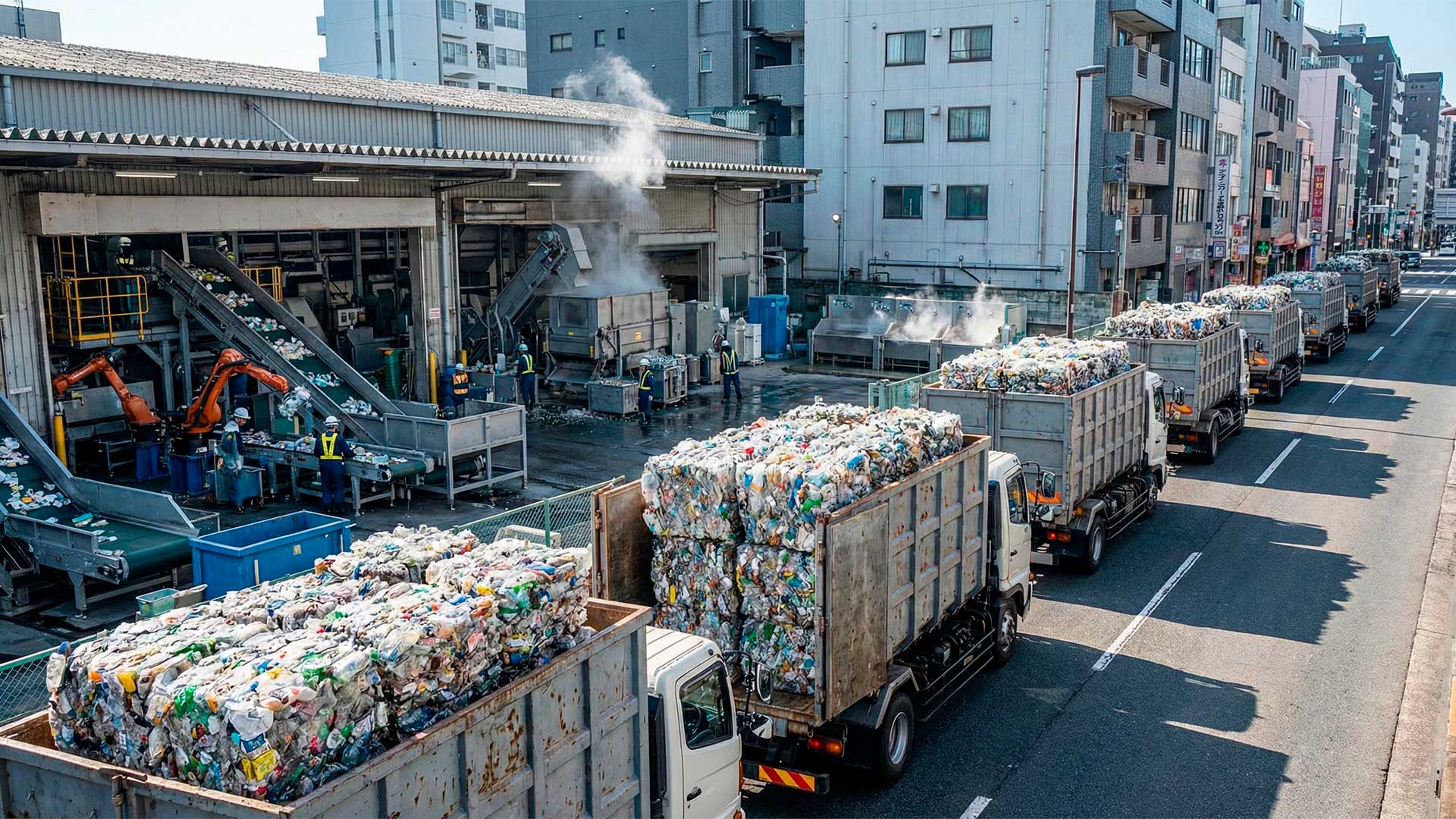


The City of Nagoya Leads an Advanced Plastic Waste Processing System That Combines Automated Technology and Rigorous Sorting to Transform Discarded Materials into Reusable Products, Reducing Environmental Impact
Japan faces a constant challenge with solid waste management due to its high population density and limited territory. The city of Nagoya has developed an exemplary system that processes approximately 100 tons of plastic resources daily, transforming them into useful products like pallets through a meticulous recycling process. This model represents an innovative solution to the global plastic disposal problem.
According to data from the Japanese government, approximately 96% of collected waste is reused in some form.
However, according to information from Greenpeace Japan, only about 20% of plastic waste is effectively recycled, while the remainder undergoes thermal recycling (incineration for energy generation), which still generates pollutant gas emissions.
-
Friends have been building a small “town” for 30 years to grow old together, with compact houses, a common area, nature surrounding it, and a collective life project designed for friendship, coexistence, and simplicity.

-
This small town in Germany created its own currency 24 years ago, today it circulates millions per year, is accepted in over 300 stores, and the German government allowed all of this to happen under one condition.

-
Curitiba is shrinking and is expected to lose 97,000 residents by 2050, while inland cities in Paraná such as Sarandi, Araucária, and Toledo are experiencing accelerated growth that is changing the entire state’s map.

-
Tourists were poisoned on Everest in a million-dollar fraud scheme involving helicopters that diverted over $19 million and shocked international authorities.


Nagoya’s experience demonstrates how it is possible to maximize the utilization of discarded materials. The process involves multiple stages of sorting, cleaning, and transformation that ensure the quality of the final product.
Plastic Resource Collection and Transport System

The process begins in the neighborhoods of the city, where residents carefully sort their plastic waste according to the strict municipal rules. According to Japanese guidelines, each type of plastic must be cleaned, with caps and labels removed separately. This initial sorting is essential to ensure the efficiency of the system.
The collection vehicles travel the streets of Nagoya daily, collecting transparent bags filled with plastic resources. All collected material is transported to intermediate processing facilities, where it undergoes the first sorting. This centralized system allows for strict control of the quality of the received materials.
Automated Intermediate Processing
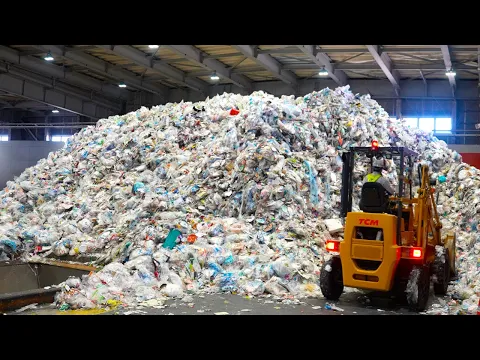
At the intermediate processing facilities, plastic resources are unloaded and piled in large quantities. The material is then fed into a highly automated processing plant that uses state-of-the-art technology for efficient separation.

The infeed conveyor transports the materials to a piece of equipment called a trommel, which removes foreign substances such as bottles or cans through mechanical screening. Next, trained staff conduct a visual inspection to remove items that could not be removed by the trommel, such as mobile batteries or small appliances.
After the removal of foreign substances, the plastic passes through a compression baler. According to the process observed in Nagoya, compression significantly increases transport efficiency, allowing large volumes to be moved at once. The compacted bales are then loaded onto trucks for transport to specialized recycling facilities.
Transformation into Plastic Pallets

Eco Pallet Co., Ltd. is one of the companies that receives the processed plastic resources. Upon arrival at the factory, the compressed bales are unpacked to allow for another sorting stage. Automatic optical sorting equipment specifically separates polypropylene (PP) and polyethylene (PE), which are the ideal raw materials for pallet manufacturing.
According to industry experts, these plastic materials are chosen for their durability and strength. Specialized workers conduct additional manual sorting to ensure that only suitable plastic proceeds to the production line. The selected materials are again compressed and packed for internal transport to the manufacturing line.
The pallet manufacturing process involves grinding and intensive washing of the materials. The ground plastic is placed in tanks and undergoes a washing line with water to ensure total cleanliness. After cleaning, the material is ready to be molded into pallets.
Finishing and Quality Control
On the manufacturing line, the recycled plastic is molded into the shape of pallets through thermal processes. The pallets undergo manual finishing work, where details are adjusted to ensure the quality of the final product.
To enhance functionality, anti-slip rubber is installed on the pallets to prevent slipping during use. Polypropylene bands organize and reinforce the structure, preventing the material from spreading. Each finished pallet undergoes rigorous inspection before being stored.
The completed pallets are stored in climate-controlled warehouses until requested by customers. According to industry data, recycled plastic pallets can reduce CO2 emissions by up to 77% when compared to products made from virgin material.
Environmental and Economic Benefits of the System
The Nagoya model represents a sustainable alternative to the traditional plastic disposal. According to information from the pallet market, approximately 61% of global users are migrating to sustainable materials, with an annual growth of 19% in the use of plastic pallets in the Asia-Pacific region.
Every five recycled pallets correspond to approximately 100 kilos of repurposed plastic. In comparison, five wooden pallets equate to a seven-year-old pine tree, highlighting the positive environmental impact of the recycled plastic option.
Japan is the second-largest producer of plastic waste per capita globally, trailing only the United States. Therefore, initiatives like Nagoya’s are crucial to reducing the country’s environmental impact. The Japanese government has set goals to decrease non-recyclable plastic waste emissions by 25% by 2030.
Challenges and Future Prospects
Despite the advanced system, Japan still faces significant challenges. Since China stopped importing Japanese plastic waste in 2018, one in four municipalities in the country has begun collecting more recyclables than it can process, according to a survey by the Japanese Ministry of the Environment.
According to Greenpeace Japan experts, a more radical shift in consumer culture is needed. Environmental organizations advocate for more ambitious targets, such as halving disposable plastic generation and eliminating exports of this material by 2030.
The Nagoya model demonstrates that it is possible to create an efficient circular economy for plastics. With investment in technology, public education, and adequate infrastructure, the process of transforming waste into resources can be replicated in other cities and countries.
What do you think of the Japanese plastic recycling system? Could this model work in our country, considering our cultural and infrastructural differences? Do you believe that thermal recycling (incineration) should be considered true recycling, or only processes that generate new products deserve this classification? Share your opinion in the comments.










O Brasil está muito atrasado para eliminar pontos de despejos de lixo em qualquer lugar sem que a prefeitura se importe com isso. Essa coleta para reciclagem deveria estar acontecendo no Brasil em todos estados e municípios. Seria um grande lucro para sociedade.
Que bonitinho! Agora só falta eles deixarem de matar baleias!