





 Portuguese
  English
  Spanish
  4 min of reading
  0 comments


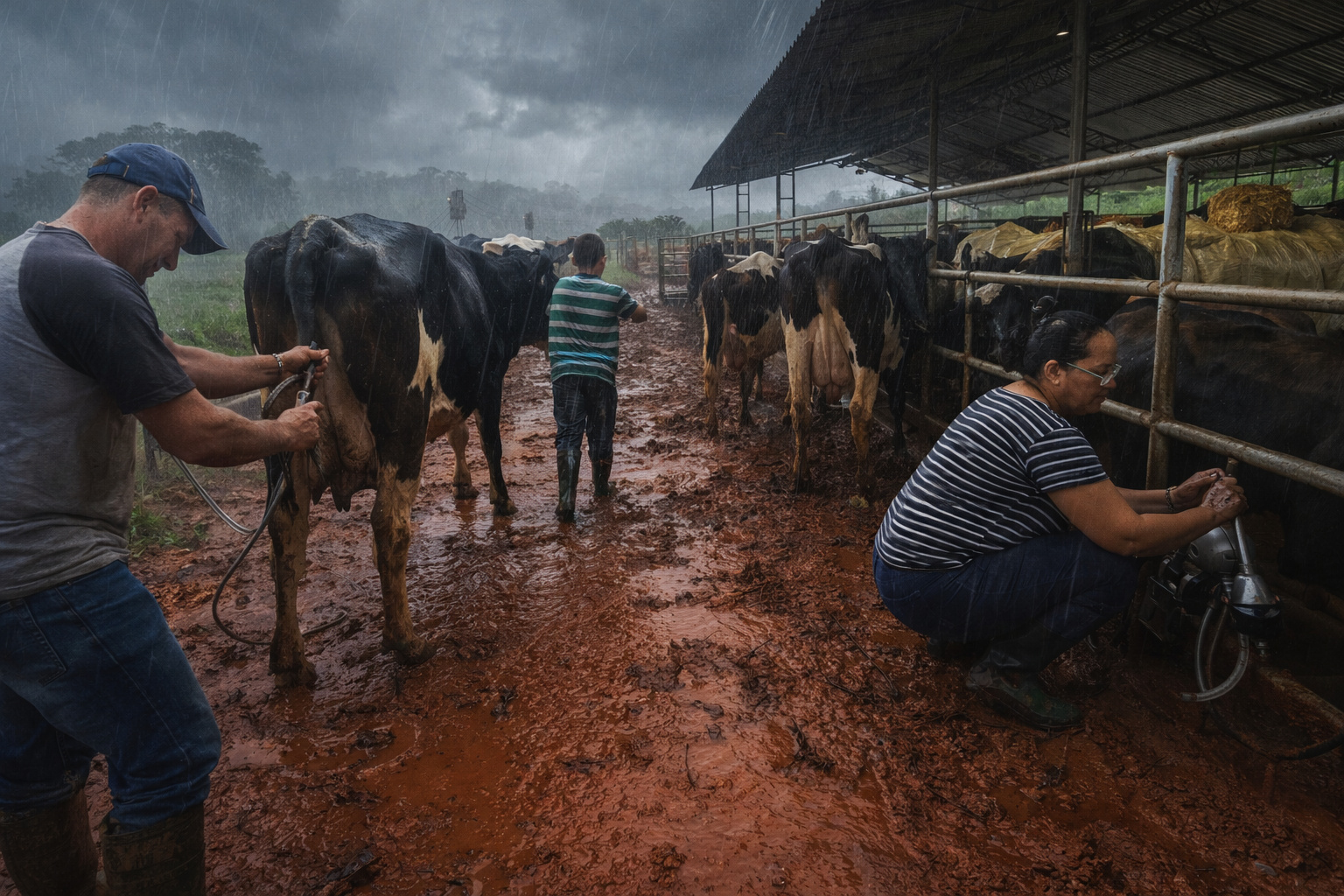
Under Heavy Rain During The Night, Routine In The Field Requires Strength, Strategy, And Faith To Preserve Milk Production Even With Compromised Silage, Wet Bedding, And Delayed Management
The information was released by the channel “Family Dairy Farming” in a video recently published on social media. In the footage, the family themselves show in detail how the heavy rain during the night directly impacted the farm’s routine, from preparing the silage to milking the cows in the soaked corral.
Right in the early hours of the day, the scene was already challenging. The heavy rain, accompanied by sideways wind, hit the barn and soaked part of the internal structure. As a result, the cows’ bedding was soaked in the morning, the corral accumulated mud, and the path needed to be scraped again before milking. Still, the milk producer emphasizes a point that defines the activity: “there is no specific day or time.” It rained? Work. It didn’t rain? Work anyway.
Additionally, the period also coincides with the silage preparation phase. However, making silage with excess rain compromises part of the quality of the stored material. Excessive moisture reduces the ideal fermentation standard and can lead to nutritional loss. Nevertheless, there is no alternative: it is necessary to move forward because the dairy cattle depend on this feed to maintain stable production.
-
Crotalaria, mucuna, and other cover crops stop being “weeds” between harvests and become central to agriculture by improving the soil, adding biomass, and enhancing green fertilization in vegetable production.
-
Coruripe Mill secures international financing of R$ 530 million and boosts the sugar-energy sector.

-
The sugar-energy sector advances with agricultural technology, but agricultural productivity still raises concerns.

-
The eggshell that almost everyone throws away is made up of about 95% calcium carbonate and can help enrich the soil when crushed, slowly releasing nutrients and being reused in home gardens and vegetable patches.



Intense Rain Increases Difficulty Of Silage And Compromises Dairy Cattle Management
With the soil extremely wet, some areas of the property simply could not be harvested. According to the producer, certain parts of the field are wetter and, with the high volume of rain, cannot support the weight of the machinery. Therefore, the silage harvest had to be partially postponed.
Meanwhile, the mud took over the corral. In some places, water visibly pooled in the middle of the path. Even after scraping, it was still possible to notice the soaked ground. “It gets stuck,” he reported. Despite this, the routine cannot stop. First, it was necessary to move the cows’ bedding, reorganize the feed, and separate the groups before starting milking.
On the other hand, the producer points out that the rain also has its positive side. It strengthens the growth of pastures, helps in the recovery of springs, and keeps the grass developing. In other words, while it complicates daily management, it ensures future feed for the herd.
The milking began slightly late due to the storm. However, as the producer emphasized, “it’s not late, it’s part of the activity.” In the first group, the cows were already feeding normally. In the second group, they were still waiting to return to the barn after the bedding was reorganized.

In daily management, some cows stand out for their production. “Sereia,” who recently gave birth, had an average of 17 liters in the morning. Other cows recorded productions of 16, 12, and even 18 liters. Overall, the average sequence of milk ranges between 17 and 20 liters per morning milking, demonstrating that, despite adverse weather conditions, the herd maintains consistent performance.
Additionally, there are recently calved cows that require special attention. “Docinho,” for example, recently entered lactation. “Estrela” was undergoing a reproductive protocol, going through artificial insemination during the milking, taking advantage of the already performed management.
Artificial Insemination, Technical Management, And Efficiency Maintain Productivity Even Under Climate Pressure
Artificial insemination is one of the most important technical aspects of the property. Initially, sexed semen was used on the cow “Estrela.” However, as no pregnancy was confirmed, conventional semen was subsequently chosen.
The procedure requires agility. The semen is taken from the warm water, carefully dried, cut with a specific cutter, and inserted into the applicator with a protective sheath. According to the producer, the process needs to be quick to preserve the viability of the genetic material. In a matter of minutes, the procedure is completed.

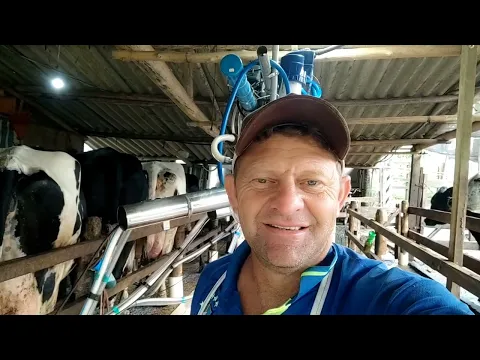
Meanwhile, in the milking parlor, the structure has a milk extractor and organization by groups, which helps reduce the total process time. Even on rainy days, the system maintains efficiency. Some cows tend to jiggle their legs during milking, which requires care to avoid interfering with the equipment. Still, the team adapts positioning and follows the normal flow.
Another noteworthy detail is the strategy of inseminating during milking to avoid additional management later. This way, time is optimized and the animal’s stress is reduced.
By the end of the first stage of the morning, the silage was already in place, the path scraped, and the bedding reorganized. The mud remained, but the work progressed. Then, the milking of the second group was completed.
Even under persistent rain, strong winds, and soaked soil, milk production continued actively. And it is precisely this persistence that defines the Brazilian rural producer: facing weather, mud, heavy management, and technical challenges, but keeping the activity running every day.
In conclusion, the family thanked the partners who recorded the routine on the farm and reinforced the sentiment that drives dairy activity: faith, work, and consistency.
Have you ever imagined facing rain, mud, and still keeping milk production running every day? Tell us what you think about this routine in the field.





-

-

-

5 pessoas reagiram a isso.