





 Portuguese
  English
  Spanish
  7 min of reading
  0 comments


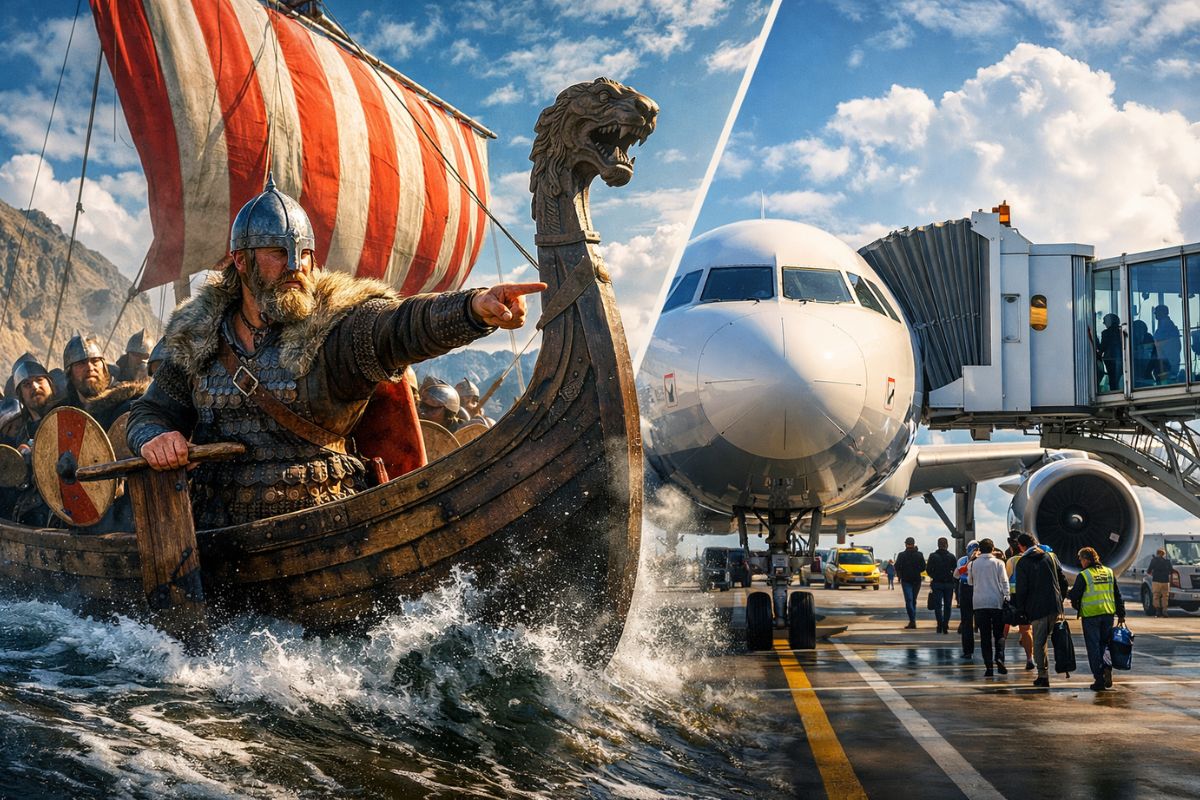
Why Sailors Abandoned Left and Right, Created Port and Starboard, and A Thousand Years Later Made You Board the Plane Always from the Left Side
Imagine being in the middle of a naval battle in the 10th century. The deafening noise, smoke covering everything, the ship rocking, and suddenly the captain shouts: watch out, they’re coming from the left. In the chaos, the fatal question arises: left and right of whom, from my position or from the enemy’s position? On land, this confusion is a gross mistake. At sea, this doubt can mean collision, shipwreck, and death.
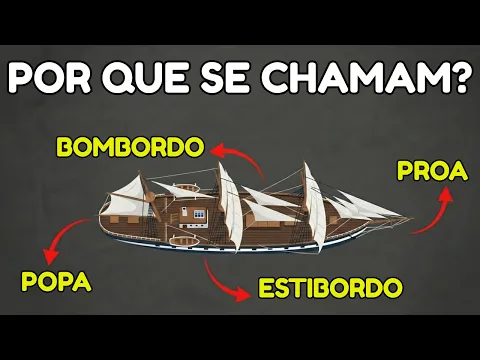
It was to eliminate this risk that the maritime world decided to abandon left and right and adopt its own absolute language that does not change with the position of the observer: bow, stern, port, starboard. This change, driven by practical choices made by Vikings about a thousand years ago, ended up creating a code so efficient that it transcended centuries, reached modern aviation, and explains why you always board the plane from the left side, even if no one mentions it at the boarding gate.
When Left and Right Became a Sentence of Death at Sea
On the deck of a ship in combat, there is no time for interpretations. If an officer shouts left and right and every sailor understands differently, the ship turns the wrong way, exposing the most vulnerable part to the enemy or crashing directly into invisible rocks in the fog.
-
Friends have been building a small “town” for 30 years to grow old together, with compact houses, a common area, nature surrounding it, and a collective life project designed for friendship, coexistence, and simplicity.

-
This small town in Germany created its own currency 24 years ago, today it circulates millions per year, is accepted in over 300 stores, and the German government allowed all of this to happen under one condition.

-
Curitiba is shrinking and is expected to lose 97,000 residents by 2050, while inland cities in Paraná such as Sarandi, Araucária, and Toledo are experiencing accelerated growth that is changing the entire state’s map.

-
Tourists were poisoned on Everest in a million-dollar fraud scheme involving helicopters that diverted over $19 million and shocked international authorities.


At sea, the reference is never each person’s body, but the ship. The bow is always the front and the stern is always the back, regardless of where you are or where you are looking.
There is no “my left” and “your right,” there is a fixed system designed for any order to be unique, without interpretation.
This problem became even more critical as routes grew, ships became larger, and risks increased. There was a need for a code that would eradicate the ambiguity of left and right once and for all.
Bow and Stern: The Front That Strikes and the Brain of the Ship

Before cannons, the bow had an almost brutal function. It was reinforced with bronze or other metals to serve as a floating battering ram. The ships were enormous spears designed to pierce the enemy’s hull, not just to push water.
Over time and with long ocean crossings, this function changed. The bow ceased to be the tip of attack and became the blade that cuts through the waves.
It became taller, sharper, designed to efficiently cut through waves, reduce loss of speed, and prevent waves from sweeping the deck, throwing sailors overboard.
At the stern, the scenario was different. This was where the ship’s “brain” was located. The captain positioned himself at the back because from there he could see all the sails, observe the wake in the water, and assess whether the ship was going straight. Not by coincidence, the stern became an area of luxury.
High, ornate stern castles marked status, housing officers, better food, and dry beds, far from the pounding of waves that the common crew faced at the front.
But this ostentation came at a price. The stern, filled with windows and finer wood, was the most vulnerable point.
If an enemy managed to line up a direct shot at the stern, the projectiles would pierce the entire ship, causing massive human and structural damage. Protecting the stern meant protecting the heart of the vessel.
How a Viking Oar Retired Left and Right
The most curious part of the story lies in the sides. Instead of using left and right, maritime tradition consolidated its own terms.
Looking toward the bow, the right side became starboard (this side), and the left side became port. And this is linked to a practical detail from the Viking era.
At that time, there was no central rudder attached to the stern as we see today. The Vikings steered the ship with a large oar, a large wooden paddle that functioned as a side rudder.
And here comes biology: since most humans are right-handed, this oar was always on the right side, near the stern, where the helmsman could use his right arm with more strength and control.
In Old Norse, this side of the oar was called stebard. Over time, this term evolved until it became the form we know as starboard.
In other words, the name of the right side of the ship originates from the practical decision of a right-handed Viking who positioned the rudder there a thousand years ago.
This choice created a silent yet powerful rule that would help eliminate the confusion of left and right on board.
Port: The Side That Needed to Be Free to Berth

If the rudder hung on the right side, it was a valuable, delicate, and vulnerable piece. Berthing the ship by touching that side to the port would be asking to break the most important control of the vessel.
Out of necessity, ships began to always berth on the opposite side of the rudder, that is, on the left side. This free side, without the large oar, became the side for the port, cargo, and crew entering and exiting.
While the side of the rudder established itself as starboard, the opposite side became the port side, the side for docking, associated with what would become port.
The practical logic became clear: starboard is the side of the rudder, port is the side of the port. Instead of saying left and right, sailors began to use terms linked to the actual function of each side of the ship.
Why Left and Right Were Dangerous Even in Names
Even with this logic, there was a critical period when the confusion continued, not visually, but auditorily. In Old English, the left side was called larboard, while the right was already called starboard.
Amid strong winds, storms, and shouts on deck, larboard and starboard sounded almost alike, increasing the risk of the helmsman turning the wrong way.
This was not a matter of theory; it was a matter of survival. Communication errors in steering commands cost entire ships. The solution was radical: change the names, make them phonetically distinct, and adopt a universal visual standard.
This is how the modern terms and the lighting system that still applies today came about: green light for starboard (right) and red light for port (left).
A Chinese captain, a Chilean captain, and a Norwegian captain, even without speaking the same language, can understand the position and movement of another ship just by looking at colors and positions.
In this scenario, left and right had no place; they were too subjective for the organized chaos of the oceans.
The Code That Eliminates Left and Right and Saves Lives
The result of this entire process was a code capable of eliminating the ambiguity of left and right at sea. The bow became the official front.
The stern, the command center. Starboard, the side associated with the rudder and the right when facing the bow. Port, the side of the dock, loading, unloading, and safe berthing.
When a captain shouts turn to starboard, it doesn’t matter if the sailor is facing backward, sideways, or turned toward the stern, the order is always the same: the ship must turn to the right in relation to the bow.
Similarly, turning to port always means turning to the left, leaving no room for interpretation of “from my point of view.”
This rigid system, born from practical decisions like the positioning of the Viking rudder, eliminated the confusion of left and right on deck, reduced collisions, avoided fatal approaches from the stern, and helped organize navigation on a global scale.
From Deck to Airport: What Does This Have to Do with the Plane You Board

It may seem that all this story is limited to the sea, but the impact goes far beyond the waves. When commercial aviation was born, its first engineers, pilots, and regulators directly imported the maritime navigation culture. That’s why we use terms like aircraft, captains, crews, boarding, and disembarking.
In practice, the logic of bombarding boats at their vulnerable part and always docking from the safe side was brought to the air. On ships, the side for docking was port, the side associated with the “access door.”
In aviation, designers simply adopted this convention of using the left side as the boarding side.
That’s why, to this day, all commercial planes board passengers always from the left side. The boarding bridge, the jet bridge, or the bus that approaches the tarmac takes you to the left door.
The right side, for the most part, remains reserved for services, refueling, cargo, and ground operations.
There are no longer Viking oars hanging on the right side of the plane, and there is no risk of breaking a wooden rudder. But the symbolic logic remains: the side for “berthing” people is still the same that ships used when they abandoned left and right to adopt port and starboard.
In the end, every time you walk through the jet bridge and enter the plane from the left door, you are following a ritual inherited from a people that needed to make quick decisions at sea and could not afford to make mistakes between left and right.
And you, have you ever stopped to notice that you always board from the same side of the plane or never connected this modern routine to the way the Vikings solved the left and right problem back then?









-

2 pessoas reagiram a isso.