





 Portuguese
  English
  Spanish
  5 min of reading
  9 comments


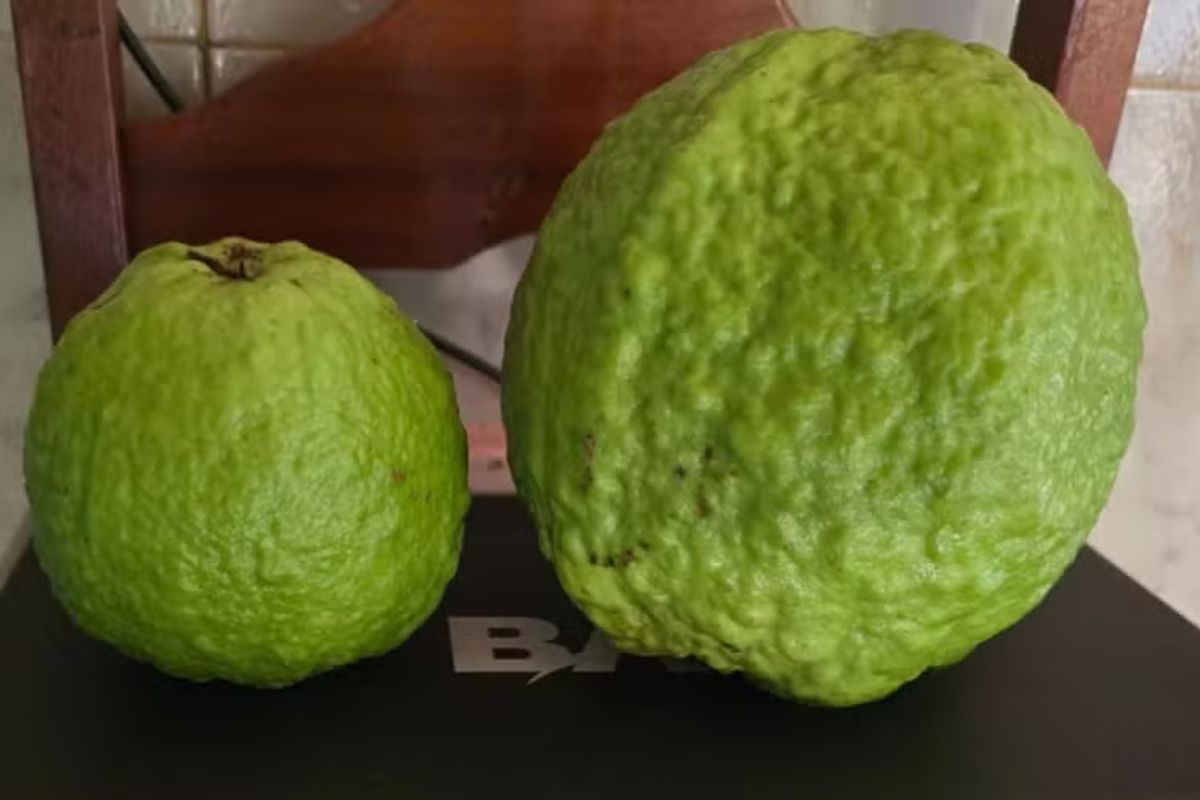


The Giant Guava Harvested by Rísia Maria de Souza and Fernando Carrijo Weighed 1.412 kg, Had White Pulp, and Came from a Guava Tree Born from a Crack in the Concrete of the Backyard; with Organic Management, It Became a Snack for More than 20 People and Caught the Attention of Guinness for Being Close to the Record.
The giant guava found in Vianópolis, in southeastern Goiás, impresses not only by its weight of 1.412 kilos but also by the improbable way it got there: it was born from a guava tree that sprouted from a crack in the cemented backyard of a couple who did not expect to harvest anything out of the ordinary.
According to the globorural portal, on February 12, confectioner Rísia Maria de Souza and her husband, Fernando Carrijo, recorded the harvest on video and saw the story gain traction on social media, while the fruit eventually became a shared snack with more than 20 people during a Carnival outing.
When the “Normal” Fruit Becomes an Exception

The guava is a tropical fruit native to South America and, for most people, its size is familiar: it fits in the palm of the hand and usually weighs between 100 and 400 grams, according to parameters released by Embrapa.
-
The sugar-energy sector advances with agricultural technology, but agricultural productivity still raises concerns.

-
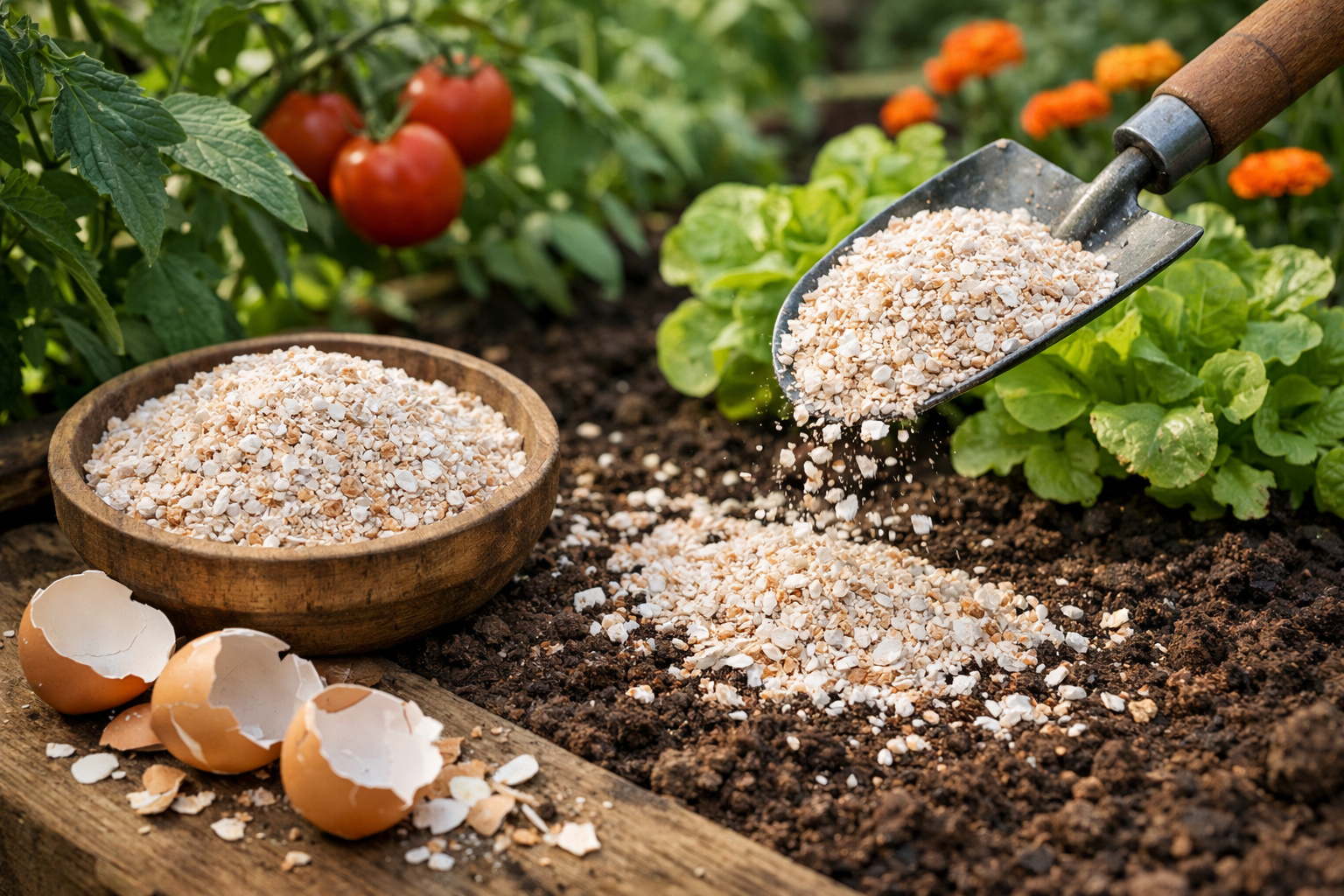
The eggshell that almost everyone throws away is made up of about 95% calcium carbonate and can help enrich the soil when crushed, slowly releasing nutrients and being reused in home gardens and vegetable patches.
-
This farm in the United States does not use sunlight, does not use soil, and produces 500 times more food per square meter than traditional agriculture: the secret lies in 42,000 LEDs, hydroponics, and a system that recycles even the heat from the lamps.

-
The water that almost everyone throws away after cooking potatoes carries nutrients released during the preparation and can be reused to help in the development of plants when used correctly at the base of gardens and pots, at no additional cost and without changing the routine.

This standard makes any deviation capture attention quickly, because the contrast is visual and immediate.
In the case of Vianópolis, the difference was so large that the comparison became inevitable: 1.412 kilos in a single fruit.
It’s not just “a big guava”; it is a unit that falls outside the more common range, even for those who are used to harvesting fruits in the backyard and monitoring the plant’s behavior over the years.
The Crack in the Cement and the Guava Tree That “Insisted” on Growing
The scenario behind the harvest helps explain why so many people were curious: the guava tree did not come from a planned garden nor from a structured orchard.
It developed from a crack in the floor of a cemented yard, an improbable spot for a fruit tree to establish itself and, furthermore, produce fruit.
Fernando reports that the tree is about five years old and began producing two years after it sprouted.
Until then, the production had already caught attention within the very backyard: the average weight of the guavas was around 600 grams, and the largest one harvested before this had reached 766 grams.
The new harvest, however, elevated the case of “domestic surprise” to city talk and then to national news.
What Does Management Have to Do with a Giant Guava?
When talking about what may have pushed the fruit outside the standard, Fernando attributes the result to the management adopted for the tree and other fruit trees in the backyard.
The central point lies in the breeding of California red worms (Eisenia foetida), used in producing humus, an organic fertilizer associated with vermicomposting.
Besides the humus, he mentions the leachate produced in the process and applied directly to the guava tree.
The detail that usually captures attention is the circular logic of care: waste that would go to waste, such as fruit peels and food scraps, becomes food for the worms, which multiply, and the result goes back to the plant as nutrition.
It’s a simple cycle to understand and hard to ignore when it’s linked to a fruit weighing 1.412 kilos.
The Snack for More than 20 People and the “Point Test”
The story didn’t just stay with the scale number. Rísia took the guava on a planned outing during the Carnival holiday, and the aftermath was shared with friends: more than 20 people tasted the fruit.
This stage, in practice, works as a type of spontaneous social validation, because it transforms curiosity into a collective experience.
According to the recorded account, the guava was at the ideal point, with a crunchy texture and sweet, juicy skin.
This changes the case, because it prevents the conversation from being restricted to size: it was not just a huge fruit “on the outside,” but a guava that, when opened and shared, maintained sensory qualities that people associate with freshness and proper ripening.
The Record Count and the 88 Grams That Made Headlines
The case gained another layer when it came onto the radar of the Guinness Book, an organization known for recording world records.
Senior public relations executive Kylie Galloway stated that the institution is monitoring the record for the heaviest guava in the world, but that no one has managed to secure it yet.
The criterion mentioned is straightforward: to guarantee the record, the fruit must weigh at least 1.5 kilos. The giant guava from Vianópolis was just 88 grams short of that mark, a detail that is usually small in any kitchen but becomes huge when it comes to “almost a record.”
It is precisely this proximity that keeps the story alive: it lies on the boundary between the already proven extraordinary and the milestone that has just escaped.
A Backyard with Other “Giants” and the Pattern that Repeats
The guava weighing 1.412 kilos was not an isolated event on the property. Fernando reports that he also harvested a pomegranate weighing 1 kilo and other smaller fruits, but above average, throughout 2026, suggesting that the backyard has been producing units outside the standard with some frequency.
This fact adds context without transforming the story into a promise: it does not mean that every harvest will be extreme, but indicates that there is a cultivation environment that has been favoring large fruits.
For those who monitor fruit trees at home, the combination of consistency in care, reuse of organic waste, and direct application of fertilizers produced on-site helps to understand why a backyard can, at times, surprise just as much as an orchard.
A giant guava that sprouts from a crack in the cement, feeds more than 20 people, and almost reaches a world record mixes chance, management, and visual narrative at the exact point to go viral: it has surprise, it has an understandable explanation, it has a clear comparison, and it has a “almost” that sparks debate.
And in your case: have you ever harvested any fruit or vegetable that was completely out of the standard and changed the way you look at your own backyard? If you could choose, would you prefer to harvest a few giant units or many smaller and more regular fruits, and why?










The article was written in Portuguese where . and , are used the opposite way for numbers in English. For example, $1,25 there instead of $1.25 for English. The translation was not done for the number 🙂
This should be 1.412 kg not 1,412 kg. The person who published this report doesn’t know how to used the , and .
I don’t believed it is 1,412 kg which is 1.4tonnes. must be a mistake shld be 1.412kg