





 Portuguese
  English
  Spanish
  4 min of reading
  0 comments


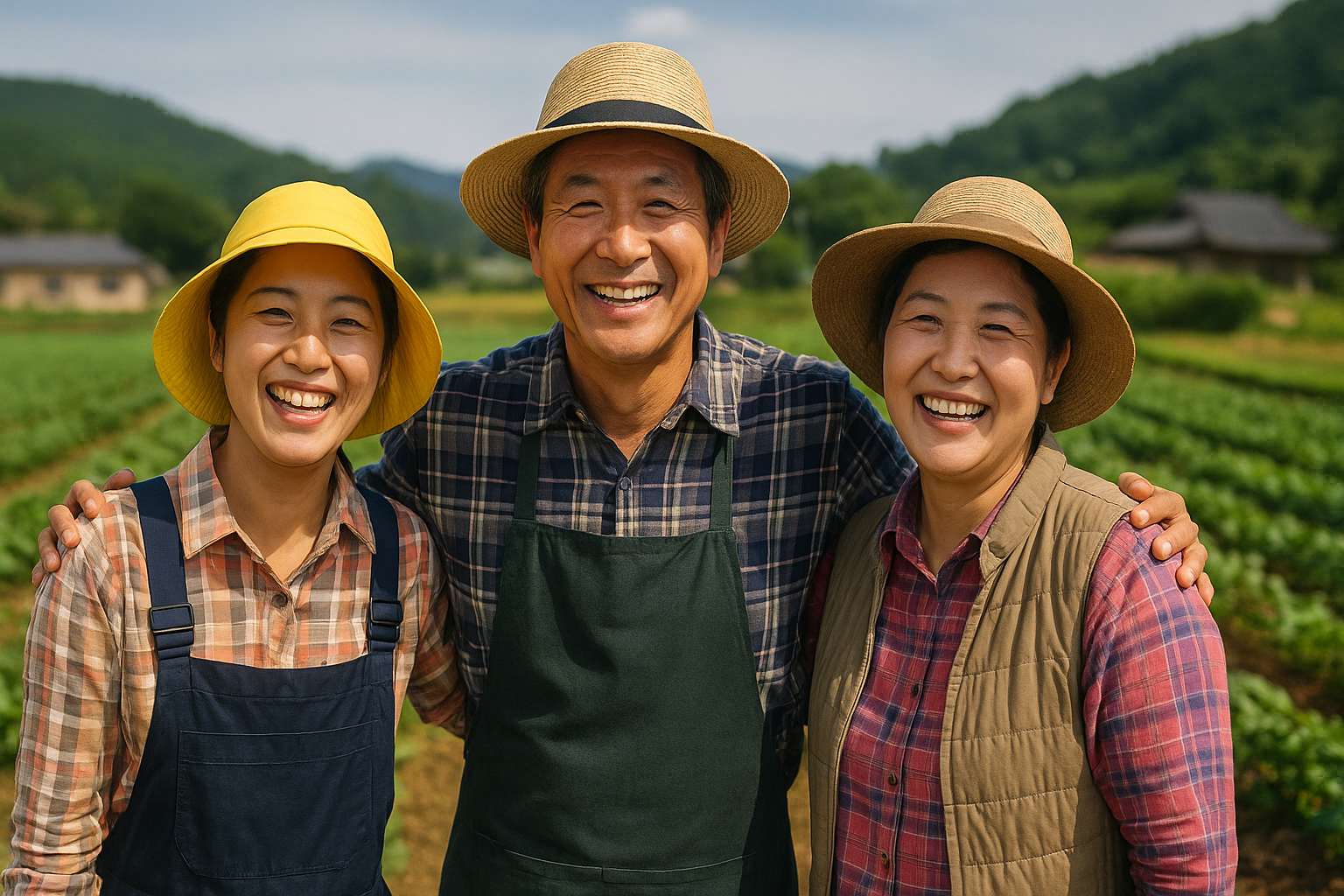
Financed By Profits From Solar And Wind Energy, The South Korean Project Uses Local Vouchers To Retain Income In Rural Communities And Combat Population Decline.
South Korea initiated in 2025 an unprecedented rural basic income pilot project aimed at addressing depopulation and aging in the country’s agricultural areas.
Seven municipalities — Yeoncheon, Jeongseon, Cheongyang, Sunchang, Shinan, Yeongyang, and Namhae — have been selected to participate in the program, which will offer a monthly payment of 150,000 won, equivalent to about 105 euros, in the form of local vouchers.
The measure will extend for two years, until the end of 2027, and could serve as a basis for permanent rural revitalization policies.
-
The government requests the Federal Revenue Service for a new system to automate the income tax declaration, reducing errors, time, and bureaucracy for millions of Brazilians.

-
Pix in installments, international Pix, and contactless payment without internet: the Central Bank revealed the new features coming to the tool that is already used by almost every adult in Brazil.
-
Mercado Livre has just started selling medications with delivery in up to three hours to your door, and this move could completely change the way Brazilians buy medicines on a daily basis.

-
In Dubai, rising tensions from the war in the Middle East are causing super-rich individuals to leave the Gulf and direct their fortunes to a new financial refuge in Asia.


Local Vouchers And Strengthening The Community Economy
The program requires beneficiaries to have resided for at least 30 days in one of the selected counties.
Payments will be made exclusively through certificates known as “local love vouchers,” which can only be used in businesses within the community.
This way, the money remains circulating in the local economy, strengthening small businesses and preventing the outflow of resources to large chains or urban centers.
The central idea is to create a circular economic model capable of generating a multiplier effect in low-population-density regions.
When consumption remains within the territory, there is an incentive for trade, maintenance of basic services, and strengthening of social cohesion. The proposal, therefore, goes beyond simple income transfer: it aims to establish a minimum economic base to ensure dignity and local sustainability.
Public Funding And Renewable Energy
The total budget for the project is 886.7 billion won — about 619 million euros — for the two-year implementation. More than a third of this amount will come from the central government, while the remainder will be funded by local governments.
The most innovative aspect lies in the form of complementary financing: part of the resources will come from the profits generated by renewable energy projects.
In Shinan, for example, the revenue obtained from solar and wind energy installations managed by a local cooperative will be redistributed among the residents.
In Yeongyang, a similar model will be applied, using the earnings from wind production.
This integration of social policies and energy transition creates a link between territorial justice and sustainability: the wealth produced by renewable parks returns directly to those living nearby.
Impact Assessment And Continuity Of The Program
The Ministry of Agriculture, Food and Rural Affairs of South Korea has created a rigorous monitoring system to measure the program’s results.
Indicators of local development, quality of life, population dynamics, and economic vitality will be analyzed.
Based on this data, the government will evaluate the feasibility of expanding the initiative or turning it into a permanent policy.
Another important point will be the capacity of municipalities to maintain basic income after the experimental period.
The analysis will include factors such as local legislation, political will, and community participation.
The intention is to identify conditions for replicating the model in other rural areas threatened by population loss and the concentration of opportunities in large cities.
An Integrated Rural Development Model
The proposal for a basic income linked to territory presents multiple benefits. It reduces dependency on fragmented subsidies, offering stable and predictable financial support.
Moreover, it encourages young people and families to remain in the countryside, contributing to demographic renewal and the preservation of local traditions.
The use of local vouchers also strengthens the economic fabric while reinforcing the sense of belonging and regional identity.
On the other hand, the link to renewable energy projects transforms the ecological transition into a tool for wealth redistribution.
Instead of concentrating profits in large companies, the system returns part of the earnings to the community, promoting environmental justice that aligns sustainability and social equity.
By merging basic income, local economy, and clean energy, the South Korean pilot program points to a concrete and measurable path to address the challenges of the 21st century.
It represents not just financial assistance but a commitment to rebuilding the bond between territory, community, and sustainable development — an experience that could inspire other nations facing rural decline.









-

Uma pessoa reagiu a isso.