Portuguese
  Spanish


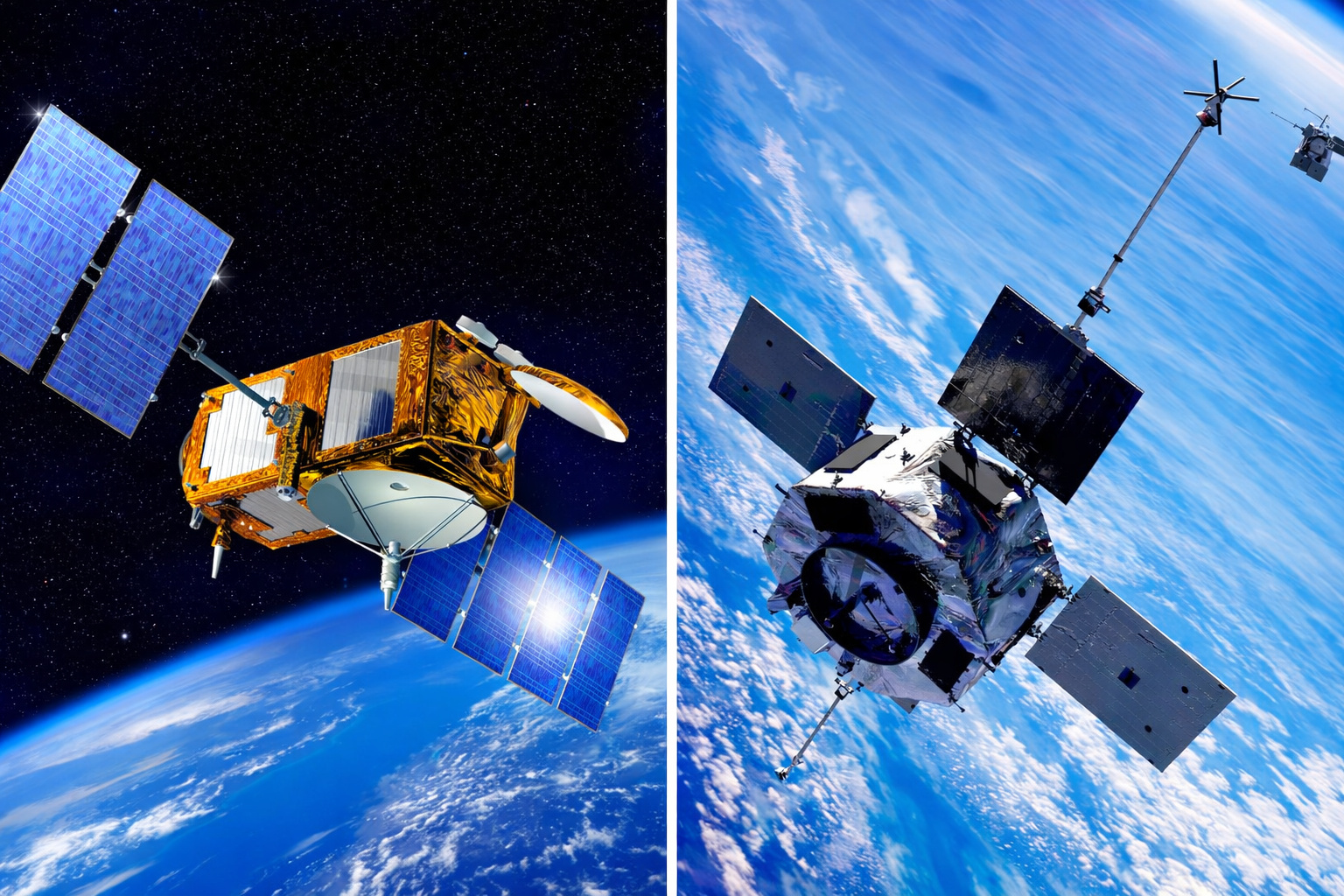

Propulsion technology using atmospheric air can change satellite operation and enable longer and cheaper missions
A new satellite propulsion system is attracting attention for using the surrounding environment as an energy source. The proposal is simple yet powerful: to use particles from the Earth’s atmosphere as fuel, eliminating the need to carry large reserves on board.
The information was released by TransMIT GmbH, a company involved in the development of the space project. This innovation could reduce costs, increase operational time, and pave the way for a new generation of satellites.
Currently, satellites rely on internal fuel to maintain orbit. This increases weight, raises launch costs, and limits lifespan. With the new technology, this scenario could change significantly.
-
Brazilian Innovator Survives Homemade Submarine Dive in Paraty Despite Hatch Leak and False Oxygen Alarm

-
China Develops Custom 140-Ton Electric Mining Truck with 770 kWh Swappable Battery, Deploys 290 Units in Xinjiang’s Largest Zinc Mine
-
Meta to Launch Arena, a New Prediction App Targeting 3.56 Billion Users, Competing with Polymarket and Kalshi

-
Scientist Challenges Famous Human Evolution Theory, Argues Homo Sapiens Evolved Gradually Over Thousands of Years





How the propulsion using atmospheric air works
The technology is called air-breathing electric propulsion, known as ABEP. Instead of carrying fuel, the satellite captures small particles present in the atmosphere at lower altitudes.
These particles are converted into energy within the system. The process involves capturing, electrically charging, and accelerating these gases to generate thrust.
This allows the satellite to continue moving without relying on traditional fuel, something that could completely change how these machines operate in space.
Satellites can operate closer to Earth
The new technology allows satellites to function at altitudes between 180 and 250 kilometers, a region where traces of atmospheric gases still exist.
This type of orbit is called very low Earth orbit. In this region, satellites experience more resistance from the environment, which would normally require more fuel.
With the new system, this resistance is now utilized to the advantage, as the particles causing the friction serve as an energy source.
Project advances and goes through an important validation stage
The system has already passed an important phase of technical evaluation, showing that it is possible to advance in development.
The initiative involves companies and support from the European Space Agency, the organization responsible for space projects in Europe. The goal is to create a motor capable of operating using gases like nitrogen and oxygen.
A prototype is under construction and is expected to undergo tests in environments that simulate low-altitude space conditions.
New technology eliminates difficult-to-use component
One of the most relevant advancements is, therefore, the removal of a part known as the cathode, common in traditional motors.
This part has always been difficult to adapt in this type of system. Now, the new model can operate without it, simplifying the design and increasing efficiency.
The information was released by TransMIT GmbH, a company involved in the development of the space project, which is directly participating in the advancement of the technology.
Direct impact on mission costs and duration
With less weight and no need for stored fuel, satellites can become cheaper to launch and operate.
Moreover, the ability to generate energy continuously using the surrounding environment allows for longer missions.
This could benefit various areas, such as communication, Earth monitoring, and services that rely on satellites being active for long periods.
Technology could change the future of satellites
The propulsion that uses atmospheric air is still under development, but it already shows potential to transform the space sector.
With greater efficiency and less dependence on limited resources, it paves the way for a new generation of satellites that can operate closer to Earth and for longer periods.
This type of advancement indicates a significant change in how space equipment is designed and utilized.
The evolution of this technology could directly influence the cost, accessibility, and expansion of satellite use in the coming years.
Want to know more about technologies that are changing the world? Leave your comment or share this news with those interested in innovation.