





 Portuguese
  English
  Spanish
  5 min of reading
  0 comments


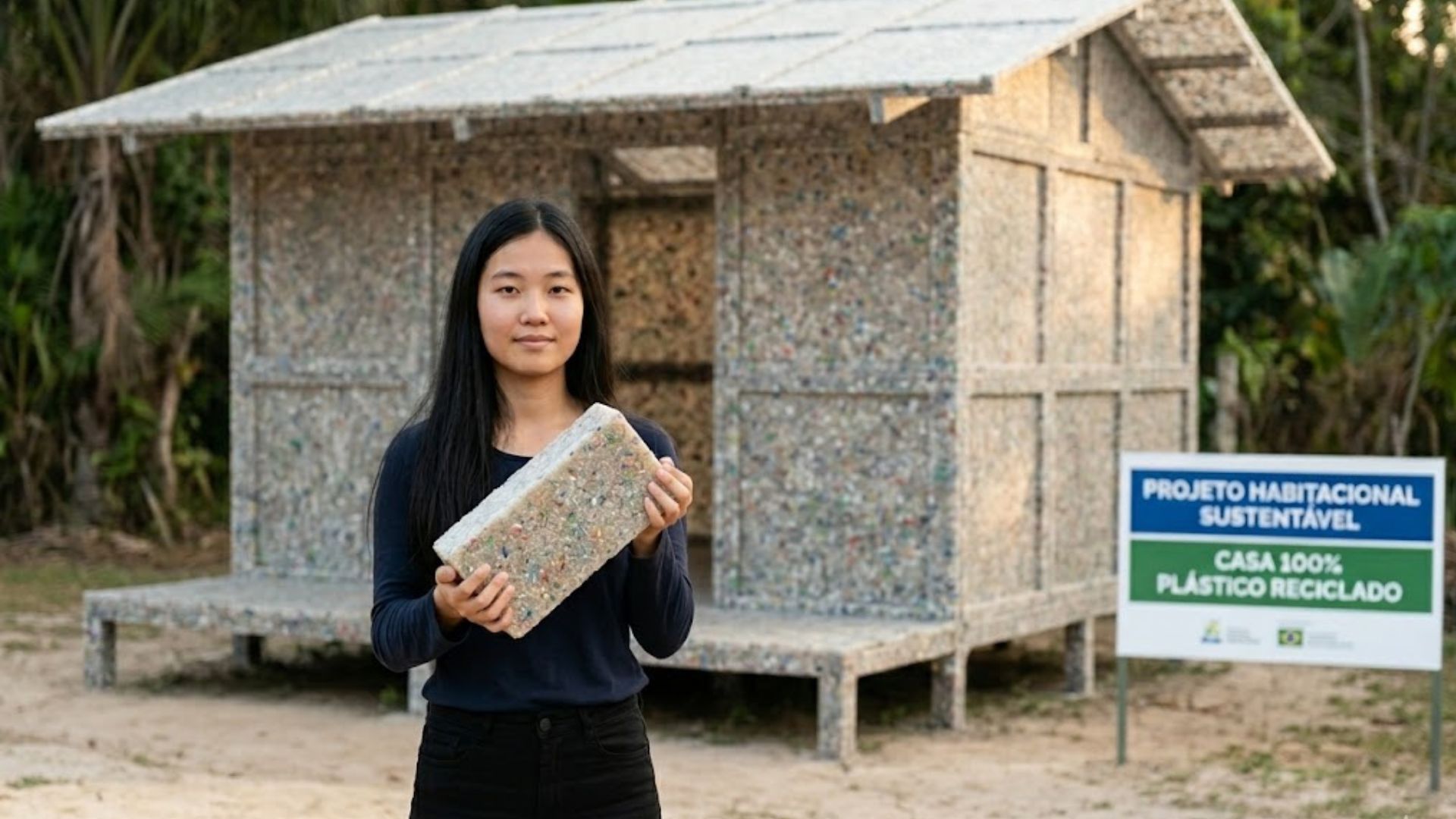
Recycled uPVC Modular Structure Targets Emergencies With Quick Setup, Lockable Door and Window, and Extended Lifespan by Transforming 460 kg of Repurposed Plastic Into Temporary Shelter Designed for Humanitarian Crises and Aligned With UN Standards, According to the University of Birmingham.
A temporary shelter in the shape of a “house,” made with 460 kilograms of recycled plastic per unit, can be set up in about one hour, without tools, and includes lockable door and window, according to information released by the University of Birmingham in the UK.
The modular structure, made from repurposed uPVC, was designed for responses to crises like wars, floods, and earthquakes when families are rapidly displaced and need minimum protection, privacy, and security in often overcrowded shelter areas.
Emergency Shelter as an Alternative to Tents
In many humanitarian operations, canvas tents address the initial urgency but fall short in sensitive everyday points, such as visual barriers, sound insulation, and protection against invasions, especially when the camp grows quickly and the movement of people intensifies.
-
Friends have been building a small “town” for 30 years to grow old together, with compact houses, a common area, nature surrounding it, and a collective life project designed for friendship, coexistence, and simplicity.

-
This small town in Germany created its own currency 24 years ago, today it circulates millions per year, is accepted in over 300 stores, and the German government allowed all of this to happen under one condition.

-
Curitiba is shrinking and is expected to lose 97,000 residents by 2050, while inland cities in Paraná such as Sarandi, Araucária, and Toledo are experiencing accelerated growth that is changing the entire state’s map.

-
Tourists were poisoned on Everest in a million-dollar fraud scheme involving helicopters that diverted over $19 million and shocked international authorities.


By investing in rigid panels and modular fittings, the project aims to elevate security and organization standards of the space, with a shelter that approaches basic domestic use, without requiring specialized personnel for field installation.
Flat-Pack Assembly and Transport Logistics

The system was designed as “flat-pack,” with flat pieces that travel disassembled to occupy less volume and facilitate transport, an operational advantage in scenarios where roads are damaged and distribution relies on long routes.
This format also addresses a recurring bottleneck in disasters: to carry more units per trip and reduce the complexity of delivery, which can speed up the arrival of the shelter to locations where the response window is short.
Modular Structure and Uses in Support Services
The modularity opens up different configurations, according to the terrain and service needs, and the university itself states that the set can be adapted for functions beyond housing, such as structures aimed at assistance.
In this context, the same fitting logic that allows for a “house” to be built quickly can serve to organize support points in improvised settlements, from triage units to administrative spaces, without relying on extra materials for securing.
Lockable Door and Window for Security and Privacy
Security is often a dividing line in temporary solutions, because shelter is not just cover from rain and heat, but also a physical boundary to reduce theft and invasions, in addition to providing some privacy for family routines.
Therefore, the presence of lockable doors and windows stands out as a highlight pointed out by the University of Birmingham, linking controlled closure of the space to better protection conditions in high-density shelter areas.

10-Year Lifespan and Recycling at End of Cycle
Although the term “temporary” is common in emergency responses, permanence can extend for months or years, increasing material wear and maintenance costs, which leads projects to prioritize durability beyond quick installation.
According to the university, the shelter was designed to last up to 10 years and, at the end of this cycle, can be recycled again, a proposal that combines prolonged use, less frequent replacement, and return of the material to the production chain.
Recycled Plastic and uPVC as Raw Material for the Shelter
The uPVC mentioned in the project is a plastic widely used in the industry, including in door and window profiles, which helps to explain the choice of a material associated with resistance and standardization, even in environments with limited infrastructure.
By incorporating hundreds of kilograms of repurposed plastic per unit, the initiative attempts to tackle two problems that often go hand in hand, according to the institutional description: the need for rapid housing and the large volume of plastic waste in the world.
Humanitarian Standards Linked to the UN and UNHCR
The university also reports that the shelter was developed to align with requirements used by international organizations in emergency responses, mentioning parameters adopted in guidelines associated with UNHCR, the UN agency for refugees.
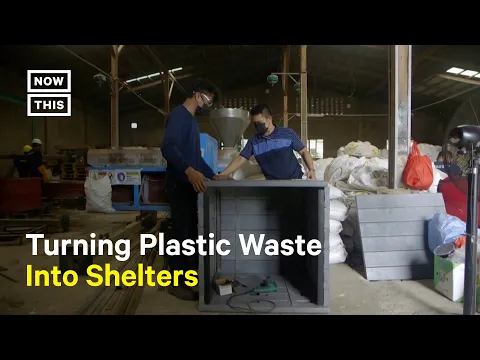

This type of alignment often influences purchasing decisions and adoption by governments, agencies, and humanitarian organizations, because it translates practical needs into minimum criteria for safety, space, protection, and installation conditions in real operations.
Partnership With Suscons and Scale Production
In addition to the technical design, the project involves an industrial dimension, as a shelter only becomes a concrete alternative when it can be produced in volume and distributed regularly, with quality control and a predictable supply chain.
At this point, the University of Birmingham reports a partnership with Suscons, based in the city, signaling the intention to go beyond the prototype and enable manufacturing to meet typical demands of large emergencies.
Public Visibility and Performance Accountability
The proposal gained visibility through institutional communications and recognition records related to innovation and sustainability, a type of showcase that usually attracts interest from funders and humanitarian operators, while also increasing accountability for results.
In extreme scenarios, promises of speed, durability, and cost-effectiveness must hold up under intense use, temperature variations, irregular logistics, and assembly in adverse environments, conditions in which seemingly simple solutions can reveal limits.
Shelter and Organization of Temporary Settlements
The impact of a more robust structure goes beyond the object, as the organization of the shelter influences water, sanitation, health, and protection, and can allow for safer storage of supplies, installation of services, and greater operational predictability.
By proposing a “house-shelter” made of recycled plastic, the project positions itself at the intersection of sustainability and humanitarian aid, by transforming waste into basic infrastructure, maintaining as its axis quick setup without tools and lockable closure of the space.









Seja o primeiro a reagir!