





 Portuguese
  English
  Spanish
  4 min of reading
  0 comments


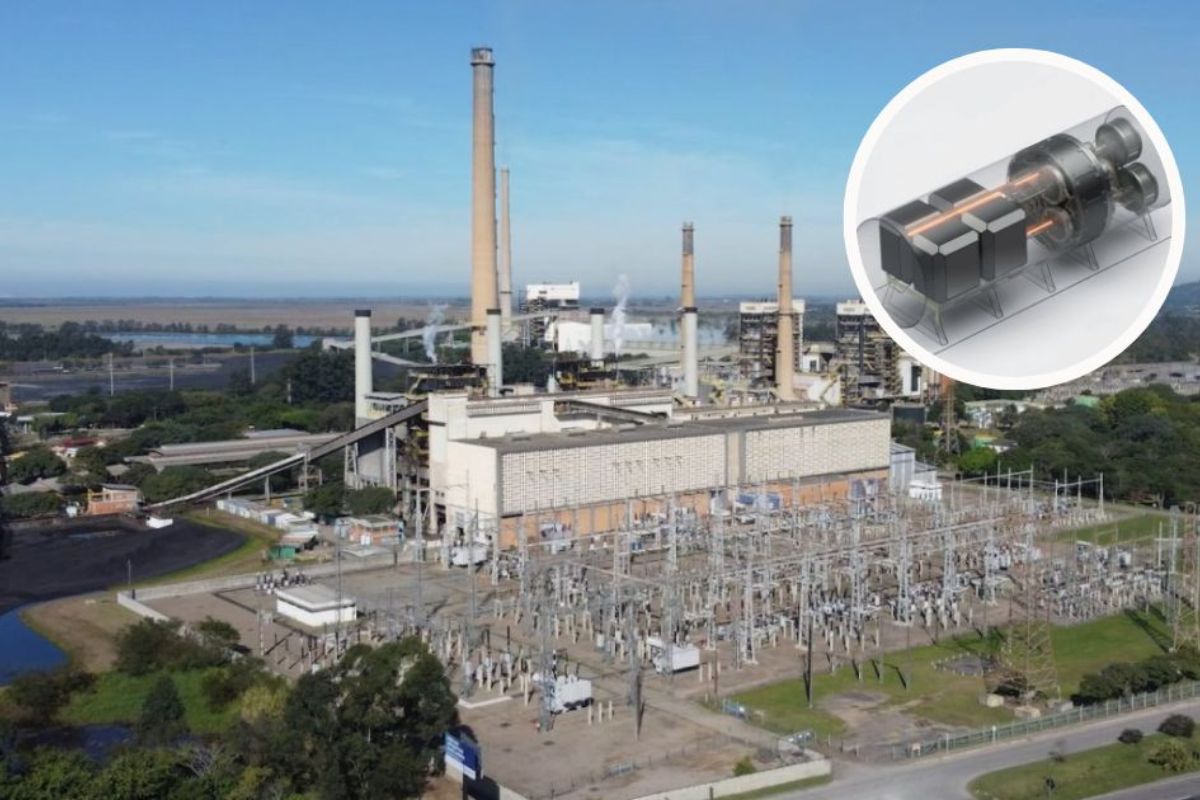
The Brazilian Nuclear Project Led From Capivari De Baixo Brings Finep, Diamante Energia, and Research Institutions Together on a 36-Month Route to Deliver a 5 Megawatt Modular Microreactor Capable of Operating for More Than a Decade, With Strategic Civil Application in Critical Areas of the Country.
The Brazilian nuclear project entered the radar discreetly but with national scale ambition. Diamante Energia, based in Capivari de Baixo in the southern region of Santa Catarina, leads the industrial front of the initiative alongside Finep and a consortium of scientific, technological, and innovation institutions.
The proposal combines energy security, a transition to low-emission sources, and the internalization of access to stable electricity. If the 36-month schedule is met, the country may gain a compact solution to meet the needs of small and medium cities, in addition to critical applications where power interruption is not an option.
Who Is In Charge and Why This Movement Gained Weight

At the center of the Brazilian nuclear project is Diamante Energia, the company responsible for managing the Jorge Lacerda Thermoelectric Complex. The company’s participation is relevant because it connects operational experience in energy generation with a new technological stage, more distributed and focused on high-reliability civil applications.
-
The government requests the Federal Revenue Service for a new system to automate the income tax declaration, reducing errors, time, and bureaucracy for millions of Brazilians.

-
Pix in installments, international Pix, and contactless payment without internet: the Central Bank revealed the new features coming to the tool that is already used by almost every adult in Brazil.

-
Mercado Livre has just started selling medications with delivery in up to three hours to your door, and this move could completely change the way Brazilians buy medicines on a daily basis.

-
In Dubai, rising tensions from the war in the Middle East are causing super-rich individuals to leave the Gulf and direct their fortunes to a new financial refuge in Asia.


The initiative also brings together Finep, which provides funding, and a consortium of national ICTs, which supports the technical foundation of the development. This institutional design is decisive: public funding directed towards innovation, business coordination, and scientific execution in the same arrangement increase the chances of transforming concept into an applicable solution outside the laboratory.
How Much It Costs, How Much It Delivers, and Where the Project Wants to Go
The Brazilian nuclear project has a budget of R$ 50 million, with a completion deadline of 36 months. The planned microreactor has a capacity of 5 megawatts, an appropriate scale to meet the demand of a small to medium-sized municipality, with the possibility of providing electrical and thermal supply for different consumption profiles.
The territorial ambition is high: the technology is presented as capable of serving up to 68% of Brazilian municipalities, especially where the grid faces limitations on stability, distance, or expansion costs. In practice, this reshapes the energy debate: it’s not just about generating more, but about generating better, with predictability and local presence.
How the Microreactor Was Designed to Operate Remotely and for More Than Ten Years

One of the strongest differentiators of the Brazilian nuclear project is the operational autonomy of over a decade without refueling.
In terms of energy planning, this characteristic reduces recurring downtime, simplifies logistics, and favors continuous use in environments that cannot rely on long supply chains.
The model also emerges with industrial logic: compact structure, modular, designed for assembly line manufacturing and facilitated transport.
This combination of modularity and remote operation changes the game for remote regions, as it shortens the distance between advanced technology and everyday use in the national territory.
National Fuel and Integration With the Existing Nuclear Park
The Brazilian nuclear project is being designed to use fuel produced by INB, akin to that used in the nuclear plants operating in the country. This choice strengthens the integration with already installed capabilities and reduces external dependencies on a historically sensitive issue for any long-term energy strategy.
In addition to supply security, the choice for a national chain tends to better organize the technological cycle, from fuel production to final application.
When technology communicates with the local industry, the gain is not just technical: it also appears in supply predictability, accumulated learning, and scaling capacity.
From Capivari De Baixo to COP 30: Energy Transition and Strategic Repositioning
Presented at COP 30 in 2025, the Brazilian nuclear project was associated with the energy transition agenda, emphasizing zero emissions of greenhouse gases during operation. This narrative connects the proposal to the five Ds mentioned by the company: decarbonization, decentralization, digitalization, diversification, and democratization.
The symbolic contrast is strong: the same corporate structure linked to the largest thermoelectric complex in Latin America also leads a low-emission technological route. This repositioning does not erase the thermal past but points the direction: to maintain supply security while the electrical system seeks to reduce carbon and enhance resilience.
Practical Applications: Hospitals, Communities, Industry, and Digital Infrastructure
The Brazilian nuclear project is described as suitable for hospitals, industrial facilities, and small communities, as well as remote areas that require continuous supply. In all these cases, the critical variable is the same: stable energy 24 hours a day, with less exposure to prolonged failures.
Diamante also cites use in data centers and supply for electric vehicles, expanding the economic reach of the microreactor to growing sectors. When a source delivers continuity, not just power, it alters investment decisions: companies plan better, essential services operate with less risk, and cities gain predictability.
The Brazilian nuclear project is still under development but already contains elements that explain its relevance: directed investment technical-institutional partnerships, compatible power with local demands, long autonomy, and alignment with decarbonization goals. The potential is significant precisely because it combines municipal scale with national impact.
If a 5 MW microreactor were deployed in your region, which priority should come first: ensuring continuous power for hospitals, attracting new industries, supporting data centers, or accelerating infrastructure for electric vehicles? I want to hear your view with real examples from your city.









-

-

2 pessoas reagiram a isso.