





 Portuguese
  English
  Spanish
  4 min of reading
  0 comments


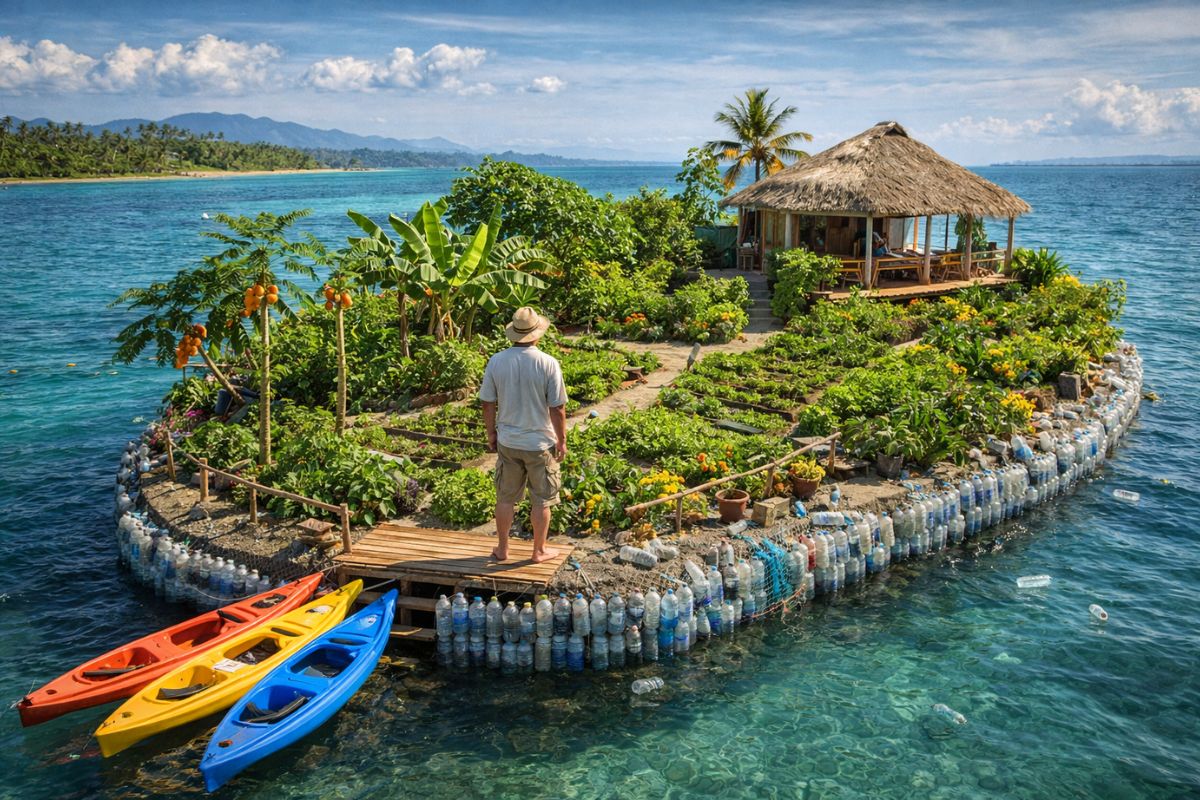
An artist focused on sustainability built a floating island using more than 150,000 recycled PET bottles as a base. The structure has fertile soil for planting, mangrove trees that stabilize the platform, solar panels for energy, and a rainwater collection system for daily consumption.
The idea of building a floating island from recycled PET bottles sounds like something out of a movie, but it’s real. Artist Richart Sowa, focused on environmental sustainability, collected over 150,000 discarded plastic bottles to create the foundation for a self-sufficient residence at sea. Located in Isla Mujeres, Mexico, the floating island functions as a complete micro-ecosystem, with fertile soil for cultivation, mangrove trees reinforcing the structure, solar panels for electricity, and rainwater harvesting for consumption. The project transforms polluting urban plastic waste into a habitable and productive space.
The process of constructing the floating island involves filling large net bags with empty and tightly capped PET bottles. These bags are tied to wooden frames, forming a robust and adaptable platform. On this base, the creator placed sand to allow for vegetation planting. The result is a structure that floats, supports weight, houses plants, and functions as a permanent residence. The first version of the floating island was destroyed by a hurricane and became known as Spiral Island, which provided essential structural lessons for reconstruction.
How PET bottles support a floating island at sea

The base of the floating island is made of thousands of empty and capped PET bottles, which function as individual buoys. Grouped inside net bags and tied to wooden frames, they create a platform that supports the weight of the sand, plants, and the housing structure above.
-
A legend of Brazilian TV is 75 years old, returned to narrate the World Cup for SBT, and still finds time to manage a farm of over 100 hectares in Rio Grande do Sul where she produces award-winning wines, olive oil, and raises cattle.

-
Family buys mansion destroyed by fire for $1.5 million, faces over 500 days of construction, transforms loss into high-end property, and leaves neighbors in awe.

-
The world consumes 50 billion tons of sand per year and no one is monitoring it: the UN warns that the second most used resource on the planet after water is running out and has even created an international mafia.
-
With a length of 211 meters, a double iron hull, and propulsion by sails, paddles, and a screw propeller simultaneously, the Great Eastern was the largest ship on the planet and ultimately laid the first successful transatlantic telegraph cable.

Each capped bottle functions as an independent air chamber, which distributes buoyancy evenly across the surface.
The problem is that PET bottles age over time. Continuous exposure to saltwater and sunlight degrades the plastic, causing the bottles to lose buoyancy and gradually sink.
This imposes an almost daily maintenance work on the floating island, with constant replacement of deteriorated bottles to keep the platform safe and stable. Regular monitoring also prevents synthetic material from tearing the nets and ending up in the ocean.
The role of mangrove trees in the stability of the floating island
Planting young mangroves on the floating island was one of the smartest solutions of the project. The roots of the mangroves grow freely and intertwine with the submerged plastic, creating a natural binding that is much more flexible and resistant to maritime conditions.
This plant growth reinforces the physical security of the floating island and creates conditions for marine fauna to settle around.
Several small fish seek shelter in the submerged roots of the mangroves, transforming the floating island into an active aquatic micro-ecosystem.
The environment has ceased to be just a residence to become a point of marine biodiversity. Similar coastal protection projects receive support from organizations like the Chico Mendes Institute for Biodiversity Conservation, which works on the recovery of degraded coastal areas.
Solar energy and rainwater: how the floating island operates without connection to the mainland
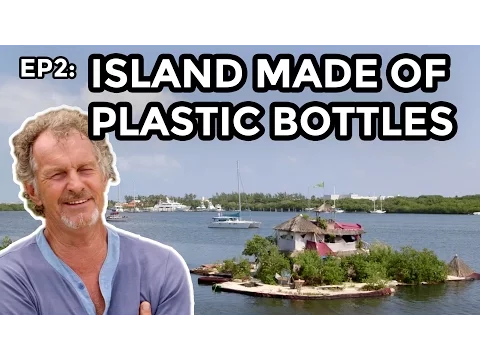

Living isolated at sea requires smart solutions for energy and water. The electricity of the floating island comes entirely from solar panels installed on the roof of the residence. The system ensures lighting during the night and operates basic household appliances, completely eliminating the burning of fossil fuels.
For daily consumption of fresh water, a rainwater collection system gathers water that runs down the roof and stores it in sturdy barrels.
The preparation of meals also follows sustainable logic: the vegetables come from the island’s own garden, and cooking is done with a solar oven. The combination of solar energy, rainwater collection, and home cultivation makes the floating island a practically self-sufficient residence.
However, this autonomy comes at a price: constant maintenance of the structure and exposure to maritime weather make life on the island a daily challenge.
The risks of living on a floating island made of PET bottles
Despite the idyllic setting, the floating island demands exhausting maintenance work. The main risks include strong winds that damage the wooden covering, severe weather events that can destroy the base in minutes, and wear caused by salt.
The first version of the island was completely destroyed by a hurricane, forcing the creator to start from scratch.
The difficulty of properly disposing of waste also weighs heavily. Reverse logistics at sea is complex and costly. Still, the floating island serves as inspiration for ecological engineers and shows that polluting waste can gain beneficial destinations.
The project questions the way we build and opens dialogue about excessive plastic use. If one person can build a floating island with 150,000 PET bottles, what could organized engineering do with millions of them?
Would you live on an island like this?







Seja o primeiro a reagir!