





 Portuguese
  English
  Spanish
 4 min of reading
  2 comments


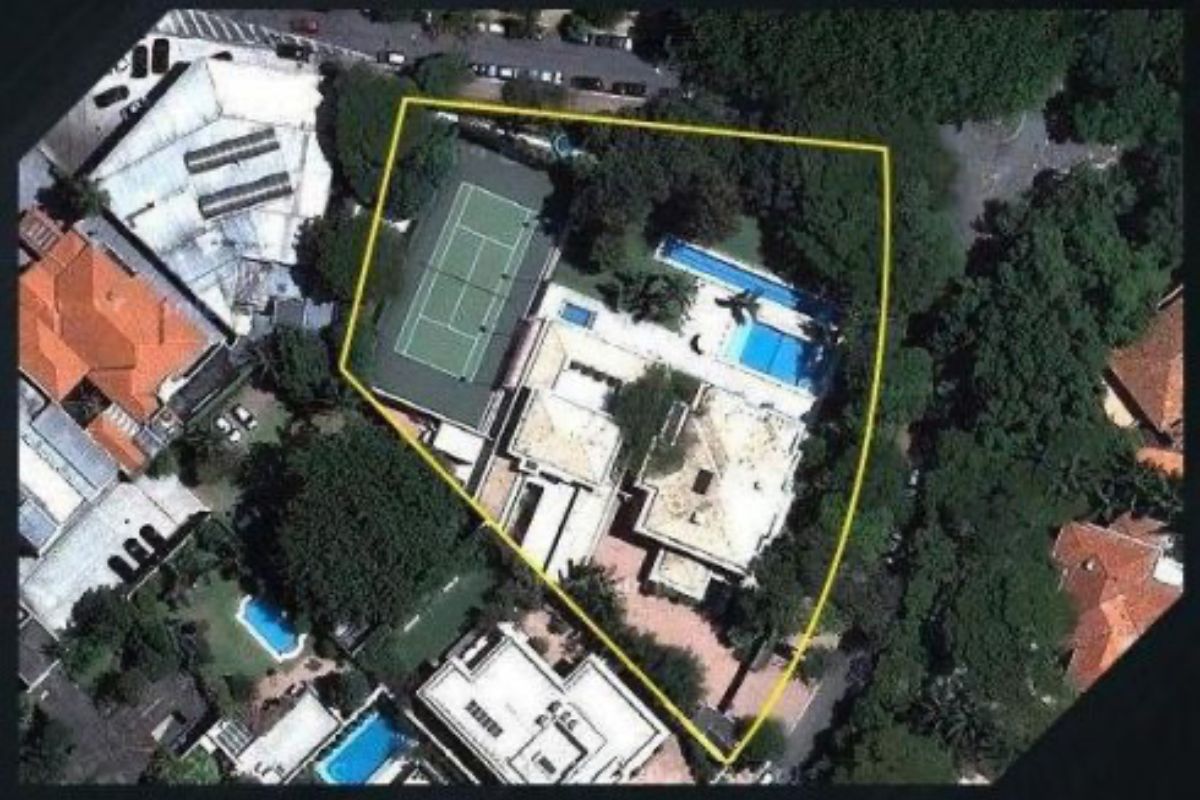


The Mansion Sold for R$ 250 Million in Jardim América, São Paulo, Marks the End of an Era After the Death of Abílio Diniz in 2024 and Opens Another with Joesley Batista, Whose Purchase Is Interpreted as Repositioning, on a Street Where Address, Neighborhood, and Timing Matter as Much as Square Meters of Land
The mansion worth R$ 250 million that belonged to Abílio Diniz in Jardim América, São Paulo, was purchased by Joesley Batista and has become a public marker of change at an address where almost everything tends to happen without announcement. The value and the neighborhood have pulled the discussion beyond the market.
Instead of architectural debate, what emerges is a reading of signals. When a mansion changes ownership at this level, the operation becomes a message about position, access, and priorities, especially since the buyer and seller carry trajectories that transcend the real estate sector.
What Is Known About the Deal and Why the Value Draws Attention
The negotiation of the mansion was closed for R$ 250 million in Jardim América, São Paulo, placing the property among the most valuable in the country.
-
The government requests the Federal Revenue Service for a new system to automate the income tax declaration, reducing errors, time, and bureaucracy for millions of Brazilians.

-
Pix in installments, international Pix, and contactless payment without internet: the Central Bank revealed the new features coming to the tool that is already used by almost every adult in Brazil.

-
Mercado Livre has just started selling medications with delivery in up to three hours to your door, and this move could completely change the way Brazilians buy medicines on a daily basis.

-
In Dubai, rising tensions from the war in the Middle East are causing super-rich individuals to leave the Gulf and direct their fortunes to a new financial refuge in Asia.


The price becomes the first filter for interpretation because it is not an abstract figure: it defines the type of possible buyer and the type of asset intended to be held, protected, and projected.
Even without public details about conditions, timeline, or contractual structure, what is evident is the symbolic nature of the address.
In Jardim América, price does not just buy area, it buys a type of presence, and this explains why the sale of the mansion resonates outside the real estate circle.
Abílio Diniz, Jardim América, and the Construction of an Address as Heritage
Abílio Diniz, founder and key figure associated with the expansion of Grupo Pão de Açúcar, maintained the mansion as part of a business life marked by reputation, capital, and networks of relationships.
The death of Abílio Diniz in 2024 marks the end of an era and reorganizes the ownership of assets that, in neighborhoods like Jardim América, rarely enter the news by chance.
The issue is less nostalgia and more asset dynamics.
When a mansion of this stature is no longer associated with Abílio Diniz, the property begins to be seen as a transitional piece, because Jardim América tends to preserve owners for long periods, and significant changes signal re-accommodations also outside the neighborhood.
Joesley Batista and What the Purchase Communicates in the Short and Long Term
The purchase of the mansion by Joesley Batista occurs at a moment when he returns to the center of business and political articulations, with recent meetings mentioned with figures like Luiz Inácio Lula da Silva, Donald Trump, and Delcy Rodríguez.
In São Paulo, an acquisition of this scale is often interpreted as a decision for controlled visibility, especially when it occurs in Jardim América.
The reputational chronology also weighs in.
Since 2017, Joesley Batista has been associated with accusations such as active corruption, organized crime, and money laundering, and he was even imprisoned for about six months, being released in March 2018 under precautionary measures, such as passport retention.
In this context, a mansion in Jardim América tends to function as a declaration of permanence, not just as simple luxury consumption.
From Heritage to Repositioning: Why an Address Becomes Strategy
The conglomerate linked to Joesley Batista, with JBS as the central company, maintained a global presence and resumed expansion, reinforcing financial strength even amid public wear and tear.
In recent years, J&F has increased diversification, with mentioned movements involving Âmbar Energia and Fluxus, in addition to market decisions that reposition assets and access to capital.
It is here that the mansion becomes a significant detail. An asset worth R$ 250 million in São Paulo is not just housing; it is a way to anchor narrative, because Jardim América imposes a type of social endorsement that functions as a language of its own.
For part of the market, the purchase by Joesley Batista helps convey a message: the cycle of retraction is behind, and the cycle of presence is being tested at the highest level.
The mansion worth R$ 250 million in Jardim América, São Paulo, moves from the orbit of Abílio Diniz to Joesley Batista, and this explains the noise: the property is not just property, it is a piece of interpretation about power, time, and the reconstruction of private public space.
When the address is one of the most expensive in the country, the change of ownership becomes a social fact before it turns into domestic routine.
In your view, what matters more in such a case: the value of the mansion, the Jardim América neighborhood, the history of Abílio Diniz, or the moment of Joesley Batista? If you lived in São Paulo, would you buy or sell a property at this level right now, and why?









Como é bom ser Amiguinho do LULES, compras de frigoríficos, portos, etc.
LULES põe o dinheiro diretamente na conta do seu sócio minoritário.
Se fosse amiguinho do Presidiário compraria uma Mansão de 500 milhões em dinheiro vivo, corrupção do Banco MASTER e desvios de dinheiro do INSS