





 Portuguese
  English
  Spanish
  3 min of reading
  0 comments


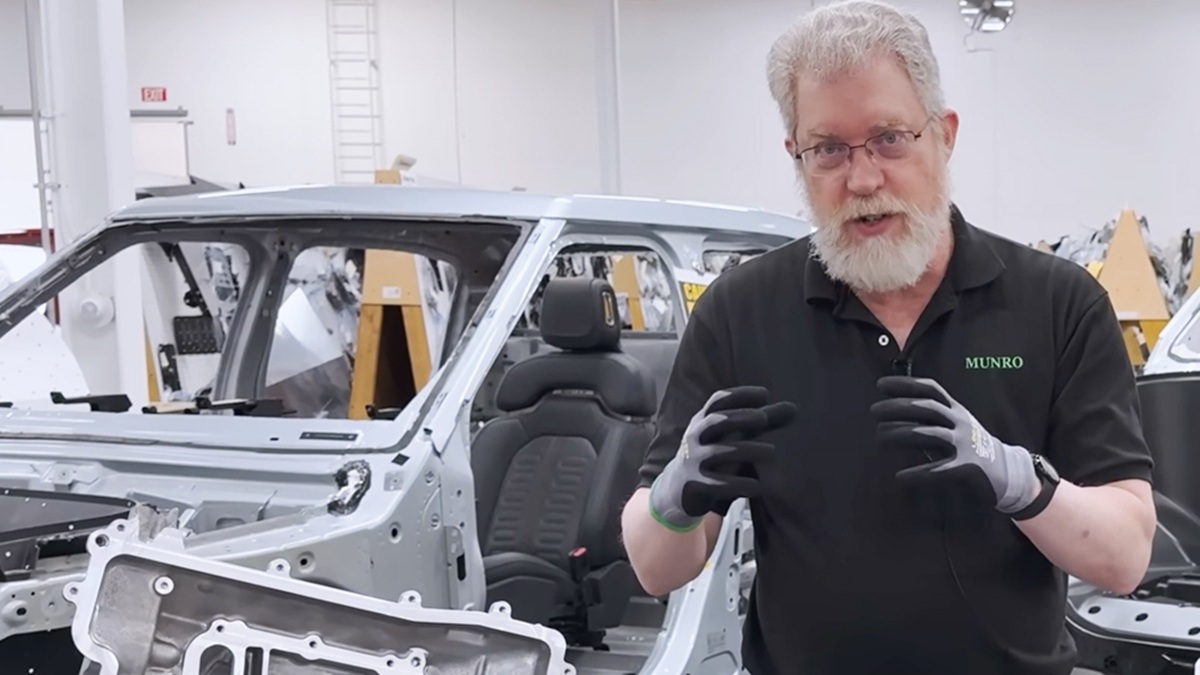
After Disassembling Two Electric Motors from Tesla Cybertruck and Chevrolet Equinox EV, Team Led by Sandy Munro Identified Deep Technical Differences in Cooling Systems, Comparing Solutions Based on Rotor Movement and the Use of High-Pressure Pump, with Direct Impacts on Cost, Energy Efficiency, Mechanical Complexity, and Thermal Control in Different Operating Conditions
The disassembly of two electric motors by the team from Munro & Associates, led by Sandy Munro, revealed technical differences between Tesla Cybertruck and Chevrolet Equinox EV, highlighting how electric motors face the cooling challenge to ensure efficiency, performance, and durability.
Technical Disassembly Exposes Distinct Solutions in Electric Motors
After disassembling two electric motors, the team analyzed how each manufacturer addresses thermal control. Although it seems simple, cooling is one of the main challenges in the development of modern electric vehicles.
The goal is not only to cool but to keep windings, magnets, and housing within an ideal temperature range. This balance is essential to preserve efficiency, performance, and the lifespan of the components.
-
A French brand placed a car on four huge red balloons to prove that its suspension made the vehicle “float,” and the surreal scene became one of the most iconic and unusual images in automotive history.
-
Jeep Avenger begins production in Brazil, debuting as the brand’s new entry-level SUV and inaugurating an unprecedented phase by becoming the first national Jeep manufactured outside of Goiana, as part of a R$ 3 billion plan.
-
Costing R$ 12,490, the new Shineray Urban Lite 150 “cheap one” arrives in Brazil with a CVT transmission, digital dashboard, and LED lights, making it more affordable than the Biz and targeting those who want to abandon the bus.
-
Ducati brings to Brazil the Superleggera V4 Centenario: 228 hp that become 247 with a track kit, carbon fiber and carbon-ceramic brakes, estimated price between R$ 1.5 and 2 million, deliveries only in 2027.

The evaluated electric motors belong to Tesla Cybertruck and Chevrolet Equinox EV. According to engineers, the solutions adopted follow radically different philosophies to solve the same technical problem.
General Motors System Uses Rotor Movement as Driving Force
According to engineer Paul Turnbull, responsible for the technical analysis, General Motors opted for a system based on basic physical principles. In the brand’s electric motor, the rotor’s own movement drives the oil into internal channels.
From these channels, the oil falls like rain over critical components. This solution eliminates additional pumps and complex external piping, reducing the number of parts and simplifying maintenance.
As a result, production costs decrease. Additionally, by not relying on an electric pump dedicated to cooling, the associated energy consumption is lower.
However, the system has limitations. Since it directly depends on the motor’s rotation, its effectiveness may decrease in low-speed situations, such as in urban traffic or during prolonged maneuvers.
At high speeds, the oil may also move in a less controlled manner. This can compromise the uniformity of cooling during periods of high thermal demand.
Tesla Adopts High-Pressure Pump for Precise Thermal Control
In contrast, Tesla implemented a strategy considered more sophisticated. Instead of relying on the natural movement of the rotor, it uses a high-pressure pump that forces the oil through precisely designed channels.
The fluid is directed straight to the electrical windings and the magnets. This solution allows for more precise and consistent thermal control, regardless of motor speed.
Among the advantages noted is the possibility of using cheaper magnets. It is also possible to optimize efficiency by reducing losses from parasitic currents, which are responsible for generating additional heat.
The cost of this solution lies in the greater mechanical complexity. The pump uses battery power, and the hydraulic system adds components that can increase price and potential damage risk.
Two Distinct Paths to Solve the Same Thermal Challenge
The comparative study demonstrates that there is no single formula to ensure thermal efficiency in electric motors. General Motors prioritizes a robust, simple solution aimed at mass production.
This choice focuses on cost and structural reliability. Tesla, on the other hand, prioritizes precision and performance, even with greater system complexity.
Both strategies reflect each manufacturer’s identity in the transition to electrification. In a scenario where every watt counts, innovation also involves the ability to manage heat efficiently.
The analysis of electric motors shows that engineering decisions go beyond power or range. Thermal management is a central factor in the development of modern electric systems.
In comparing the two architectures, the team highlighted that both meet the objective of keeping components within the appropriate thermal range. Each approach, however, responds to different industrial priorities.
In the current context of electric mobility, temperature control has become an essential part of electric motor design, influencing energy efficiency, cost, and operational reliability.










-

-

-

4 pessoas reagiram a isso.