





 Portuguese
  English
  Spanish
  5 min of reading
  11 comments


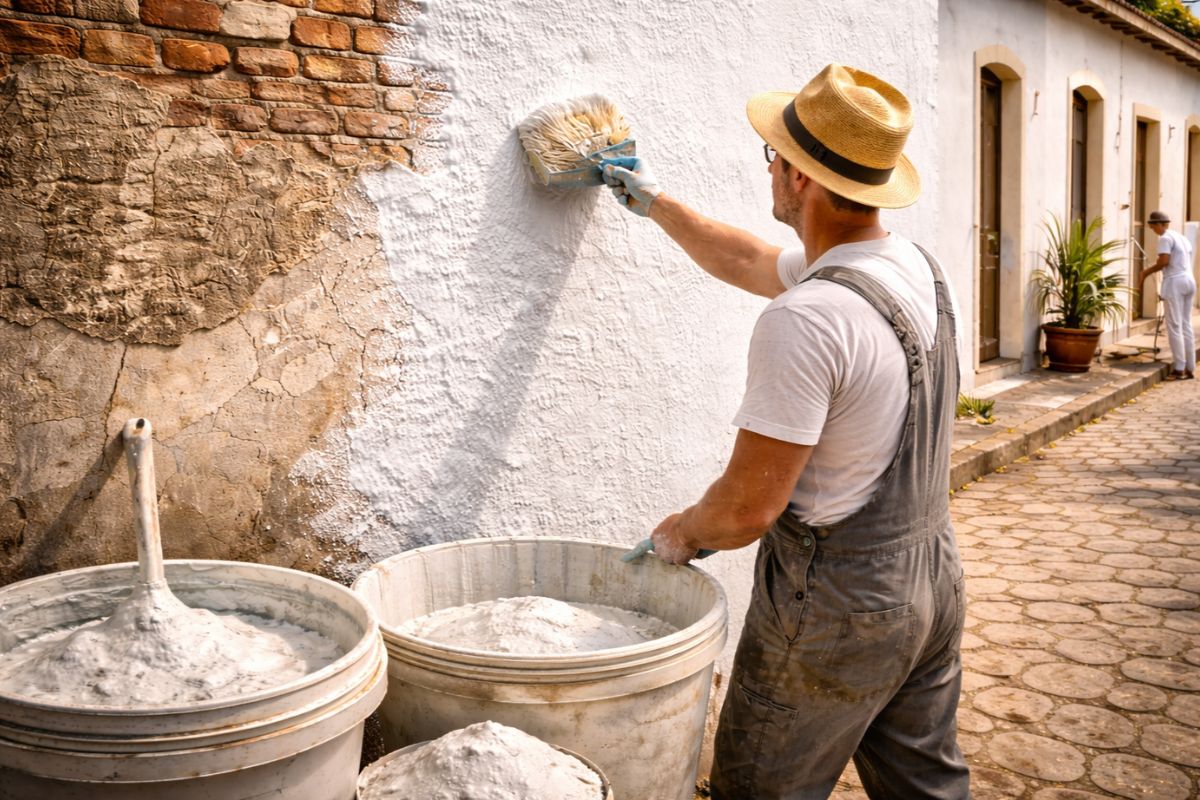


The Simple Technique of Mixing Hydrated Lime with Mineral Dye Has Been Used to Transform Old Walls, Renew Surfaces, and Give a More Uniform Appearance to Residential Neighborhoods at Low Cost
The simple technique of mixing hydrated lime with mineral dye has gained ground as an economical alternative to renew old walls, standardize facades, and improve the visual aspect of residential areas. With accessible materials and application without great complexity, the solution has caught the attention of residents, condominiums, and small contractors.
In practice, the proposal combines low cost, direct execution, and immediate visual results. Instead of relying solely on more expensive paints, many spaces are resorting to this combination to cover stains, smooth imperfections, and give a more organized look to exterior walls and common areas.
What is the Mixture of Hydrated Lime with Mineral Dye
The basis of this simple technique lies in preparing a “milk” of hydrated lime with water, to which powdered or liquid mineral dye is added. The lime serves as a coating, while the pigment defines the color, usually in more subdued tones such as white, beige, ochre, gray, and earthy colors.
-
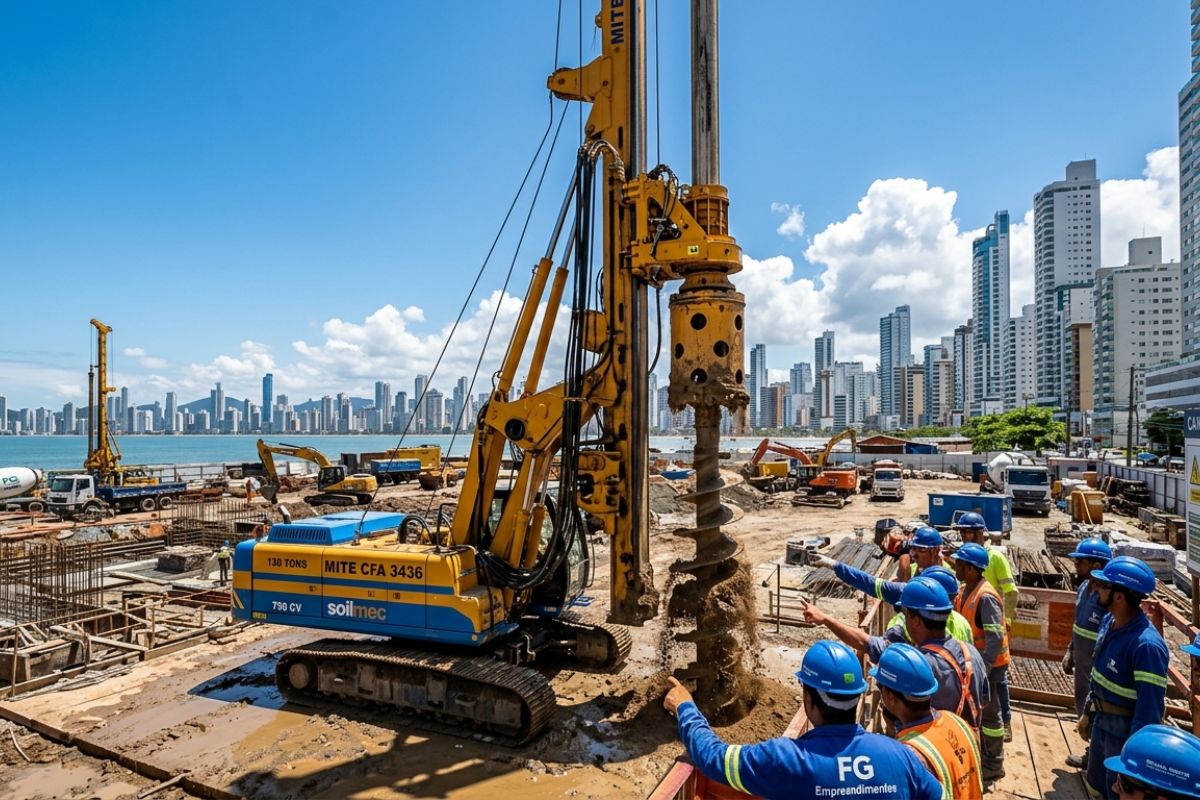
Italian giant of 130 tons arrives at the Senna Tower construction site and accelerates foundations: Mite CFA 3436 drills up to 50 m, 750 hp engine, investment of R$ 20 million, unique in Latin America.
-
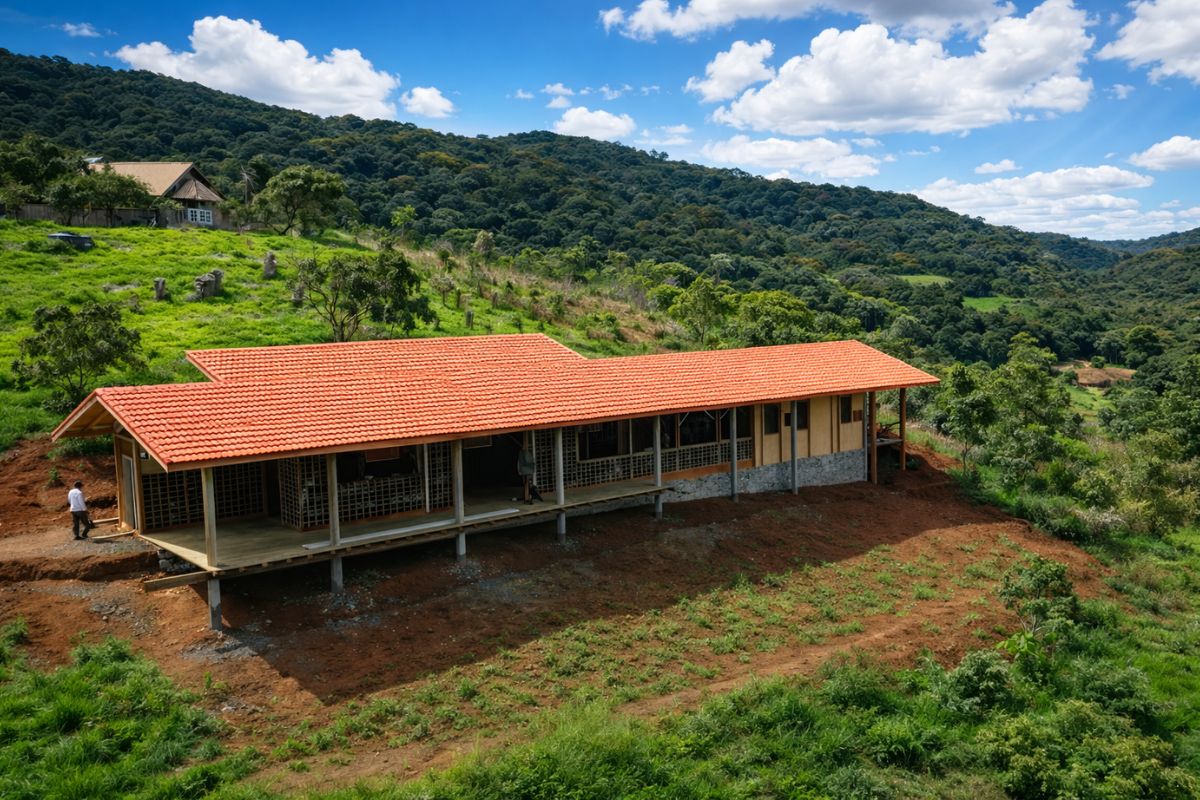
The adobe house in Monteiro Lobato takes shape with bamboo and clay from the land, a stone foundation, and a roof for the wind; cracks are normal, and finishing with lime turns it into a “common house.”
-
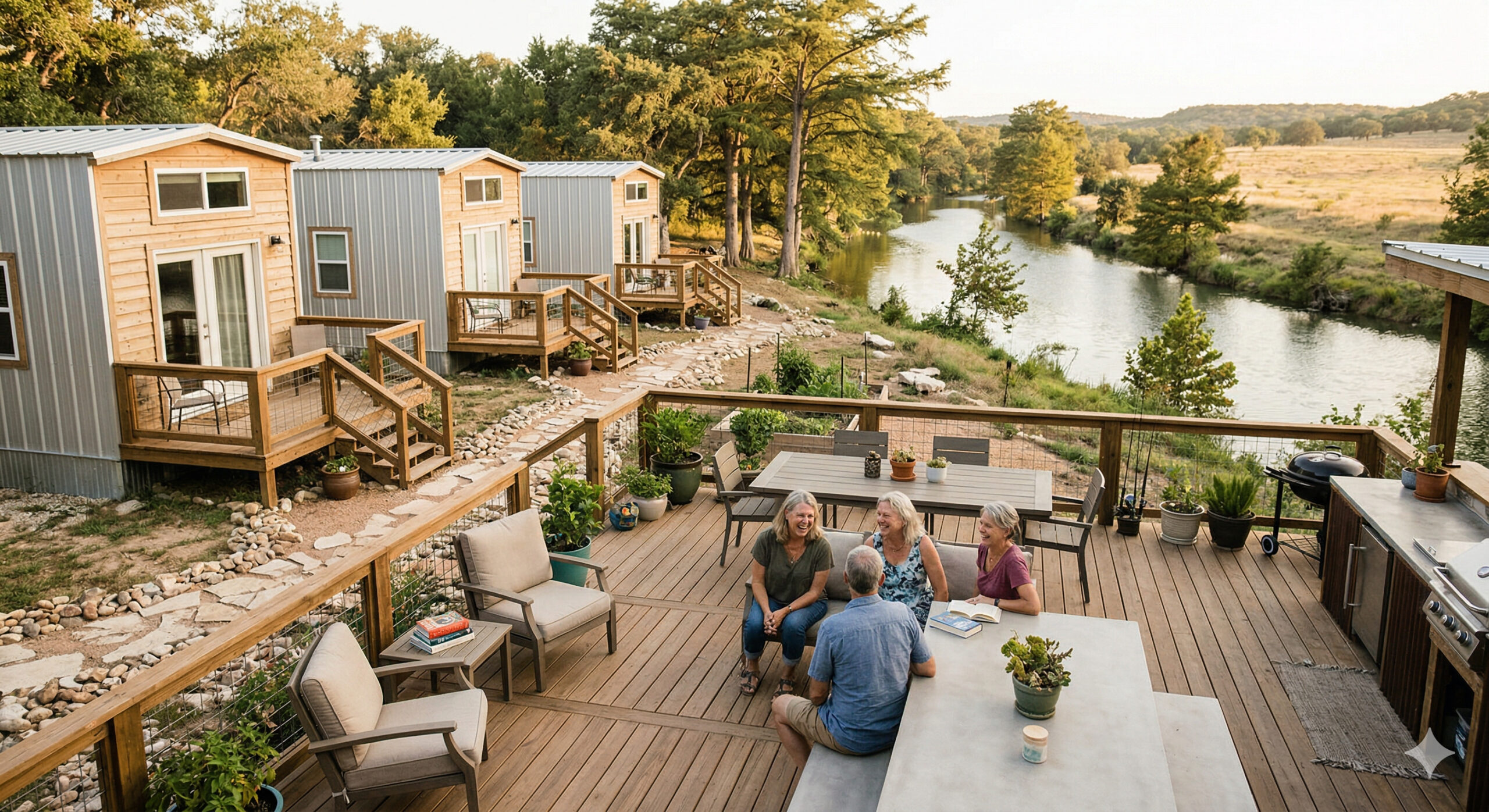
Four friends with over 30 years of friendship built a “mini village” by the banks of a river in Texas to grow old together, with houses of just 32 m² and a shared common space. The Bestie Row project has become a model of alternative living that is starting to spread around the world.
-
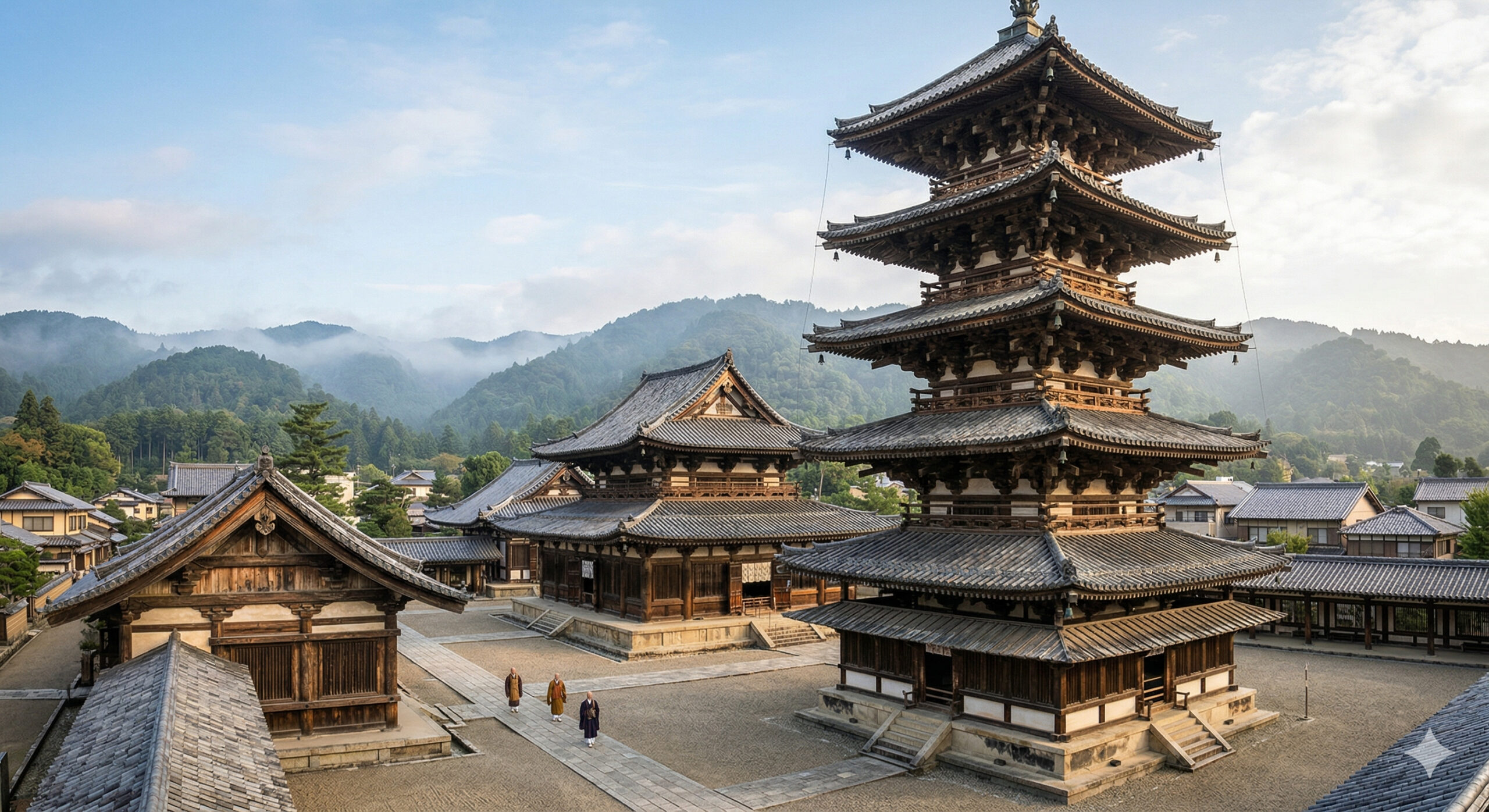
The ancient Japanese capital, planned over 1,200 years ago, still withstands earthquakes with colossal wooden temples and palaces, built without concrete or modern steel, by masters who created engineering capable of enduring centuries.

This type of application forms a breathable layer, which helps the wall to release moisture more easily than certain synthetic paints.
On old walls, this contributes to uniforming stains and small visual flaws, creating a cleaner finish. The result is usually simple, but quite effective for those seeking renewal without overspending.
Why the Simple Technique Became a Low-Cost Option
The main attraction of this simple technique lies in its cost. Hydrated lime is priced lower than many acrylic paints, and mineral dyes are also generally affordable. In extensive walls of condominiums, subdivisions, and villages, this difference can represent significant savings in the budget.
Another favorable point is the execution. Since the application does not require sophisticated equipment, the service can be performed by freelance professionals or small local contractors. This reduces costs with specialized labor and helps make the renovation faster and less inconvenient for residents.
What Are the Care and Limitations of the Application
Despite the advantages, the simple technique does not eliminate the need for maintenance. Durability tends to be lower than that of high-performance paints, especially in places highly exposed to sun, rain, and pollution. Over time, there may be fading and the need for periodic reapplication.
There are also aesthetic limitations. The palette tends to be more opaque, without high shine and very intense colors.
Additionally, surfaces that are too smooth or already covered by waterproof paints may have lower adhesion, requiring more careful prior preparation. In other words, the low cost is worthwhile, but it does not eliminate attention to the state of the wall.
How to Prepare the Wall Before Painting
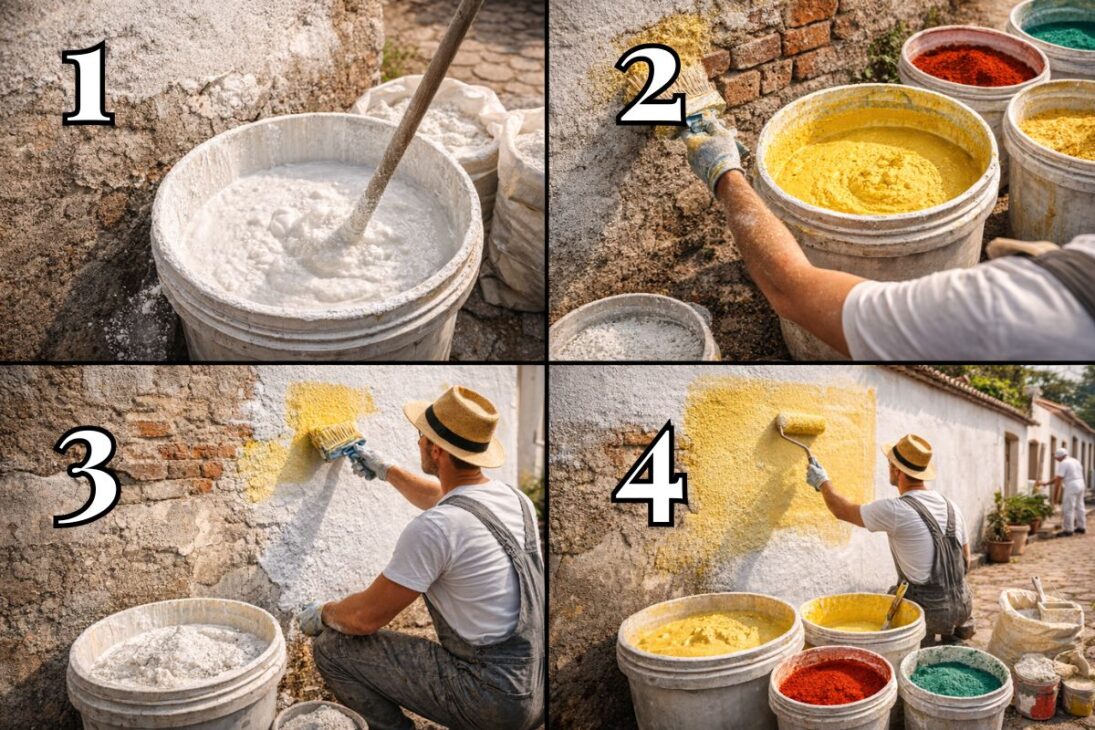
For the simple technique to work well, the first step is to assess the condition of the surface. The wall must be firm, clean, and free from active mold, loose plaster, or excessive dust. In older structures, it may be necessary to make corrections before starting the application.
This step includes removing dirt, moss, peeling paint, and compromised areas. When there are cracks, holes, or loose plaster, it is ideal to correct these points before proceeding. Good base preparation makes a direct difference in the finish and adhesion of the mixture.
How to Make the Mixture and Apply in Thin Coats
After cleaning and repairs, the lime should be diluted in water until it reaches a consistency similar to that of thicker milk. Next, the mineral dye is mixed until the desired shade is achieved. Before painting the entire area, it’s worthwhile to test the color on a small patch of the wall.
The application is usually done with a brush, stencil, or roller, always in thin coats with drying intervals between layers. This care helps to leave the coverage more uniform and reduces the risk of excessive marks. In practice, the simple technique relies more on careful execution than on expensive equipment.
Safety Also Part of the Process
Even though it is a simple technique, the application requires basic protective measures. Since lime is alkaline, it can irritate the skin and eyes, making it important to use gloves and protective eyewear during preparation and painting.
This point deserves attention, especially in community workdays or jobs done more informally. Saving on materials should not mean neglecting safety. Small preventive measures help avoid issues during the job.
How This Solution Changes the Landscape of Neighborhoods
In residential areas, the simple technique has been used not only to recover old walls but also to create visual unity among facades, low walls, and common areas. In horizontal condominiums and villages, this contributes to a greater sense of organization and urban care.
Besides the aesthetic effect, this type of action can also strengthen the sense of community. Community workdays to revitalize walls and shared spaces become more viable when costs are reduced and the process is accessible. With lower investment, residents can gradually and visibly renew their surroundings.
Economic Solution Gains Ground in External Renovations
By combining low cost, direct application, and rapid visual improvement, the simple technique of mixing hydrated lime with mineral dye consolidates as an interesting alternative for those who want to renew facades without resorting to more expensive solutions.
It does not replace all paints and does not eliminate durability limitations, but it serves well for proposals of economical revitalization.
For old walls, residential neighborhoods, and common areas that need visual standardization, the mixture emerges as an accessible and functional resource. When the priority is to spend less while still improving the appearance of the walls, this solution makes practical sense.
Would you use this simple technique to renew your house’s wall or do you think it’s still worth investing in conventional paint?







Esta técnica es muy antigua
Un toque mágico es poner un poco de cemento blanco a la mezcla, esto ayuda a fijar mejor y al tacto no mancha… !!!
Una pregunta, ****ál es la diferencia entre esta técnica “revolucionaria e innovadora” con la que se ha usado cientos de años? En los pueblos de Venezuela se ha usado toda la vida.