





 Portuguese
  English
  Spanish
  4 min of reading
  0 comments


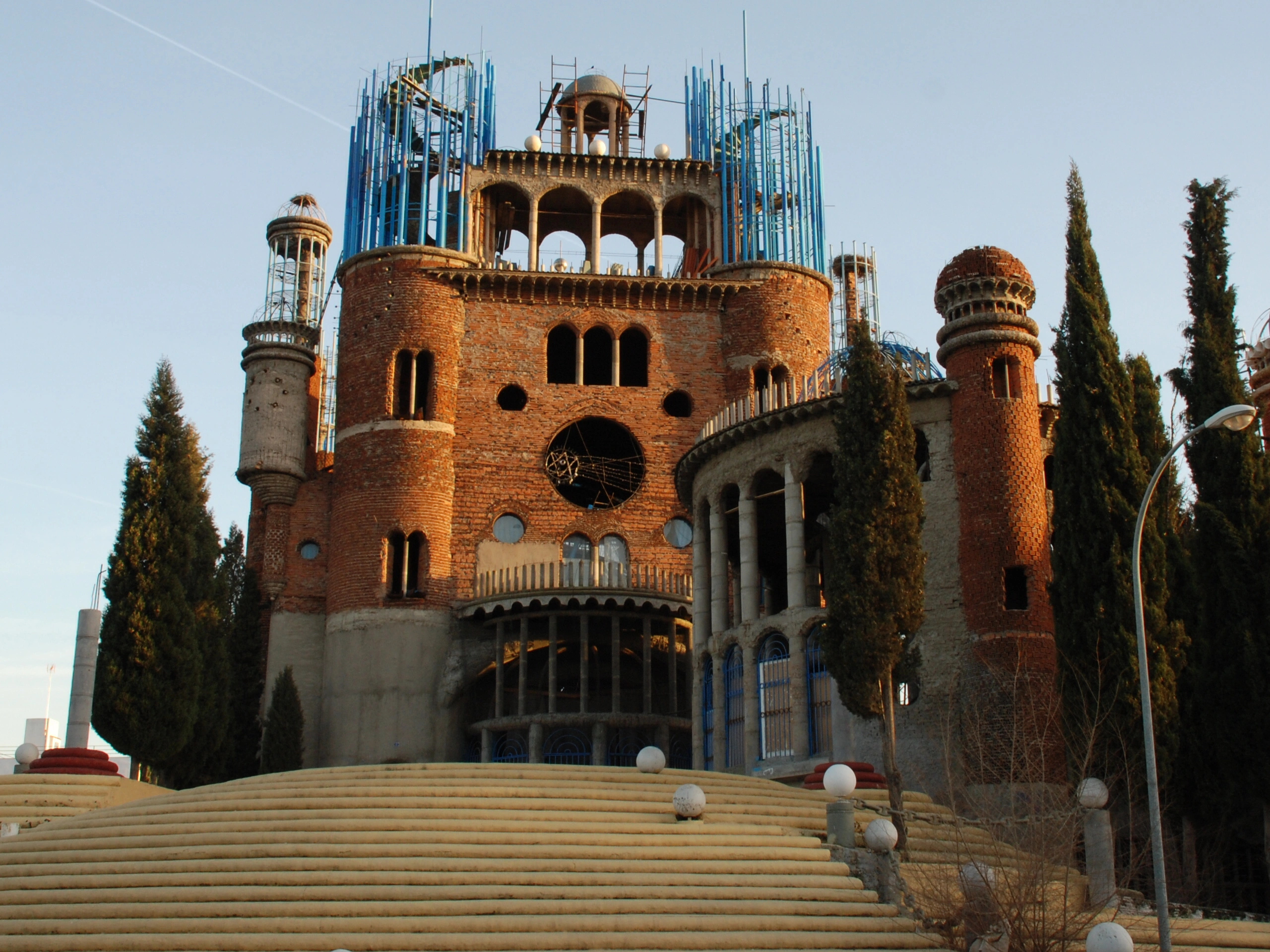
Justo Gallego Built a Cathedral in Spain for Nearly 40 Years Without an Official Project, Public Funding, or Institutional Support.
In the municipality of Mejorada del Campo, in the Community of Madrid, Spain, one of the most improbable works of European architecture began almost invisibly in 1961. That year, a former Trappist monk named Justo Gallego decided to dedicate the rest of his life to a project that lacked official approval, public funding, a signed blueprint by engineers, or institutional support. He wanted to raise a cathedral on his own.
Justo Gallego had left the monastery due to health issues and, as he himself reported, made a personal vow to build a temple dedicated to the Virgin Mary. The land was inherited from his family. The tools were simple. The knowledge came from books, observation of historic churches, and trial and error. Still, over nearly 40 years of continuous work, the construction grew to become impossible to ignore.
A Cathedral Built Without a Formal Technical Project
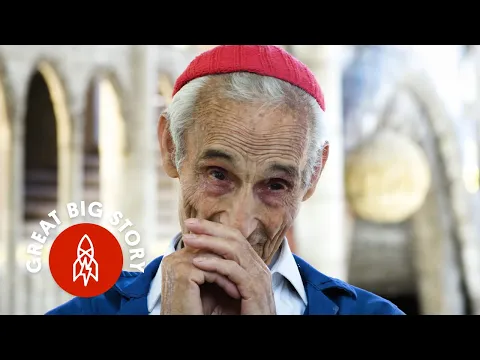

Unlike any conventional work, the so-called Cathedral of Justo never had an approved structural plan from official bodies. There are no records of load calculations, soil tests, or oversight by civil engineers during most of the construction. Justo worked based on visual references from great Spanish cathedrals, such as those in Madrid and Toledo, reproducing proportions “by eye.”
-
Friends have been building a small “town” for 30 years to grow old together, with compact houses, a common area, nature surrounding it, and a collective life project designed for friendship, coexistence, and simplicity.

-
This small town in Germany created its own currency 24 years ago, today it circulates millions per year, is accepted in over 300 stores, and the German government allowed all of this to happen under one condition.

-
Curitiba is shrinking and is expected to lose 97,000 residents by 2050, while inland cities in Paraná such as Sarandi, Araucária, and Toledo are experiencing accelerated growth that is changing the entire state’s map.

-
Tourists were poisoned on Everest in a million-dollar fraud scheme involving helicopters that diverted over $19 million and shocked international authorities.

Even so, the scale is impressive. The complex occupies more than 4,000 m² of built area, with hallways, cloisters, towers, staircases, and a central nave covered by a dome reaching about 40 meters in height, equivalent to a building with more than 13 floors. Some of the walls exceed 10 meters in height, built block by block, often without industrial scaffolding.
Improvised Materials: Scrap, Donations, and Extreme Recycling
One of the most impressive aspects of the work is the origin of the materials. Without financial resources, Justo Gallego relied for decades on industrial scrap, leftover construction materials, discarded bricks, metal drums, tires, rejected beams, and even reused concrete molds.
The circular columns, for example, were shaped using oil drums as molds. Windows received discarded glass from factories. Grates and metal structures came from junkyards. Much of the cement was obtained through informal donations or small purchases, as money allowed.
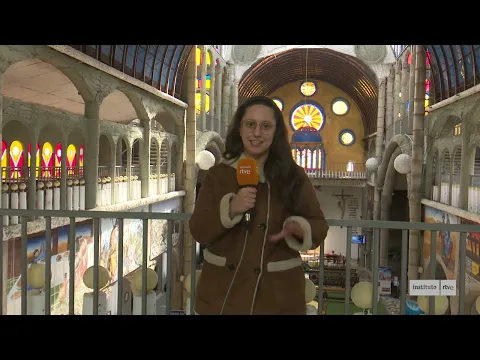
Despite this, the end result does not resemble a patchwork quilt. The repetition of forms, symmetry, and monumentality created a unique architectural identity that intuitively but coherently blends Romanesque, Gothic, and Baroque elements.
Almost Solitary Work for Four Decades
For most of the construction, Justo worked alone, including heavy tasks such as digging foundations, manually transporting materials, and raising tall walls. At certain times, he received occasional help from family members or curious volunteers, but never from a fixed team.
He followed a strict routine: he started working at dawn and continued until sunset, practically every day of the year. It is estimated that Justo dedicated more than 20,000 days of work to the project throughout his life, without pay, contract, or official recognition for decades.
Structural Safety and Technical Controversies
The absence of formal engineering has always generated criticism and concerns. Technicians and architects pointed out structural risks, especially in areas such as the dome, spiral staircases, and tall towers. At times, local authorities even suspended parts of the construction due to a lack of permits.
Nonetheless, the structure stood firm for decades, withstanding the elements, winds, and the natural aging of materials.
After the 2000s, with growing fame, engineers began visiting the site for assessments, and some structural corrections started to be discussed.
From “Illegal Work” to Unofficial Cultural Heritage
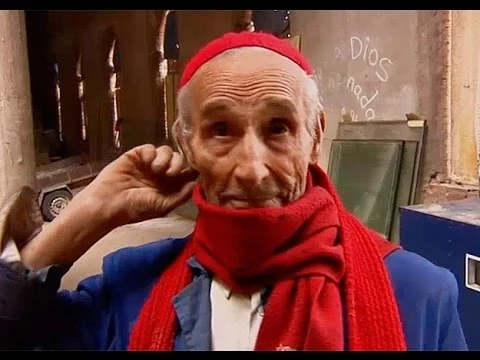
For many years, the cathedral was seen as a local eccentricity. This changed when international reports began to circulate, especially from the 1990s and 2000s. Outlets like BBC, El País, National Geographic, and European documentaries turned the work into a symbol of human perseverance.
With the increase in public interest, the Cathedral of Justo began receiving thousands of visitors each year, attracting tourists, architecture students, and curious individuals. Although it is not officially recognized as a cathedral by the Catholic Church, nor registered as a consecrated temple, it has become an informal cultural landmark of Mejorada del Campo.
After the death of Justo Gallego in 2021, at the age of 96, local foundations and volunteers took on the responsibility of preserving the structure and discussing its legal future, including possible regularizations and safety adaptations.
A Monument Outside Modern Logic
The story of the Cathedral of Justo challenges almost all principles of modern construction: there was no timeline, budget, technical team, funding, or guarantees. Still, the result is one of the most unique structures in contemporary Europe.
More than a religious work, the building has become an extreme experiment about human persistence, the limits of self-construction, and the ability of an ordinary individual to transform decades of manual labor into something monumental.
In a world of billion-dollar megaprojects, the cathedral built with scrap and faith stands as a disconcerting reminder: not every great work is born from great resources — some are born solely from stubbornness.










Seja o primeiro a reagir!