





 Portuguese
  English
  Spanish
  4 min of reading
  0 comments


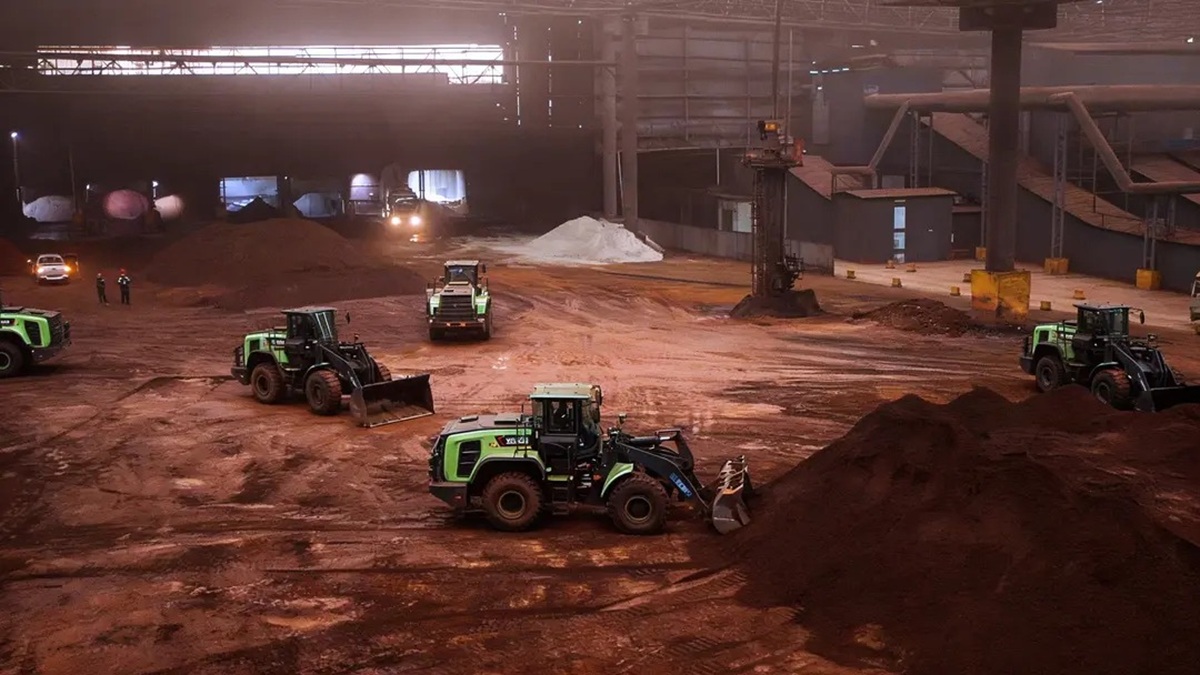
With a nominal capacity of approximately 127 tons, a 783 kW electric motor, and integration into a US$ 400 million contract for up to 100 vehicles between 70 and 130 tons, the electric loader marks a central milestone in Fortescue’s plan to eliminate diesel and fossil fuels from operations in Pilbara by 2030.
The 127-ton electric loader from XCMG was delivered to Fortescue as part of a US$ 400 million order for the electrification of mining in Western Australia, aiming for up to 100 electric vehicles and the elimination of fossil fuels by 2030.
XCMG delivered two of its largest battery-powered machines to the Australian miner Fortescue. The XC9260BEWL electric wheel loader and the XC9260BEWD wheel dozer are the first units of a record US$ 400 million order.
The central objective of the contract is to reduce Fortescue’s operational carbon footprint. The machines are part of the top range of electric vehicles from the Chinese manufacturer and were designed to match or exceed the performance of the existing diesel-electric hybrid XC9260 models.
-
Motorola launched the Signature with a gold seal from DxOMark, tying with the iPhone 17 Pro in camera performance, Snapdragon 8 Gen 5 that surpassed 3 million in benchmarks, and a zoom that impresses even at night.

-
Satellites reveal beneath the Sahara a giant river buried for thousands of kilometers: study shows that the largest hot desert on the planet was once traversed by a river system comparable to the largest on Earth.

-
Scientists have captured something never seen in space: newly born stars are creating gigantic rings of light a thousand times larger than the distance between the Earth and the Sun, and this changes everything we knew about stellar birth.

-
Geologists find traces of a continent that disappeared 155 million years ago after separating from Australia and reveal that it did not sink, but broke into fragments scattered across Southeast Asia.

127-Ton Electric Loader Achieves 280,000 Pounds of Load Capacity
The electric loader operates with a 783 kW electric motor, obtaining power entirely from onboard battery systems. The proposal is to bring large-scale mining closer to zero-emission operations.
The electric wheel loaders achieve 280,000 pounds of nominal load capacity, equivalent to about 127 tons. Bucket capacities range from 15 to 19 cubic yards.
The battery-powered electric models were built to match the same class of heavy service as the hybrids. The electric loader is classified as large surface mining equipment.
This allows moving the same volumes of material per shift as traditional diesel loaders, but without fuel combustion or exhaust emissions.
Battery Systems Follow Previous Model Reference with 1,002 kWh
XCMG has not yet released technical details about the batteries of the new XC9260BE machines. However, there is recent reference from the company in the electric segment.
The previous year, a 15-ton battery electric version of the XC9150 model was launched. This unit used a 1,002 kWh lithium iron phosphate battery developed in partnership with BYD.
The system was designed to support high-power rapid charging of direct current. This configuration indicates the type of energy storage that can sustain the new ultra-large electric loaders.
Considering the scale of the previous systems, it is expected that the XC9260BE machines destined for Fortescue will use batteries at least of the same size, possibly larger.
These ultra-class mining units face intense work cycles. Therefore, they require large energy storage to support long shifts, high power, and rapid recharges between operations.
Order Includes Up to 100 Electric Vehicles Between 70 and 130 Tons
As part of its decarbonization strategy, Fortescue plans to introduce up to 100 ultra-heavy battery electric vehicles from XCMG.
The fleet will include transport trucks, loaders, and track dozers with capacities ranging from 70 to 130 tons. The goal is to transform iron ore operations in Pilbara, Western Australia.
The stated objective is to create a truly zero mining system by 2030. This involves eliminating not only diesel but all fossil and bio-based fuels in mining, material transport, and on-site power generation.
If realized, the project will represent one of the largest electrification efforts ever attempted in large-scale industrial mining.
Partnership Between XCMG and Fortescue Accelerates Net Zero Emission Goals
According to co-CEO Gus Pichot, the arrival of the prototypes marks a significant advancement in the partnership between Fortescue and XCMG. He stated that the project demonstrates how quickly decarbonization plans are being turned into concrete actions.
Pichot remarked that the new machines exemplify tangible progress in building the green technologies necessary to achieve net zero emissions by 2030.
He added that both companies are committed to delivering results quickly. The goal is to prove that heavy industry can eliminate emissions in an economically viable way.
The electric loader integrates this set of initiatives and symbolizes the transition to combustion-free operations. By replacing diesel models with battery-powered machines, the project aims to redefine the operational standard of industrial mining.
The initial delivery of the two units inaugurates the practical implementation of the US$ 400 million contract. Therefore, the electric loader becomes a central piece in Fortescue’s emission reduction strategy.
The scale of the investment and the volume of equipment planned indicate a structural shift in the energy model of operations in Pilbara. The established timeline points to 2030 as the final milestone of the transition.
With the progressive introduction of up to 100 electric vehicles, the company aims to consolidate a system that completely eliminates the use of fossil fuels. The electric loader, in this context, represents one of the main vectors of this operational transformation.








-

-

2 pessoas reagiram a isso.