





 Portuguese
  English
  Spanish
  5 min of reading
  13 comments


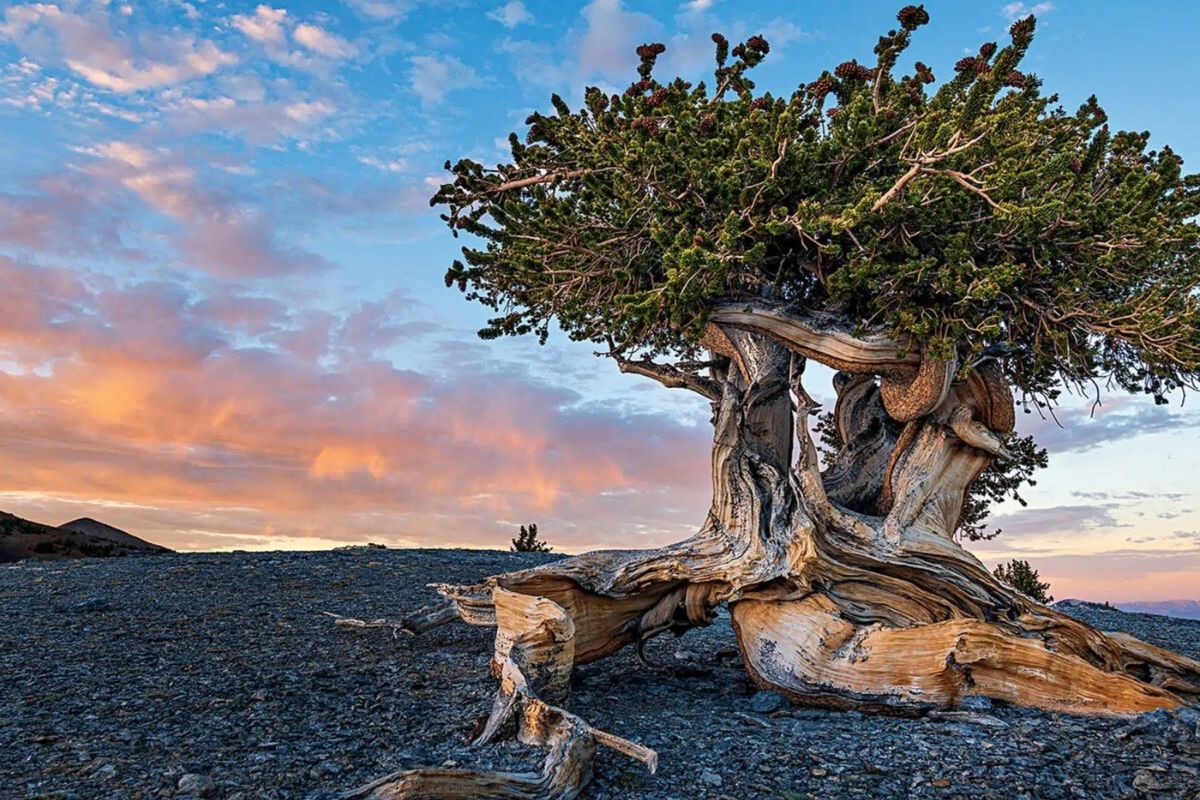


The History of Prometheus, Tree Almost 5 Thousand Years Old Felled in Nevada by a Researcher, Exposes the Conflict Between Scientific Curiosity, Human Ambition and Ethical Responsibility to the Planet
The story of a tree almost 5 thousand years old felled by a scientist in the United States is not just a curious episode in botany. It has become a symbol of the central dilemma of our age: how far can we go in the pursuit of knowledge when it means destroying something that can never be recovered? In this case, science did not observe nature from a distance, but literally brought it down to study it.
Prometheus, as the tree was named, challenges the way we understand our relationship with the environment. Are we part of nature, or do we treat everything as an object for use and research? Philosophers like Hegel have argued that human beings are nature thinking about itself, revealing both our greatest potential and our greatest danger. In the drama of a single felled tree, this contradiction takes on concrete form.
Who Was Prometheus, the Tree Almost 5 Thousand Years Old
Prometheus was not just an isolated tree. It was a long-lived Bristlecone pine, part of a group of trees that have lived for millennia in the White Mountains, in California and nearby regions.
-
Motorola launched the Signature with a gold seal from DxOMark, tying with the iPhone 17 Pro in camera performance, Snapdragon 8 Gen 5 that surpassed 3 million in benchmarks, and a zoom that impresses even at night.

-
Satellites reveal beneath the Sahara a giant river buried for thousands of kilometers: study shows that the largest hot desert on the planet was once traversed by a river system comparable to the largest on Earth.

-
Scientists have captured something never seen in space: newly born stars are creating gigantic rings of light a thousand times larger than the distance between the Earth and the Sun, and this changes everything we knew about stellar birth.

-
Geologists find traces of a continent that disappeared 155 million years ago after separating from Australia and reveal that it did not sink, but broke into fragments scattered across Southeast Asia.

In these areas, there are specimens over four thousand years old, including a tree known as Methuselah, which has surpassed 4,850 years and was long considered the oldest tree in the world.
The tree almost 5 thousand years old that became known as Prometheus lived on the edge of Wheeler Peak, in Nevada. It was several centuries old when the great pyramids of Egypt were being built, but it did not enter history just because of its age.
What brought it to prominence was the fact that it was felled at the behest of a researcher, in the 20th century, opening an uncomfortable debate about the cost of science.
How the Tree Almost 5 Thousand Years Old Ended Up on the Ground
In 1964, Prometheus was felled during research by Donald Rusk Currey, then a 30-year-old doctoral student.
The initial intention was to use a method considered relatively controlled: extract samples from the trunk with drilling bits, without killing the tree. The problem was that, in four attempts, two bits broke.
Faced with this impasse, Currey obtained permission from the United States Forest Service to cut down the entire tree.
The researcher did not know he was dealing with the oldest known tree in the world at the time, and by the scientific standards of that moment, he did not act outside the law or in a manner considered exceptionally cruel. Still, the result was the same: a millenary tree reduced to logs and discs for analysis.
What the Scientist Sought by Felling Prometheus
Currey was not interested only in the age of the tree almost 5 thousand years old. His focus was to study the climatic conditions of a period known as the Little Ice Age, a colder phase in the Northern Hemisphere that extended approximately from 1300 to 1900. To do this, he used a key tool: dendrochronology.
Dendrochronology analyzes the growth rings of trees. From them, it is possible not only to estimate the age of a trunk but also to obtain clues about past climate, such as periods of drought, intense cold, or variations in humidity.
At a time when many modern climatic data did not yet exist, a tree almost 5 thousand years old seemed a valuable archive of information about centuries of environmental history.
Did He Know What He Was Doing?

From a scientific point of view, Currey knew the tree was very old. This was part of the interest in the species and the region. If there had not been an expectation of great longevity, Prometheus would not have been chosen as a research subject.
What he and the community at the time did not imagine was that it was a unique specimen, capable of contesting the title of the oldest tree in the world.
When the ring count revealed the impressive age of Prometheus, the dismay was great. The question that emerged was inevitable: does ignorance about how extraordinary the tree was justify the cutting? In other words, can science claim good intention to sacrifice nature in an irreversible way?
The Tree Almost 5 Thousand Years Old as an Ethical Warning
The fall of Prometheus ended up serving as a reality check. The episode led to a review of how ancient natural monuments, especially millenary trees, were handled.
Pine species like Prometheus and Methuselah gained worldwide notoriety and became targets of stricter protective measures, preventing other specimens from being felled in the same way.
At the same time, dendrochronology itself evolved. Today, procedures tend to be much more cautious, with minimally invasive methods that preserve the tree while still providing reliable data.
In this sense, the story of the tree almost 5 thousand years old serves as a turning point: it showed the limit of what people were willing to destroy in the name of knowledge and pushed science to seek more responsible alternatives.
Prometheus, Myth and Reality: The Price of Knowledge
The name Prometheus is not casual. In Greek mythology, the titan brings fire – a symbol of knowledge and civilization – to humans, paying a high price for it.
Similarly, the tree almost 5 thousand years old became the involuntary price of a stage in science. While the mythological Prometheus accepts suffering as part of his mission, the tree was sacrificed without choice.
This analogy reinforces the emblematic nature of the case. Prometheus is not just an ancient trunk brought down by a failed drill.
It represents the open question: to what extent do we have the right to transform nature into an instrument, even when the intention is to better understand the planet itself?
The Legacy of the Tree Almost 5 Thousand Years Old
In the end, Prometheus ended up fulfilling a dual role. On one hand, it provided important data for climate research based on growth rings.
On the other hand, it served as a reminder that the pursuit of knowledge also needs clear ethical brakes, especially when it involves elements of nature that cannot be replaced.
The tree almost 5 thousand years old made visible the tension between scientific curiosity and environmental responsibility. Like in the myth, the “fire” of knowledge came with too high a cost to be ignored. And science, from this episode, had to look at itself in the mirror.
And you, do you think the felling of a tree almost 5 thousand years old in the name of scientific research can be justified in any way, or is this a limit that should never be crossed?







“Un árbol de 5 años de antigüedad”, pero que redacción mas infame, obviamente debe decir 5,000 (cinco mil) años de antigüedad, gran error que lo repitieron a cada rato.
A lo largo de todo el artículo han insistido en que la “longevidad” de ese ejemplar es de casi… ¡5 años! Vaya calidad periodística la del amanuense.
Tudo que o homem toca, ele destrói. E para ele, não há limite. Lamentável 😢